How the Early Pioneers Preserved Food and What They Ate

When we think of the Wild West we often think of the old films with John Wayne or Clint Eastwood. They’d sit out under the stars, eating beans from a can and chewing tobacco. I grew up watching those films and I still can’t picture a cowboy without thinking of him walking cross the badlands spitting tobacco onto the sand.

But of course the Wild West of the films wasn’t quite the same as the real Wild West. The real Wild West was a very different place indeed. One of harsh conditions, lack of food and battles over land, like the Indian Wars. The frontiers people who came to the western states looking for a new life, had to be hardy folk, who had the skills to take care of themselves with little resources and scarce food availability. Many of the early arrivals came on foot, with pack horses or driving heavy-laden cows. Some even trundled their few household goods in wheelbarrows along the forest traits. Roads, over which oxen could draw covered wagons, had yet to be cleared.

During a SHTF situation, pain could become an annoyance for some, but unbearable for others.

If doctors are scarce and medicine becomes even scarcer, this one little weed, found all over North America and similar to morphine, could be a saving grace.

In this article, we’ll look at how the frontiers folk coped with food scarcity. How they used skills like hunting, like growing and gathering vegetables and the techniques they used to preserve food during often very hard winters.

Food, Food Glorious Food

The types of food that the pioneering folk ate were dependent on two things:

  1. The indigenous food stuffs available
  2. Provisions they pick up at the point of origin (these were non-perishables like, coffee, nuts, sugar and flour)

Indigenous food: Meat

Local food was either hunted or found. Buffalo and squirrel were two of the meats that were part of the staple diet, certainly of the early settlers. In the early days of the Wild West, buffalo roamed widely and freely across the plains. There was an estimated 40 million in North America in 1830; by 1889 there were 541. The reason for the sharp decline in numbers wasn’t due to cowboys feasting on buffalo meat. No, that was down to commercial hunting. Still, buffalo was part of the diet of the early settlers because of its abundance. Buffalo hunting took two forms, ‘running’ and ‘approaching’. Running, involved great horsemanship and marksmanship. The rider would chase up against the animal on horseback and raise his gun to shot the beast as it ran alongside. Good huntsmen were known to kill 5 or 6 animals in one hunt. It was a dangerous practice, if the animal was only wounded it could potentially turn on the rider and horse. Approaching involved the type of hunting our earliest forebears would have practiced, which is stalking and using understanding and knowledge of the beast’s behavior. The hunter would use his skill and guile, using his Winchester to kill his prey. Buffalo being big beast, would provide a lot of meat for many people. The problem was the storage of the meat, we’ll explore the methods used, later on.

These Solar Backup Generators Deliver 4 Times More Power Than Other Models!

Other meats came straight from the forest. This included, squirrel, pigeon, rabbits, wild ducks, deer and in the far west, antelopes and elk. The latter were more difficult to hunt, as they were extremely fast and very alert.

In the early days of the Wild West, meat was abundant, but as more settlers arrived it became less so. However, this was offset by the increase in the farming of domestic animals like pigs.

Indigenous food: Vegetables

Vegetable gardening was one of the priorities of the early settlers of the Old West. Planting of a variety of vegetables, including, squash, beans, peas, sweet potatoes and potatoes, as well as onions cucumbers and melons, was part of the pioneer skill set. The Old West ‘kitchen garden’ was usually planted twice a year, much like modern vegetable patches. The spring garden would provide produce such as peas and early cabbages, whereas the late summer garden would provide food through to the early winter. This planning out of the patch was important to provide year round supplies and help avoid spoilage.

There were also plenty of wild vegetables available, such as wild onions, dandelions and dock as well as a variety of salad type leaves such as plantain. Fruits like chokeberries and huckleberries were available in places like Montana.

Here are 23 survival uses for honey that you didn’t know about.

Corn, a staple of early West settlement, was important as a vegetable, but also for bread and biscuit making. Corn was grown from south North Dakota though to Kansas, Nebraska, south Colorado, New Mexico and Arizona and many other places.

Making the Food Last

Miss Beecher’s Domestic Receipt Book

Organized planting of kitchen gardens was one way of ensuring year round produce, but there was a real requirement to find ways of keeping food for long lengths of time, especially over winter.

Frontiers people used a variety of techniques to preserve food.

Preserving Vegetables: Pickling

Scurvy was a problem over wintertime when fresh vegetables were very scarce. Catharine Beecher was the ‘go to’ authority on methods of preserving vegetables and her book “Miss Beecher’s Domestic Receipt Book” published in 1846 offered advise and recipes for pickling vegetables (see below for an example).

Here are 21 wild edibles you can find in urban areas.

Preserving Vegetables: Drying

Fruit and vegetables could be kept for extended periods by drying them out. This had to be done on a sunny day. The fruit would be prepared, often being cut into slices, then set under some light cloth (cheesecloth for example) and left out in a sunny spot. It was important not to let the fruit get too hot as this would cook it; but instead to dry it over a few days.

Preserving Meat: Salting

As soon as the animal was killed, the preparation for preserving the meat had to be made. Any meat not eaten immediately would go off quickly, especially in the summer months. The main method of preservation in the early day of the Wild West was to salt the meat. Again Catharine Beecher gave the settlers advise on how to do this (see her recipe below).

Preserving Meat: Drying

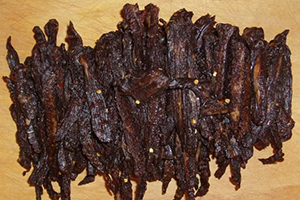
Drying meat was a recommended method for preserving beef and buffalo. Drying involved salting slices of meat, then laying the meat slices out for 2 weeks before then placing in brine for a further 3 weeks. After which the slices were dried with a cloth and hung in a cool dry place away from flies.

Preserving Meat: Smoking

This was probably the most complicated of all of the preservation techniques and involved specially prepared smoke houses. Typically, the meat would be salt cured first, sometimes using a mix of herbs for flavor. Then the meat would be hung in smoke houses over a hickory or oak based fire. The meat would hang in these smoke houses for up to a month.

Recipes That the Pioneer Used:

Pickling (the Miss Beecher way)

This recipe is taken directly from the Miss Beecher’s Domestic Receipt Book of 1846

“PICKLES.      Do not keep pickles in common earthenware, as the glazing contains lead, and combines with the vinegar.    Vinegar for pickling should be sharp, but not the sharpest kind, as it injures the pickles. If you use copper, bell metal, or brass vessels for pickling, never allow the vinegar to cool in them, as it then is poisonous. Add a tablespoonful of alum and a teacup of salt to each three gallons of vinegar, and tie up a bag with pepper, gingerroot, and spices of all sorts in it, and you have vinegar prepared for any kind of common pickling.   Keep pickles only in wood, or stoneware.      PICKLES.  Anything that has held grease will spoil pickles.  Stir pickles occasionally, and if there are soft ones, take them out and scald the vinegar, and pour it hot over the pickles. Keep enough vinegar to cover them well. If it is weak, take fresh vinegar, and pour on hot.  Do not boil vinegar or spice over five minutes.    To Pickle Tomatoes.    As you gather them, throw them into cold vinegar.  When you have enough, take them out, and scald some spices tied in a bag, in good vinegar, and pour it hot  over them. “

[spacer style=”1″]

Beef Jerky

Meat:

  • Beef or buffalo

Jerky brine:

Note a modern marinade would include soy sauce and molasses.

  • 2 quarts water
  • 1 cup salt
  • ½ cup sugar
  • Black pepper
  • Mashed onion

Make up the brine solution, mixing all of the ingredients together.

Add the thinly sliced meat and mix through the brine solution until completely covered.

Place a plate, or similar, on top of the meat and press it down firmly onto the meat.

Leave in a cold place (ideally a refrigerator or similar) for around 8 hours.

Next rinse the brine off the meat with water and dry the meat slices with a cloth.

Air-dry the meat for an hour.

You can now add other flavorings, such as herbs or pepper.

Air-drying over several days in a hot climate was the original way jerky was made. However, safer ways include drying in a low heat oven. The oven has to be very low heat and it takes many hours for the jerky to dry out (it’s important not to let it ‘cook’). If you have a smoke house, use that, it makes great jerky.

Preparedness Hacks: Once a nuke is heading your way, you might think that there isn’t much left to do, but you would be wrong!

Because we will show you America’s natural nuclear bunkers that are also EMP proof. When the sirens start wailing, all you need to do is pick the closest one to your home, where you can take cover before it hits.

Salting Meat

This recipe is again taken directly from the Miss Beecher’s Domestic Receipt Book of 1846

“Directions for salting down Pork.  

Cover the bottom of the barrel with salt an inch deep.  Put down one layer of Pork and cover that with salt, half an inch thick. Continue thus till the barrel is full.  Then pour in as much strong pickle as the barrel will receive. Always see that the Pork does not rise above the brine. When a white scum, or bloody-looking matter rises on the top, scald the brine and add more salt.   Leave out bloody and lean pieces for sausages.   The Pork ought to be packed as tight as possible, and always kept under the brine. Some use a stone for this purpose. In salting down a new supply, take the old brine, boil it down and remove all the scum, and then use it to pour over the Pork. “

[spacer style=”1″]

Sourdough Cornbread

Sourdough uses the natural yeast in the air, so is a good basic bread to know how to make. You need to make a ‘starter’ for the basic bread mix. The starter is made from potatoes:

Starter

Cut 2 potatoes up into about 8 pieces and boil until tender. Take about 2 cups of the potato water. Mix into the water, 2 cups of flour and 1 tablespoon of sugar. Put the mix to one side and wait until it doubles in size.

Ingredients

1 cup of starter

Cornmeal

1 cup milk

2 tablespoons sugar

2 eggs

½ cup fat

¼ teaspoon salt

¼ teaspoon soda

Mix the starter, cornmeal, milk, sugar and beaten eggs together until well mixed. Add the fat, salt and soda. Pour the mix into a greased tin and bake for 30 minutes at about 400F.

7 Things Our Ancestors Stockpiled To Survive Winter

Life was hard for our ancestors — much harder than it is for us today. Most of them didn’t have running water and electricity to make their lives easier. These modern conveniences have changed our way of life, to the point where we often forget what people had to do throughout history in order to survive.

We look at survival today as something needed in a time of emergency, but to many of them, survival stared them in the face every day of their lives. That was especially true in the wintertime, when it wasn’t possible to glean what you needed from nature. Basically, if you weren’t ready for winter, you didn’t survive.

During a SHTF situation, pain could become an annoyance for some, but unbearable for others.

If doctors are scarce and medicine becomes even scarcer, this one little weed, found all over North America and similar to morphine, could be a saving grace.

So our ancestors all became experts in stockpiling. They’d spend the warmer months preparing, so that when the cold winter months came around, they’d be ready. You could tell a lot about a family’s wealth and industry by that, as there were those who struggled through the winter and those who didn’t.

I remember my grandmother, who lived though the Great Depression. She was a hoarder if you ever saw one. While her home wasn’t one you’d expect to find on one of those reality shows where they dig through a house filled with junk, she didn’t let things go to waste. If there was any utility she could get out of something, it didn’t go to the trash; it was saved for that proverbial rainy day.

Not everyone saved all the things that my grandmother did, but I imagine a fair percentage of those who lived through the Depression did. Even those who didn’t knew the importance of stockpiling for winter. The idea of “saving up for a rainy day” wasn’t just a figure of speech — it was a way of life.

These Solar Backup Generators Deliver 4 Times More Power Than Other Models!

So, what did they stockpile? Let’s take a look.

1. Food

Of course, the most important thing to stockpile for winter was food. Everyone would “put up” food — canning, smoking and drying it. The modern grocery store is actually rather new, with the first real supermarkets opening exactly a century ago. Before that, you could buy foodstuffs from the general store, a local butcher or a local greengrocer (produce only). But there weren’t grocery stores as we know them.

The majority of the population at the time was involved in agriculture. It wasn’t until the industrial revolution that the vast majority of the population shifted to the cities. And while people who lived in the cities have always had to depend on store or market-bought food, before that time, they were in the minority.

2. Feed

Feeding yourself wasn’t enough in those days. You needed to be able to feed your livestock, as well. Even people living in the city had to take this into consideration, as many had horses and wagons. Here are 23 survival uses for honey that you didn’t know about.

Early garages weren’t attached to homes, because they were converted barns and stables. Before the automobile became common, that’s how people moved around. So, they’d have a stable behind the home and had to make sure the loft was filled with hay and grain to feed their horses. Granted, they always didn’t harvest that themselves, but they still had to buy it and stockpile it to take care of their horses.

If that hay and feed was the “fuel” for their transportation back then, and they stockpiled it to get through the winter, perhaps we should follow suit. While our modern cars won’t run well off of hay, few of us have enough fuel to keep them running for more than a day or two. In a blizzard or power outage, that could prove to be a costly mistake.

3. Firewood

7 Things Our Ancestors Stockpiled To Survive Winter

Cutting wood for the fire in the wintertime is much more difficult than it is in the summertime. So our ancestors needed to take advantage of the warmer weather to cut their wood and stack it for winter. Granted, living in the city made that hard for some, but cities were smaller back then. They could still take a wagon out to the country to cut wood, if they didn’t want to pay someone for it.

It would take several cords of wood to make it through the average winter, and – prior to electricity — there wasn’t any other option. That is, unless you happened to live in an area where you could heat with coal. Coal produced much more heat per ton than firewood did, making it a great improvement; but you couldn’t cut or mine it yourself.

In addition to the firewood, our ancestors always made sure they had a good stock of tinder. It’s all but impossible to find anything that can be used as tinder in the wintertime. So, most families filled up their home’s tinderbox to overflowing during the warmer months. That way, they could always start a fire if it went out. Here are 21 wild edibles you can find in urban areas.

4. Extra blankets

Keeping a home warm was difficult, especially a larger home with lots of rooms. Few actually could afford a fireplace in every room, even if they wanted one. So they’d heat the main living area of the home and leave the doors open to the bedrooms. Whatever heat managed to make its way in there was all that they’d get.

Since they didn’t have much heat in the bedrooms, they counted on body heat to keep them warm at night. That was part of the reason why kids would sleep together — so that they could keep each other warm.

But the other thing they did was pile blankets high upon the beds. It wasn’t uncommon to have a chest at the foot of the bed, which was used to store these extra blankets in warmer weather. Then, in the wintertime, they’d be brought out and piled on the bed. A good quilt was laid on top to make it all look good.

That’s part of why goose down quilts were so popular. Not only are they warm, but they don’t weigh a ton. It’s much nicer to bury yourself under a couple of goose down quilts than to have the weight of six wool blankets on you all night long. So save those goose feathers; it’s time to make another quilt.

5. Medicine

Most people kept a pretty good supply of medicines in the home — not the medicines that you can buy over the counter in the drug store, but home remedies. Doctors weren’t all that common. Some communities only had a visiting doctor come by a couple of times a year when he was making his circuit. So, they needed to be ready to take care of themselves. That’s why home remedies were so important. When that’s all you’ve got, you want to make sure you don’t run out.

6. Candles

Candle making was a summertime activity. You had to make them when the bees were active, collecting pollen and making honey. That meant you made them during the warmer months, when there were lots of flowers in the fields and on the trees. In the winter, bees stay in their hives, living off the honey they stored up in summer.

Harvesting honey, for those who had hives, also meant harvesting the beeswax. That meant it was time to make candles. While some were made by professional candle makers, it wasn’t uncommon for people to make their own, especially those in rural communities. Those candles would have to be enough to get them through the winter.

7. Reading material

Wintertime was a time to stay indoors as much as possible. The harvest was in and it was too early to think about plowing for spring. So, people would work inside the home, repairing harnesses, sewing clothes and reading. Few had time to read during warm weather, as the work on the farm kept them going from “can see” to “can’t see,” but in the wintertime, gathered around the warmth of the fire, reading was common.

People would literally save magazines and newspapers for months, waiting until wintertime to read them. While that would make the news a bit out of date, life didn’t move as fast back then. News was slow to get to rural communities anyway, especially out West. So, winter made a good time to catch up.

Preparedness Hacks: Once a nuke is heading your way, you might think that there isn’t much left to do, but you would be wrong!

Because we will show you America’s natural nuclear bunkers that are also EMP proof. When the sirens start wailing, all you need to do is pick the closest one to your home, where you can take cover before it hits.

What’s The Closest Natural Nuclear Bunker to Your Home? (Sometimes the shelter is so close that is right below your feet.)

Only a handful of preppers can afford a $ 70k nuclear bunker.

But if you think about it, there are a lot of natural nuclear shelters in the US that are absolutely free.

All you need to do is to identify the closest one to your home and maybe include it into your bug out plan in case a nuclear war is looming (or an asteroid impact).

Keep in mind that these bunkers are all naturally EMP hardened. But they will protect you only from the nuclear blast and the initial radiation burst.

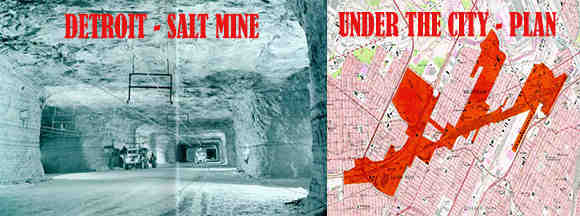
Sometimes the shelter is so close that is right below your feet. It’s the case in Detroit, where just 1200 Feet below there is a salt mine that can easily shelter the entire population of Detroit! Actually it can shelter over 5 million people.

under the city saline

The salt mine was used to mine table salt, but with the decline in salt prices the mine is now used to mine road salt for winter.  The Michigan basin and the great lakes area (since there are also huge salt mines in Canada), used to be part of a sea which sank into the earth. The salt was left behind and formed the massive deposits that we mine today.

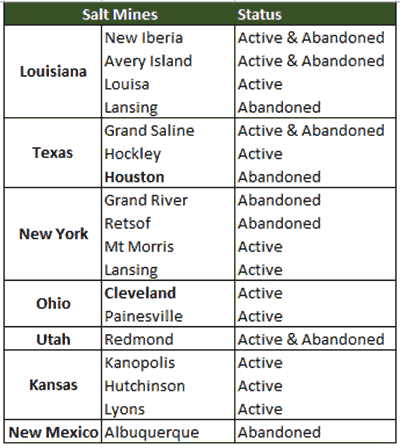
Detroit isn’t the only city with a salt mine below it. Other cities like Houston and Cleveland (1400 feet below) are also situated over salt mines.

So I’m going to start with…

…The Underground Salt Mines:

tabel salt mines

Salt mines are your best option because they are very spacious with large rooms rather than narrow, dark, high humidity tunnels like you see in mines!

Caves

From 1964-1973 the USA and CIA conducted a secret war to support the Royal Laos Government and to stop the communist incursion by dropping bombs on then communist Lagos and northern Vietnam.  Unbelievably in these years the USA dropped more bombs than any other time in the history of war. 270Million cluster bombs, 210 million more than Iraq in 1991, 1998 and 2006 COMBINED!  7 million tons of bombs, more than twice the amount dropped in Europe and Asia in WWII.  This is equal to a laneload of bombs every 8 minutes, 24 hrs. a day for 9 years.

Kaysone Phomvihane who was the leader of the communist movement led his people to limestone caves in the craggy mountains at the Vietnam boarder.  The shelter has become known as the ‘City of Victory’ and is a tourist attraction.

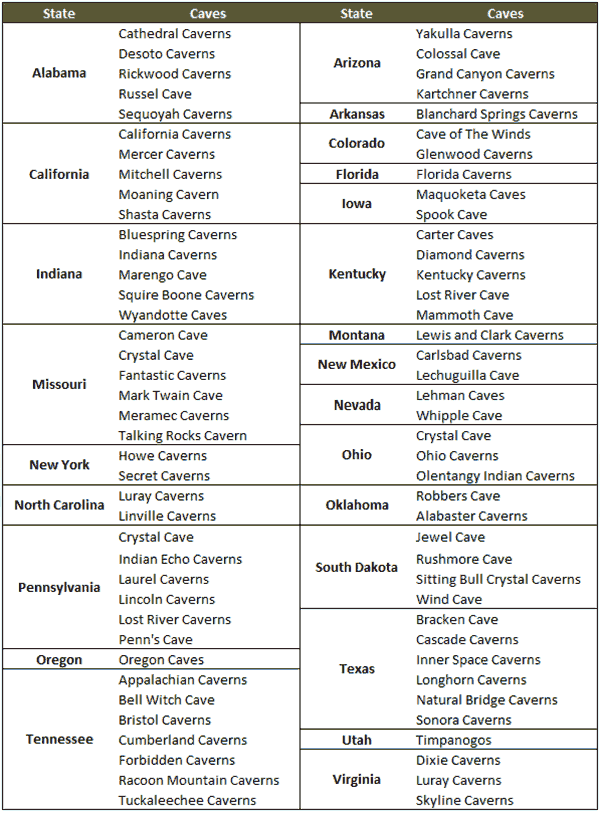
There is an extensive network of caves all across the USA. I have made a list of the largest ones, state by state for your reference.

usa caves3

There are many advantages to cave living even in an emergency situation.  They tend to retain heat in the winter and are cool in the summer as well as an excellent natural hide away from natural disasters.  There was even a reference to living in limestone caves of Missouri the film “Deep Impact” when comet was to hit the earth and flood a greater part of the world.

The reality is that nature provides most things that we need to survive, so why not a cave as a refuge for war or nuclear bombs?

Underground Mines:

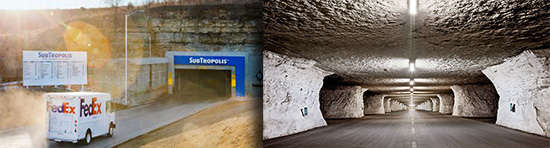
Subtropolis

You might find it hard to believe, but Kansas City has a “nuclear shelter” which houses 10 percent of city’s commercial real estate.

Subtropolis – as it is called – is an ex limestone mine with an excavated size of 140 football fields, which was turned into an underground industrial park. The limestone deposits are six times stronger than concrete.

UPDATE:

Find The Closest Mine to Your Home:

Unfortunately there isn’t a reliable map with all US underground mines. I tried to use Google Maps but it has a lot of other facilities with the name “mines” and also surface mines.

But you can use this website to find the closest mine to your home. Just enter your location and make sure you’ve checked “underground” and a 50 miles radius. The results is your closest “nuclear shelter”.

If you don’t have any mines near your home, scroll down and you’ll find “mines by state”, select your state and see what mines are close to you.

A Final Word

Of course, a specially made nuclear bunker has food, water and oxygen reserves. These natural shelters will protect you only from the nuclear blast and the initial radiation burst.

Chances are that you won’t be warned about a nuclear blast, but (just in case) here are 3 signs that you need to take “nuclear” cover:

1 – When your electronics stop working (most of them)

Most experts agree that the next nuclear war will start with at least an EMP. If one of the nuclear powers blasts a nuclear weapon 275 miles above the US it will produce an EMP that will basically send us, the Canadian and the Mexicans back to the Dark Ages. This is exactly what our enemy wants: to disrupt our communication and our ability to retaliate at full capacity. I have something you need to watch. It’s much better than I am at explaining the threat. Watch it and learn what you should fear most (Video), what an EMP effects and how you can protect your electronics, car, mobile phones, etc.

2 – When you hear on the news that a nuclear bomb has just detonated somewhere

It doesn’t matter if it’s in the US, Russia or China… I’m thinking that when a nuclear bomb explodes we face 3 possibilities: a nuclear war which may involve the US, nuclear terrorism which means that the first explosion may be followed by another four, or human error like in 1956 when the US Air Force accidentally dropped two atomic bombs on North Carolina. If it’s the last case… then yes you’ve probably evacuated in vain. But the risk worth the effort! 

3 – When a Nuclear Bomb explodes a few miles away, but does not kill you.

If you’re not killed in the first few minutes, you can live a lifetime or die of cancer in the next few days. The longer you expose yourself to radiation (in the radioactive area) the lowest the chances to survive. Take your family and leave as fast as you can!

Here’s What Happens When You Go Without Power for 7 Days

I don’t know if you’ve ever lived through a major power outage, but I have. I live in a hurricane zone, so I guess it’s no surprise that I would end up suffering through a hurricane sometime. The one I got wasn’t one of the big, sexy ones which brought in FEMA agents and lots of non-profit agencies to help us recover, but it was bad enough that it took a week for our power to get back on, so we could put our lives back together.

You don’t really realize how much you need electric power, until you are left without it. As a society, we are addicted to electricity. Pretty much everything we do uses electricity in one way or another, even activities which we think aren’t electrified.

When the power goes out, you really notice it; and the longer it is out, the more things it affects. Life gets harder rather quickly, as we wonder how we are going to do even the basic necessities for survival, let alone the day-to-day activities we are used to.

Here’s What Happens When You Go Without Power for 7 Days

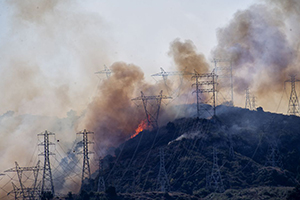
Looking at the way things are in California right now, this may be something we all need to get used to. The rolling blackouts they are having right now are due to a series of errors, some made by the power company and some by the government.

The government blames the utilities for not properly maintaining their lines, while the utility companies are blaming the government for forcing them to invest the money that should have gone into that maintenance, into expensive green energy projects.

With the push for green energy projects across the country, PG&E may not be the only company that is behind on its maintenance. Now that the dam has been opened, we could see forced blackouts anywhere in the country where there is a risk of power lines causing wildfires.

Perhaps you can learn something from my experience. It sure has helped me with my planning since I went through this experience. So, I’ll break down the week here and give you an idea of everything that went wrong.

When the Power Went Out

I first noticed that the power went out when my computer suddenly shut off. This wasn’t the first time that had happened to me, as power outages in the middle of a storm are fairly normal. I figured that the power would come on in a while and in the mean time, I could have a snack and watch the rain.

First Day

Here’s What Happens When You Go Without Power for 7 Days

There was just one thing… the power didn’t come back on. As I sat there for hours, I counted all the work I wasn’t getting done and all the money I wasn’t making.

Meanwhile, since I live in the south, the temperature was rising. It had been 100°F outside before the rain started and it was rapidly heading that way inside. I opened the doors and windows that I could, without rain coming in, but there wasn’t enough airflow to cool the house much.

I guess that wasn’t as bad as being up north in the wintertime. While too much heat can kill you, too much cold is more likely to. People who live in colder climates than me and who don’t have any alternative means of heating their homes, like a wood-burning stove, are really taking a chance with their lives in the case of a major power outage.

Without power, we really didn’t have much light in the house. Most homes don’t have enough windows and mine is no exception. Between the lack of windows and the heavily overcast sky, it was hard to do much of anything.

Fortunately we had a gas stove, so cooking dinner wasn’t much of a problem. We had plenty of food and for the moment, the fridge and freezer were keeping things cold. We just had to make sure we kept the doors closed to keep that cold inside.

Second Day

Had a hard time sleeping that first night, due to all the heat. For that matter, we had a hard time sleeping all week long. If I had been able to string up some hammocks we could have been cooler, but the only place I could do that was in the back yard, and it was still raining.

I work at home, so I obviously couldn’t work. But neither could my wife. The school she worked at didn’t have any power either, so she was stuck at home. The kids loved it, as kids will, seeing it as a vacation from their classroom. But even if the schools had been open, they would have been stuck at home, as our street looked like a lake; some problem with the stormwater drainage.

The big thing that confronted me that morning was the home’s sump. Without electricity, the sump pump wasn’t emptying it out automatically.

Here’s What Happens When You Go Without Power for 7 Days

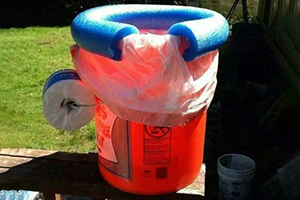
I had to tell the family we were switching over to emergency procedures and they’d have to use a five-gallon bucket toilet we had set up for emergencies. Fortunately, we use greywater recycling, so the water from most of the sinks and tubs went out into the back yard, not into the sewage system.

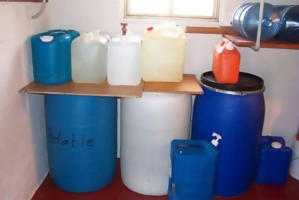
As afternoon rolled around, the water flow from the sink started diminishing and eventually came to a complete stop. We were without water. Fortunately, I had foreseen this and had stockpiled water. My rain barrels were full as well and I had a good water purification system.

Third Day

The rain has finally let up… at least for the most part. We’re still getting some sudden rainfalls, but we’re also getting dry times as well. Maybe our street will finally dry out and I’ll be able to move the cars. But man, the humidity is horrible.

Up till now the food in the refrigerator has been doing good, as the insulation was enough to keep it cold. It also helped that I had the freezer full, so there was a large mass of cold food there to keep it cold. But today’s crunch day for that food. I’m going to have to start doing something with it or it’s all going to spoil. Time to fire up the smoker and smoke what I can. Too bad it’s too cloudy to use the sun’s power to make jerky.

Here’s What Happens When You Go Without Power for 7 Days

Bathing is a challenge now, as we don’t have running water; and with the heat, we all need to bathe. I’ve spent a lot of time in Mexico, so I knew how to handle this. All it takes is a five-gallon bucket and a smaller plastic container, something that holds about two quarts.

To take a bath, you get a couple of gallons of water in your bucket and lock yourself in the bathroom, setting the bucket in the tub. You can wet yourself down by pouring water over yourself with the small container.

Once wet, it’s time to soap and lather. Then use the same container to pour water over yourself to rinse. The water is cold, but you don’t want to use more than you have to anyway. I can actually bathe and wash my hair with less than a gallon.

Of course, there are some family members who might not be all that happy bathing with cold water. I won’t mention any female’s names, but I’m sure you know what I mean. That meant heating up the water in a metal bucket on the barbecue grille. Fortunately, I’ve got a gas grill, in addition to the wood-burning smoker. I always keep extra propane on hand, as part of my survival preparedness.

Fourth Day

By now I’d be worried about my firewood supply if I lived up north. Most people stack their firewood in the open, which means that it would have gotten soaking wet from all that rainfall. In olden times, most people either stacked their wood in a shed or built their homes with wide eaves, so that they could stack the wood up against the house, where the eaves would protect it.

Still working on smoking the meat from the freezer and canning the veggies. That’s a bit challenging on an open fire, but not all that bad. We’re using the gas barbecue grille for that as well, when we’re not using it for cooking. I hope my supply of propane holds out.

Here’s What Happens When You Go Without Power for 7 Days

There’s enough sunlight that I can make jerky from some of the meat, rather than smoking it. I’ve already soaked it in brine, in anticipation of smoking it, so it has salt. That’s not as good for flavor as marinating it, but it will work fine for preserving it.

To make the jerky, I sliced the meat up and hung it over the clothes line. This is somewhat analogous to what the American Indians did, except they used wood racks, instead of a clothes line. Still, it’s the same idea and the meat seems to dry well, as long as the sun stays out.

Neighbors are starting to run out of food and have come knocking. That’s tough. I know many of their kids. Fortunately, we know this isn’t a TEOTWAWKI event, where we know the power won’t be coming back on. So I shared some food with them, giving them rice and beans from my stock, as well as some of the chicken that had thawed out.

I’m concerned about what’s going to happen in a few more days. People have already broken the windows in the local supermarket and raided it for food. What’s going to happen when that food runs out. The average supermarket only has three days worth of food on hand.

Fifth Day

Here’s What Happens When You Go Without Power for 7 Days

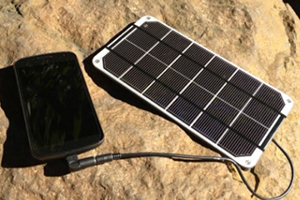
I’ve decided that my plans for alternative power were totally inadequate. The few solar panels I bought have barely been able to keep up with charging phones, flashlight batteries and a few other necessities.

If I had been able to power my fridge, I wouldn’t have had the panic to save my food. If I could have air conditioned at least one room in the house, we could have slept a whole lot better.

It’s more than just keeping cool so that we can sleep better; my wife’s heat intolerant. We normally have to keep her in the air conditioning pretty much all the time, except during our brief winter. Without air running, she’s been unable to do a thing.

I’ve been using evaporative cooling as much as I can to keep her cool, but that’s not enough. There isn’t any ice, or I’d be using that. The best I can do is keep her wet and in the breeze. At least at night it’s a bit cooler and she can move around.

People are starting to talk about organizing the neighborhood so that everyone can eat. I know what that means, it means that they expect me to share what I have. As best I know, there are no other preppers in the neighborhood, so I don’t know where all this food is supposed to come from, unless they are thinking I have enough to feed everyone.

Finally got all the food salvaged. But as much as I care for my fellow man, I didn’t do it for them. Besides, by the time you split up what was in my freezer through the neighborhood, we’ve got enough for one good meal, that’s it.

Sixth Day

Here’s What Happens When You Go Without Power for 7 Days

More people are coming around, asking for food. I don’t know these people, so I’ve been turning them away. Mostly I do that by telling them to go to the FEMA distribution center.

But as far as I know, FEMA isn’t here yet. If they are, it’s probably just to bring red tape. I haven’t seen anyone who has had food that came from FEMA.

Decided to do some scouting around today, so took the car out to see what’s happening. As best as I can tell, there are a few churches and non-profits up and running, trying to help people. That’s it. But I took that information back to my neighborhood and tried to spread it around.

Almost got carjacked while I was out scouting around. There has always been a lot of gang activity in the area, so I guess the gangs are getting active. I must have looked like an inviting target, driving my car down a nearly empty street. Fortunately, I saw them in time and gunned the engine, before they could reach me. A few twists and turns and I lost them. But it was close.

The radio has gone dead; we’re not even getting information that way anymore. Radio stations are supposed to have some sort of emergency power supply and a stock of fuel to run it. So I guess they ran out. We don’t even know if anyone out there is paying attention to what’s happening here, as we aren’t getting any reports back. It sure feels lonely.

Seventh Day

Here’s What Happens When You Go Without Power for 7 Days

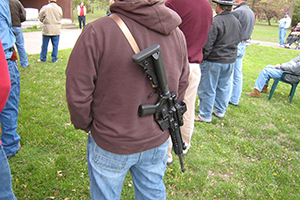
Things are starting to get ugly. People are hungry and so are their kids. I’m starting to see others walking around with guns strapped on. I carry concealed, so I’ve been doing that all along.

But I doubt all those people have a concealed carry license. They’ve just decided to take it on themselves to carry a gun. And I have to say, they don’t all look like nice people.

Several of them got together and came up my walkway, looking like they were planning on taking over. Since I have a four foot tall hedge around my front yard, they were all bunched up, right there on the walkway… right where I wanted them. I stepped out on the balcony, while the family poked their guns out the windows. As I said, they were right where I wanted them… where we had the upper hand.

That was enough to get them to turn back, after shouting a few threats at the house. I’m sure they’ll come back, just as soon as they’re ready.

Later that Day

Thank God, the lights came back on. We have power once again. Things are starting to settle down. Where it was looking like we were going to have High Noon in the streets of our neighborhood just a few hours ago, things look civilized once again. People have put their guns away again. Some food trucks have shown up and I see smiles on faces once more.

So that was my experience. I’m glad it wasn’t any worse. But what about you? Have you lived through something similar? Have you had the lights go out? How did you handle it? How did your neighbors? What did you learn that you were doing wrong?

The Best 7 States to Retire In

As the clock keeps ticking on, I find myself getting closer and closer to retirement age. While the issue of whether or not I ever will fully retire is something yet to be determined. But I’m pretty sure that I will at least slow down and not be working 40 plus hours per week.

Of course, me being me, I’ll never retire from being a survivalist. That’s too much a part of my being now, after 45 years, to give up on. So whatever form my retirement or semi-retirement takes, it’s going to look more like a permanent bug out, than anything else. A very high priority for me will be to go somewhere that I can establish as much of a sustainable, self-sufficient lifestyle as possible.

With that in mind, I’ve started looking around to see what’s available. I’m not talking about specific pieces of property or homes, but rather what parts of the country I would choose as a good place to live out the rest of my days in. I want a combination of comfort and security, hopefully with a reasonable cost of living.

With that in mind, I’ve come up with a few criteria:

  • It must not be an area subject to a lot of natural disasters. This cuts out some of the top retirement spots, like Florida, as well as much of the Eastern Seaboard.
  • I want an area with a fairly low population. If there is ever a TEOTWAWKI event, those who live in high population areas, especially big cities, will probably be the first to die.
  • Sufficient rainfall or access to ground water to be able to grow my own food.
  • Low overall cost of living, so that I don’t have to pay too much for property.
  • A conservative government. With the country becoming more and more divided politically and the progressive states becoming more and more extreme, I’d prefer to avoid having to deal with it.
  • While I don’t want to live in a high population area, I want to be close enough to one, that I can go into town to buy things I need. I don’t mind an hour drive into town on a Saturday, if that day is going to be dedicated to shopping.

Of course, all of those things are relative. Low population in the eastern part of the country is totally different than low population in the Midwest and West. Nevertheless, the idea is to find an area which meets those basic needs as much as possible. Here’s what I’ve come up with:

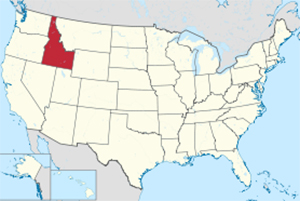
Idaho

The Best 7 States to Retire In

Idaho is actually one of the few states I’ve never visited; but I felt that I had to use it to start this list. In many ways, Idaho is one of the most perfect states for the criteria I have laid out.

The population of the state is fairly low, giving a low cost of living. Yet there is plenty of rainfall, making it an easy state to grow food in. However, I’d avoid the most southern part of the state, because it is drier there.

The one thing that Idaho has going against it is that it is so far north. The growing season in Idaho, as well as some of the other states I have on my list, is pretty short. That means growing in underground greenhouses, probably with geothermal heating to boot. Putting up with the cold will be a challenge; but fortunately I like the cold.

Northwest Wyoming

The Best 7 States to Retire In

I’ve spent a fair amount of time in Wyoming, although I’ve never lived there. More than anything, it’s a ranching state, raising cattle for beef.

As with many other ranching states, like Texas, there really isn’t enough rainfall for growing crops in much of Wyoming.

However, the Northwest part of the state has good rainfall, so it would be good for raising food in. The population is still low there and the cost of living is reasonable.

There is a drawback to this part of the state. That is, this is where Yellowstone National Park is. In other words, the Yellowstone Supervolcano. So if you’re worried about that volcano erupting, you may want to consider somewhere else.

North & South Dakota

The Best 7 States to Retire In

The Dakotas, as they are known, are sparsely populated states, which are mostly agricultural, with some ranching thrown in.

There’s more rainfall in the eastern part of the states, but there are more rivers in the western part. So it seems that whatever part of the Dakotas I would retire in would have good water sources to meet my needs.

These states are pretty conservative, with a fairly low cost of living. But just like Idaho, they are far to the north, so we’re talking short growing seasons and cold winters. While those can be dealt with, it will be hard to live there without proper preparation.

Southeast Texas

The Best 7 States to Retire In

I currently live in Southeast Texas, so I know this area the best of any of them. While I’m looking at other places to retire, I may just end up staying where I am; or at least staying in this area.

Once you get out of the bigger cities, the population is reasonable. Cost of living outside the cities is good too. In fact, the Rio Grande River, where I used to live, is one of the cheapest places to live in the country.

Being so far south, Texas has little problem with winter. There has only been one Christmas snowfall in history, in the Rio Grande Valley. The trick here is growing things. You can grow year-round, but have to be careful about the hot summers. I’ve lost more than one plant to nothing more than heat.

Water can be a real issue in much of Texas. I won’t even consider the western part of the state for that reason. There’s lots of cheap land out there, but almost no water to speak of. On the other hand, the gulf coast of Texas has a number of small rivers leading into it. The trick then, is finding a piece of property which allows access to those rivers, either on the surface or through a well. Rainfall alone isn’t enough to count on.

Arkansas

The Best 7 States to Retire In

For some reason, people make a lot of fun of Arkansas, but the state has a lot going for it. Most of the state is hilly, with plenty of rivers and good rainfall.

It’s also one of the cheaper places in the country to live. For anyone on a retirement income, that’s an important consideration.

Another nice thing about Arkansas is the climate. It’s not so far south that heat is going to be a major issue, but yet is far enough south to avoid the harsh winters of the north. Although the overall population density of the state is higher than anything we’ve looked at so far, there are still plenty of places with tiny towns and sparse populations.

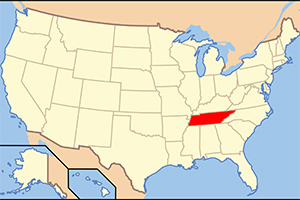
Tennessee

The Best 7 States to Retire In

Tennessee probably has the highest population density overall of any state that I’ve mentioned here in this list. However, that population is mostly limited to the major cities.

It is a mountainous state, with the mountains being sparsely populated. There are many places you can go, where you can still find wide-open land. Cost of living varies throughout the state, so you’ll have to be selective.

As a growing state, Tennessee is a mixed blessing. One of the things that stands out is that the state is extremely green. That’s because of the high rainfall. But remember, that rain is falling on mountainous terrain, which is difficult to farm. But then, we’re not talking about actual farming, but rather growing our own food. So with that in mind, Tennessee is a winner.

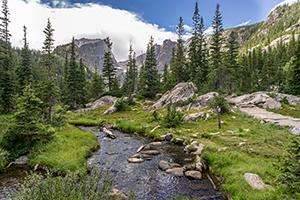
Colorado Rockies

The Best 7 States to Retire In

I grew up in Colorado and spent much time in the Rockies. That probably has a lot to do with why I’ve included it in this list. If I could pick one place where I’d like to retire, it would be up in those mountains.

There’s just one problem with that; Colorado is the most expensive place I’ve picked on this list. Mountain property is expensive, even if though is sparsely populated.

Colorado may not be a good place for growing food… at least not in the mountains. The eastern part of the state is all farmlands. But it’s a great place for hunting; as are pretty much all the other states I’ve mentioned here. So, even if it isn’t perfect, the state has a lot going for it.

So, Where Would I Pick?

I’ll have to admit, the jury is still out on my own decision. As of this time, my top picks are either to stay here in Texas or move to Arkansas. I’d like to move up north to the Dakotas, or even to Idaho, but the cold weather has me concerned. While I can handle the cold well, my wife can’t.

The other problem with that cold weather is growing enough food. I wrote recently about a retired man who is growing citrus in Nebraska, using underground greenhouses and geothermal heating. That’s what it would take to grow enough food to live. While I’m sure I could do it, I’m not sure I’ve got enough money to invest in building those greenhouse and getting them running.

Part of my decision is also one of proximity. If I buy some property now and start preparing for my retirement, that property can also be my bug out retreat. I’ve got my eye on a couple of small towns here in Texas, which I think would be very nice to retire in. They meet all my criteria, are close enough to be good for bugging out to, while still being far enough away that I won’t have to worry about them being affected by anything that hits my home city.

10 Urban Survival Skills to Develop Before SHTF: Without Using These Skills, Your Survival Won’t Just be Less Likely, It May be Impossible

Disaster preparedness and survival can basically be divided into two separate categories: rural and urban.  Let’s focus on the latter of those two.  Urban survival will arguably be more difficult than rural, and thus, the urban survival skills that you develop and apply will be a little different than the ones you would for rural areas.

Urban areas have many disadvantages when it comes to survival. Most notably, you lack access to natural resources, the area is very densely populated and crowded, and finding yourself in the middle of or close to rioting will be likely one disaster hits.  But through it all, you can and will survive. Honestly, it all comes down to the specific skills that you adopt. It is those skills that we are going to talk about in this article.

Here are the top urban survival skills you need to have:

Move Fast and Bug Out Before It’s Too Late

One of the pitfalls to urban survival is the fact that roads and routes are going to become clogged with dense traffic, if not closed down completely by the authorities.  In other words, bugging out may be impossible if you do so when it’s too late, or after the disaster has started.

This is why, if you do decide to bug out, you need to do so BEFORE the disaster strikes if possible. Granted, you may not be able to predict the disaster incoming, but regardless you should still move as fast as possible. But for certain disasters, such as hurricanes, you should be able to predict them ahead of time based on the warning signs and take action accordingly.

To bug out, you’ll need three possible routes to take to evacuate, a bug out vehicle loaded with supplies, and a bug out location.  Take note that bugging out is not always the safest thing to do. It leaves you vulnerable on the road and means you will be abandoning your home, property, possessions, and survival stockpile.

But at the same time, death may be certain if you opt to stay. Or, you may be forced to evacuate by the authorities.  Regardless, there are some instances where bugging out will simply be the only thing you can do to survive. And if you do decide to bug out, you better be ready to go with a bug out bag and bug out vehicle, and you better hit the open roads before they get clogged up and/or shut down.

Blend In

Your survival in urban areas won’t be so dependent on your defensive skills so much as it will be on your ability to blend in with the crowds.  You need to become what is called a ‘grey man’ or ‘grey woman,’depending on your gender. The ‘grey man/grey woman’ is not someone who necessarily wears the color grey, but rather someone who can blend in with a crowd and not attract suspicion.

In other words, you can walk into a crowd and then walk out of it, and nobody should be able to recall that you were there.

To become a grey man/grey woman, you will need to do the following things:

  • Wear clothes that are similar to the rest of the crowd
  • Avoid camo or tactical gear
  • Always move in the direction of the crowd and NEVER against it
  • Never make eye contact with anybody, but don’t keep your head low either (it attracts the suspicion of law enforcement)
  • Conceal any weapons and valuables you have on you
  • Do not wear a backpack, and if you do have a backpack, keep it over both shoulders and do not open it
  • Exit the crowd at the nearest available opportunity

Practice Situational Awareness

Situational awareness is something that you can easily practice in your everyday life. To put it simply, it means that you are aware of your environment. Situational awareness is one of the most important urban survival skills that you can possibly have.

To practice and develop your situational awareness skills, try practicing the following the next time you walk into a restaurant:

  • Don’t daydream or become lost in thought
  • Don’t check your phone
  • Listen to the crowd around you, to the normal sounds of the environment, and to people talking
  • Now look for any unusual sounds that stand out, such as running or shouting
  • When you hear a door swing, look up to see who walked in or left
  • Notice any smells in the air
  • Check outside the windows for any unusual activity out there

Situational awareness is not hard, it just requires practice to develop.

Get Ready For Poor Sanitation Standards

Something that many people don’t think about when preparing for disaster is how bad sanitation standards are going to get.  The urban landscape as we already know it isn’t exactly the cleanest environment, to begin with. But it’s not going to get any better during a disaster, and on the contrary, it’s only going to get worst.

For one thing, the trash will no longer get picked up. If there’s no more running water, people will no longer be able to use toilets. Mosquitoes and flies will become an ominous presence, the air will become rancid, and diseases and infections will spread like crazy. You’ll also have to deal with things such as asbestos, concrete dust, smoke, and broken glass.

Practicing good personal hygiene and being ready for the poor sanitation is easily one of the very best urban survival skills that you can have.  As part of your stockpile, include eye protection, hearing protection, hand protection, and respiratory protection. Having a medical mask with sterile gloves is a must.

You’ll also need to stock up on things such as hand soap, baking soda, hand sanitizer, and toothpaste. Make it a habit to use hand sanitizer or warm water with soap regularly.  Dispose of human waste in black garbage bags, and then bury those bags at least four feet into the ground and at least two hundred feet away from where you are living and any natural water sources.

Learn How To Repurpose Everyday Items

One of the most important urban survival skills of all time is resourcefulness. Your house is filled with items that can easily be used for survival-related purposes. You just have to use your head!

This is why you should invest some of your time into learning how to take everyday items and repurpose them for survival purposes.

Learning about these DIY tips, hacks, and projects will most certainly be to your benefit in a disaster SHTF scenario. You cannot afford to let anything go to waste.

Have An Emergency Fund

You would be wise to have an emergency fund of cash in your house at all times. This way, when disaster strikes, you can quickly go to the grocery or sporting goods stores and begin buying more things you need before they become looted.

At a minimum, you would want to have at least $100 in emergency cash in your house, but having $1,000 or $2,000 would be even better.

Beef Up Your House

As was discussed earlier, bugging out is usually more dangerous than bugging in. The only two exceptions are if you are forced to bug out or if you are certain that death is extremely likely if you stay.  Otherwise, you will need to bug in so you don’t abandon your stockpile and risk yourselves out on the open road.

And part of bugging in will mean making your house.  Guess what: the average American house is extremely easy to break into and not easy to defend.  Fortunately, you can change that.

You change that by replacing your glass windows with acrylic glass and your wooden outside doors with metal doors with heavy duty hinges. You can also invest in sandbags that you can set up after the disaster at your doors and windows, as well as in fencing and barbed wire to construct a perimeter around your house.

These aren’t radical defensive measures. Once the stores are all looted, the raiders and marauders will turn to the suburban homes next. And if they have any reason to suspect that your home contains valuable items, any reason at all, THEY WILL ATTACK.

Finding Water

One of your biggest challenge with urban survival will be finding water. You don’t have access to natural sources such as lakes and streams, and the only natural water that you really do have access to is rainwater (and you don’t get to choose when it rains).

Therefore, you will need to do two things: stockpile plenty of water, and know where you can find more.

In a major city, the best places to find water to drink will be the following:

  • Fountains
  • Ponds
  • Pools
  • Water Dispensers In Offices
  • Grocery Stores and Restaurants (if they haven’t been looted yet)

You will also need to know how to disinfect the water when you find it to make it safe to drink. Do you really want to drink the water directly from a fountain or a pond?  The easiest way to disinfect water will be to boil it for at least fifteen minutes. You can also use bleach. Eight drops of bleach and leaving it alone for thirty minutes will make one gallon of water safe to drink.

Also, remember to fill up every sink and bathtub in your house with water right after the disaster, since it may quit flowing.

Escape A Riot

No one wants to find themselves in the middle of a riot, but if you do, you better know how to escape.  Escaping a riot will cause you to put your grey man/grey woman skills and your situational awareness skills to the ultimate test.

You need to be fully aware of what is happening around you and blend in with the crowd if you want to make your escape. You’ll need to move with the flow of the crowd rather than against it, avoid eye contact, and try to keep yourself down. Law enforcement officers and the rioters/protestors around you will be an equal threat.

Move with the flow of the crowd and at an angle until you find an opportunity to escape. DO NOT run in a riot unless if the crowd is running to, and keep any weapons and valuables hidden.

Develop Your Medical Skills

Finally, another of the most important urban survival skills to have will be to develop your medical skills.  After any disaster, you will no longer have access to doctors or nurses or health professionals. Instead, you’re on your own.

Stock up on medicines and first aid items and take classes on how to treat basic wounds such as burns, open wounds, cuts, sprains, and broken bones. Having first aid guides on hand will also be very wise.

Conclusion

To conclude, these are the top urban survival skills that you will need to develop. Without using these skills, your survival won’t just be less likely, it may be impossible.

But by using these skills, you can take comfort in knowing that you will be far, far more likely to survive than the vast majority of people who are struggling to make it around you.

50 Tips From The Great Depression: The Great Depression Was One Of The Most Traumatic Events In American History

The Great Depression was one of the most traumatic events in American history. Following the stock market crash of October 1929, industrial production crashed, construction shrank to a fraction of what it had been and millions of people found themselves on short hours or without work. Until the economy picked up again in 1935 life was a real struggle for the average American.

To get through the economic collapse and the grinding poverty that followed it, people had to adapt and learn new skills – or re-learn old ones. For that reason, many people who lived through it looked back with a sense of, maybe not exactly nostalgia, but pride in how they managed to cope.

A lot of the things people did during the Great Depression still make a lot of sense today. With our own economy looking vulnerable, and the risk of a new collapse always lurking just around the corner, would we cope as well as our grandparents and great-grandparents did? Here are some of the ways they took care of themselves and those around them through some of the hardest times the USA has ever seen.

During a SHTF situation, pain could become an annoyance for some, but unbearable for others.

If doctors are scarce and medicine becomes even scarcer, this one little weed, found all over North America and similar to morphine, could be a saving grace.

Work

  1. Entire families moved in search of work. By staying together, they could support each other while not missing employment opportunities.
  2. Migrant farm work was a life-saver for many. Different crops needed harvesting at different times, so it was – and still is – possible to find several months’ work.
  3. People were willing to try any job. They didn’t ask “Do you have any work for a…?” But, “Do you have any work?” They were flexible because they had to be.
  4. Everyone in a family was prepared to earn money. Kids could make a valuable contribution too. Families worked for a common goal – earning enough to survive.
  5. Almost anything had some value. Driftwood collected from the beach could be split and sold as firewood. Most any kind of metal can be collected and sold as scrap.
  6. Government “New Deal” employment programs provided jobs and taught skills. They also created a lot of new infrastructure, including many roads – and the Hoover Dam.
  7. There was no such thing as retirement age. Anyone who could work did When money is tight, everyone needs to contribute whatever they can earn.
  8. A lot of jobs became part-time as employers tried to save money. Many people worked several part-time jobs, often putting in very long days.
  9. Many of the jobless spent all day going round employers, looking for any work they could find. Even an hour or two’s labor would make a difference.
  10. People created jobs for themselves. Some women would wake early to cook dozens of meals, then sell them outside factories and construction sites.
  11. Flexibility helped. Someone who knew a little about several trades had a better chance of finding work than someone who was an expert at one.
  12. Farmers would take on workers they didn’t have the money to hire, and pay them in produce instead.

Housing

  1. Many people lost their homes. Often, extended families – grandparents, aunts, uncles – ended up living in one house.
  2. Others were forced to live in their car or truck, buying cheap meals and washing at public gyms or swimming pools.
  3. The homeless often lived in tents – or shack or lean-tos they’d built themselves. Having a place to live, even a basic one, was better than sleeping rough.
  4. To save energy, walls were insulated with anything that would help keep heat in through the winter – mud, newspapers or tar paper. It all helped cut fuel costs.
  5. Homes were kept cooler than normal. Wearing more clothes indoors reduced the need to burn fuel, and that left more money for food.
  6. In summer people hung wet sheets over doorways and windows. As the water evaporated it drew in heat from the air, cooling the home slightly.
  7. Refinancing a home was one way to keep up the payments – and it could also free up cash for living expenses.

Money

  1. Life insurance policies were a safety net for those who had them. If money ran out the policy could be cashed in, helping keep the family afloat for a few more months.
  2. Many people rarely saw cash; barter economies quickly grew up. Small jobs might be paid with milk, fresh vegetables or fruit, especially in rural areas.
  3. With millions out of work, begging was common – and seen as desperation, not antisocial behavior. Outside restaurant was a favorite spot; only the rich could afford to eat there.
  4. People respected banks back then, but when banks started closing the trust soon faded. Nobody knew when their own might shut, so the wise kept cash at home.
  5. Many stores gave credit and let regular payments slide. They just kept track of what was owed and hoped it would be paid someday. Many stores went bankrupt because of this.

Food

  1. Having a vegetable plot made a huge difference. In 1929, 20% of Americans still lived on farms; most of the rest had big gardens, and the skills to grow their own food.
  2. Hunting and fishing were major sources of protein. Meat was expensive, but if you could harvest your own you had a better diet. Surplus was great for barter, too.
  3. Foraging was also popular. Nuts, berries, and wild greens helped put meals on the table, and kids and older people could forage as well as anyone.
  4. In the country, canning was an essential skill. A well-stocked pantry was both a source of pride and a life-saving reserve for the winter.
  5. People learned that you can eat almost anything if you’re hungry enough. Tumbleweed was used as fodder for cattle; then people found it could be eaten. Young plants are best.
  6. No part of an animal was wasted. Offal was fried, boiled or turned into ground meat. Even chicken feet could be boiled to add some taste to a broth.
  7. A little bit of bacon would add flavor to almost anything. The hard rinds or dry ends of a piece of bacon could be boiled – and butchers sold them for pennies.
  8. Communities divided vacant lots and parks into family vegetable plots. Housewives and kids spent much of their time growing extra food.
  9. To keep some variety in their diets, people traded the produce they grew with friends and neighbors.
  10. Meals were cooked from scratch – there were hardly any prepared foods in the shops. Recipes were usually simpler than today’s. That mean they were cheaper to make.
  11. Stores closed on Sundays, so fresh produce that would go bad by Monday would be sold off cheap late on Saturday. Shopping at that time was great for bargains.
  12. Livestock was a great asset. If you had a cow or even a few chickens, you were sitting on a wealth creator. Milk and eggs helped your own diet, and could be bartered.
  13. Meat and dairy products were expensive; bread, potatoes, and noodles were cheap and filling. People bulked out meals with carbohydrates. Lard or bacon fat added flavor.
  14. Soup was a popular meal. It filled you up, and the main ingredient was water. Almost anything could be made into soup – beans, potatoes, even stale bread.

Clothes

  1. Shoes were mended over and over. Holes in the sole were patched with leather from scrap belts or purses. Complete soles were cut from old tires.
  2. People learned to make and repair clothes. Any fabric could be used. Rural families made clothes from feed sacks. One woman turned a casket’s fabric lining into kids’ dresses.
  3. Fashion was canceled. People preferred to get more use out their old clothes and spend their money on food.
  4. When kids outgrew their clothes they were handed down to younger siblings or given to people who could use them.
  5. Really old clothes were cut up for rags to get some more use out of them. Why spend money on dusters and cleaning cloths when rags worked just as well?

Preparedness Hacks: Once a nuke is heading your way, you might think that there isn’t much left to do, but you would be wrong!

Because we will show you America’s natural nuclear bunkers that are also EMP proof. When the sirens start wailing, all you need to do is pick the closest one to your home, where you can take cover before it hits.

Society and Attitudes

  1. Nobody felt entitled to be supported. People knew that they had to work as hard as they could to survive; if they didn’t, they could expect nothing.
  2. On the other hand, people were willing to help those who were trying but struggling. They knew they could be the ones needing help next, so most gave all they could spare.
  3. Communities became closer, giving mutual support and organizing donations of food or cash to those who needed them the most.
  4. Many towns set up welfare loan schemes. Money could be loaned to people who needed it, but it was expected to be paid back. Detailed records were kept of what was owed.
  5. Willingness to work hard, and to do what you could to support the community, was more highly valued than individualism and independence.
  6. People learned to keep a positive outlook on life. They learned that they could lose a surprising amount – almost everything – and keep going.
  7. Positivity was essential. There was no point complaining how bad things were – they were just as bad for almost everyone. What mattered was trying to make them better.

Pemmican Invented By The Native Americans It Stored For 50 Years

What Is Pemmican?

The word pemmican is derived from the word pimî, meaning “fat or grease.” Pemmican itself is a concentrated combination of meat and fat that was created by Native Americans as a nutritious food that was used to boost energy.

Traditional pemmican was made by cutting meat (typically whatever was available) into thin slices and then drying it. The dried meat was pulverized into small pieces and then mixed with fat. Occasionally, dried fruits were included in the mixture.

The ratio of dried meat to fat is 1:1, and it takes about 5 pounds of raw meat to make 1 pound of pemmican. Due to this, pemmican is incredibly filling and will supply the consumer with energy for several hours.

Additionally, due to its preparation process and storage method, pemmican can last for many years and in many cases, decades.

During a SHTF situation, pain could become an annoyance for some, but unbearable for others.

If doctors are scarce and medicine becomes even scarcer, this one little weed, found all over North America and similar to morphine, could be a saving grace.

Pemmican as a Survival Food

Its humble beginnings are a large part of the reason that pemmican is such a great survival food. It was used first by Native Americans and later by European fur traders, as well as explorers in the Arctic and Antarctic regions. When cold food storage was nonexistent and easy-to-carry, easy-to-store food was all the rage, pemmican was in its heyday.

Pemmican Nutrition

The meat that pemmican was and is made out of varies. Buffalo, moose, elk, or beef are the most common. The nutritional information will depend largely on who makes the pemmican and how it is made, including what meat and ratio of meat to fat is used. Additionally, adding dried fruit, nuts, honey, or other additives will alter the nutritional information.

The bottom line is that pemmican is incredibly rich in protein, and the rendered fat that is used in preparation will supply a great deal of calories in a small amount of food, which is excellent for survivalists, preppers, and those in emergency situations.

The average piece of pemmican (about 62 grams) has around 300 calories, including 11-15 grams of protein. It will give the consumer a great boost of energy without a sugar crash or unquenchable thirst that may come from other survival foods.

Why Is Pemmican a Great Survival Food?

Pemmican has been used for centuries as a survival food in both comfortable and extreme conditions, for both those who desperately require it and those who simply enjoy consuming it. It is an excellent survival food for many reasons:

  • Very Few Ingredients – At its simplest, pemmican is meat and fat.
  • Easy to Make – Pemmican was made back in the day with no electric appliances and with the most basic tools. Anyone with a little time and the right ingredients can make pemmican without a problem.
  • Full of Calories – Sustainability is key when you’re in a survival situation, and pemmican answers the call of high caloric foods. At around 300 calories per serving, pemmican can be used as snacks, meals, and complete sustenance in any and all situations.
  • Lightweight and Portable – Easily packed into pockets, pouches of bags, and the like, pemmican is lightweight enough for children to carry and portable enough to fit just about anywhere. You could make large batches of pemmican and store them in various places, or, if you’re seriously lacking in space, you could make smaller batches regularly since it is so simple to make.

Pemmican Shelf Life

One of the main reasons that pemmican is an excellent survival food is its shelf life. Pemmican doesn’t require any special equipment to make or store, and it can simply be stored in a plastic bag or other airtight container for several years. Off the Grid News names Pemmican as the number 2 food that can be stored for 100 years. They list its shelf life as “indefinite.”

Various sources note that the shelf life of pemmican is largely determined by how it is prepared and how it is stored.

If you add extras into your pemmican recipe (honey, peanut butter, dried fruit, etc.), the shelf life will be shortened. If the environment in which it is stored is very humid, the shelf life will also be reduced. If the fat is not rendered properly before making the pemmican, the shelf life will decrease. If you have the option of storing pemmican in the fridge or freezer, that will help extend the shelf life. In general, pemmican will last a solid ten years, if not fifty or more.

Commercial Versions of Pemmican

Even though Pemmican is very easy to make, you also have the option of buying commercial versions of pemmican to keep in food storage or to utilize on hikes or survival adventures. Several companies sell commercial versions of pemmican in various forms, including bars, sticks, and in pails.

History of Pemmican

The Métis Tribe of Canada is credited with inventing pemmican. They used mostly buffalo in preparing their pemmican, and their travelers and trappers used it as a regular source of food and nutrition. As more people discovered the genius behind pemmican, it became a valuable commodity. Tribes and individuals began trading pemmican, and a war was actually started over it!

It the late 1800s and early 1900s, pemmican also became a major food source for those exploring the Arctic and Antarctic. Scottish explorer Alexander Mackenzie traveled west across Canada to the Pacific Ocean in 1793 and relied heavily on pemmican throughout his entire journey.

Robert Peary, a North Pole explorer, went on three long journeys in the late 1800s and early 1900s on which he used pemmican as a source of food for himself, his men, and his dogs. He said of pemmican, “It is an absolute sine qua non,” meaning that it is indispensable and essential.

British troops who fought in the Second Boer War received pemmican as part of their rations and could supposedly go 36 hours without additional sustenance on just 4 ounces of pemmican.

Preparedness Hacks: Once a nuke is heading your way, you might think that there isn’t much left to do, but you would be wrong!

Because we will show you America’s natural nuclear bunkers that are also EMP proof. When the sirens start wailing, all you need to do is pick the closest one to your home, where you can take cover before it hits.

Native American’s Pemmican

The earliest instances of pemmican are found in the history of the Native North Americans. These groups generally used buffalo to create pemmican, cutting the meat into thin strips and drying it for days (or sometimes weeks) over a fire until it became incredibly hard and would crack when bent.

The Native Americans then would place the dried meat on a hide and pounded with stones or mallets until it became almost a powder-like consistency.

The fat from the buffalo was melted down over fire, added to the “beat meat,” and placed in a rawhide bag whose seams had been greased and sealed. This rawhide bag would be moved and turned regularly to encourage the fat to infiltrate all of the meat, and the newly made pemmican would last for years in this type of storage.

It is interesting to note that one 90 pound bag of pemmican was made from one or two entire buffalo!

Métis Tribe’s Pemmican Trading

The Métis people initially developed as a mixed race created by the indigenous people of North America and British or French colonial-era settlers. As they established themselves as a people group, they began also establishing themselves economically, primarily by beginning the pemmican trade throughout modern-day Canada.

Traders from the Métis tribe would kill buffalo, convert it into pemmican, and use it as tradeable goods all across the area at several important fur posts.

Pemmican Recipes

As previously stated, pemmican recipes are as simple as you want them to be. A 1:1 ratio of meat to fat will create a basic pemmican that will last for decades. But in case you’re looking for something more adventurous or want the break down on how to make pemmican, see below for our favorite pemmican recipes.

How to Make Pemmican

Standard Meat + Fat Recipe

Start with the best quality meat you can find. Beef, buffalo, elk, or deer will do. Grass-fed is preferable. Cut off the fat, and then cut the meat into thin pieces and dry it in a dehydrator, in the sun, or in the oven on the lowest temperature possible. When fully dried, the meat should be hard and brittle and should crack when you bend it.

Next, you need to pulverize the meat. A food processor, blender, or mallet should do. Make sure it is in tiny pieces and almost a powder-like consistency.

Next, you should render the fat. Cut the fat into small pieces and cook it in a crock pot, on the stovetop, or in the oven on low. Cook until you are left with mostly clear liquid with just small bits of fat remaining. Strain the chunks out.

Next, mix the liquid fat and ground meat together until it is saturated and can be formed together without falling apart. Remember you are going for about a 1:1 ratio.

Finally, you should form the mixture into balls, blocks, or any other shape you would like. Store in an airtight container in cool, dry place.

pemmican

Additives Recipe

You can use the standard meat and fat recipe and make some simple replacements or additives to spice up the taste.

  • Consider substituting the fat for honey, peanut butter, or a combination of both.
  • Dry some fruit (blueberries, choke berries, pitless cherries, etc.) and grind them up and add them into the recipe.
  • Start with already made beef jerky to speed up the process. Try various flavors of jerky to change the taste of the final product.

Vegetarian Recipe

While traditional pemmican is obviously made with meat, there are a few vegetarian variations available. This particular recipe uses tofu-jerky in place of meat.

Grind together 2 cups of dates, 4 cups of powdered tofu-jerky, 2 cups of unsalted peanuts, and 2 cups of raisins. Then slowly mix honey in, a little bit at a time, making sure it is fully incorporated each time. Add only enough honey to make the mixture stick together without crumbling, and then form into balls, squares, or whatever shape you like.

9 Street Survival Skills Necessary To Navigate a City During a Disaster: When A Disaster Hits, 99% Of People Are Completely Unprepared

Major cities may still only take up a small portion of the land mass in the United States, but they are nevertheless home to over 80% of the population. With this being the case, the odds of being caught in the concrete jungle when disaster strikes are quite high.

Of course, the survival skills necessary to navigate a city during a disaster – whether it’s a major disaster such as a foreign attack or a personal disaster such as a robbery – are quite different from the skills many preppers may be accustomed to.

If you would like to ensure that you can take whatever the concrete jungle has to throw at you, here are nine skills you need to have.

1. Lockpicking

The trademark of big cities is lots of buildings, and lots of buildings means lots of locks. In normal circumstances, these locks may be an afterthought. However, in a disaster scenario, being able to get past them could mean the difference between life and death.

Brush up on your lockpicking skills and invest in a good, portable lockpicking kit. In the right situation, these things could prove incredibly valuable. To learn more, check out these 3 ways to open locked doors.

2. Blending In

How do you hide in a place where there are thousands if not millions of eyes everywhere you turn? The answer is that you hide in plain sight. The art of blending in is one that is really underappreciated, however, in an urban area it is often the best way to ensure you are not the target of whatever catastrophe is taking place.

Martial law officials, foreign invaders, desperate scavengers, and more are all more likely to target someone who catches their attention for any reason at all. In these scenarios, it’s best to be just another indistinguishable face in the crowd.

3. Self-Defense

If you don’t intend to carry a weapon on you during your visit to the city, it’s a great idea to have a few self-defense skills that you can rely on. Of course, in the vein of blending in, physical confrontations should be avoided if at all possible.

If you do have to defend yourself, though – for whatever reason – you need to make sure that you have what it takes to come out on top.

4. Scavenging

One great thing about urban areas is that there is no shortage of materials and supplies available if you know where to look and you have an eye for making use of the unordinary. Scavenging is more of a mindset than it is a skill that is taught.

You just need to keep your eyes open and develop a bit of creative talent for repurposing what you find into something useful. Here are some places to scavenge for supplies after the SHTF.

5. Situational Awareness

When you’re surrounded by people, there’s often a lot to take in and process. This is especially true in hectic situations such as after a disaster. With that said, developing an acute situational awareness and the ability to quickly take in everything going on around you is one of the best ways to ensure your survival in an urban area.

This starts with really tuning in your focus to your surroundings and trusting your instincts above all else. In many cases, this type of situational awareness can help you escape dangerous situations before they ever develop.

6. Navigation

Too many people are completely reliant on their GPS when it comes to navigating an urban area. However, if those GPSs ever stop working, there are going to be a lot of people who are lost and in trouble.

To avoid being one of them, take the time to learn the area you are visiting and get comfortable with the idea of navigating it without any technological aid.

Buy a map that you can bring with you and memorize a few escape routes just in case you lose it. If things go south, these navigation skills could be the difference between getting out quickly and getting caught wandering around a maze of concrete and steel.

7. Escaping a Riot

The middle of a major riot in an urban area is not a place you want to be under any circumstance. Just think back to the LA riots for an example of how dangerous these riots can become and how quickly they can spiral out of control.

Of course, escaping a riot isn’t nearly as simple as walking away. If it were, there would be far fewer innocent bystanders who died in the chaos.

Before you visit a major city, take the time to research the best way to escape a riot in case you are caught up in one. There’s a lot of great information out there about this designed to help you get out of the middle of a riot as quickly as possible.

8. Communication Skills

Urban areas mean lots of people, and knowing how to deal with people when necessary is an important survival skill. If you can develop a knack for communicating with people, talking them down from violent situations, and reading their intentions based on what they do and say, you’ll have a much easier time navigating the often complex and sometimes dangerous human interactions that take place after a disaster has struck.

9. Driving

If you think driving through a big city under normal circumstances is a nightmare, imagine what it would be like to drive through one during or immediately after a major disaster. Of course, many times driving anywhere in these scenarios won’t be a possibility; in a situation where everyone is trying to get out, traffic jams can quickly shut the entire road system in the city down.

However, if you get out early enough or if there’s been time for the dust to settle, you may be able to effectively escape the city via your vehicle – assuming of course that you have the driving skills necessary to navigate a major city during heavy traffic congestion and highly stressful situations.

It’s certainly no easy feat but, like anything else, it can be learned. By the way, make sure you have a good vehicle.

I Lived In A Post-SHTF World For 3 Years, And This Is What I Learned

As a professional physician having always lived in a big city, I never imagined that at some point in my life, the social and economic situation of my country, Venezuela, would lead me to learn and use survival skills that I had read about but never even thought of applying.

Without being in a declared war or a formal armed conflict, we have experienced different situations of chaos for about 10 years in Venezuela. But in the last three years, the country has become a true SHTF scenario, where the only way to move forward is to learn how to survive.

During a SHTF situation, pain could become an annoyance for some, but unbearable for others.

If doctors are scarce and medicine becomes even scarcer, this one little weed, found all over North America and similar to morphine, could be a saving grace.

I feel that the lack of food, clean water, and, at the lowest point of the situation, electricity, has given me new skills that have undoubtedly prepared me for any catastrophic situation.

After three years in this contingency, I can now share every situation that took me by surprise and the techniques I had to learn by doing.

There is no such thing as “too much” stored water

I Lived In A Post-SHTF World For 3 Years And This Is What I Learned

Water is one of the most important resources we need for life. Unlike other supplies, it is not interchangeable with another product, and to be ingested, it must go through a purification process.

I have never been prepared for a water shortage before. Now I know it is important to keep water stored safely in closed containers. If water is not drinkable, it must be purified before ingesting it since contaminated water can cause serious gastrointestinal diseases.

Water is not just for drinking but is used in many other activities, such as cooking and cleaning, so I had to learn some purification techniques that can be done at home.

One of the most popular techniques to decontaminate water is to boil it for three minutes. Purification tablets are also very useful, not that expensive, and easy to use.

Adding five drops of chlorine per liter of water as an emergency measure is another way to clean the stored water.

Grains are my friends

To eat properly, it is necessary to consume proteins, fats, and carbohydrates.

The moment I realized that animal protein was scarce—in addition to the fact that the electricity problems spoiled it—I had to investigate the nutritional content of other foods in order to keep myself well-fed.

Lentils are grains that are easy to store, non-perishable, and high in protein. Together with a cereal like rice, they make a complete meal that keeps us well-nourished and in good health.

Let there be light: candles, matches, flashlights, and batteries

I Lived In A Post-SHTF World For 3 Years And This Is What I Learned

After spending more than four hours without power, I began to worry. I had some candles saved, but I did not know where they could be. I also had a couple of flashlights, but I had removed the batteries to prevent them from being sulfated.

Candles and matches must be in several easily accessible places. Likewise, the batteries should be in the same place where the flashlights are kept, and we must be sure that they have a charge.

During this year, the country suffered the most serious electrical crisis. In several areas, there were blackouts of up to five days.

After a couple of days without electricity, the candles will not be enough, so learning to make oil lamps becomes a vital skill in this situation.

The lack of electricity can lead to a state of anguish that grows with the passage of time. It is important to do everything possible to minimize that effect.

Preparedness Hacks: Once a nuke is heading your way, you might think that there isn’t much left to do, but you would be wrong!

Because we will show you America’s natural nuclear bunkers that are also EMP proof. When the sirens start wailing, all you need to do is pick the closest one to your home, where you can take cover before it hits.

Be prepared with medicines, but it’s better to learn from nature

Due to my profession, I am always very attentive about keeping basic medications, such as anti-inflammatories, analgesics, and antibiotics, in the cabinet.

When I had to live in an SHTF situation, my medical supplies became insufficient, and I couldn’t find any in the pharmacies or they were too expensive. So I had to learn a little more about natural medicine, its uses, and its benefits.

I must say that this is one of the most important things I learned during that time.

Many anti-inflammatory drugs and synthetic analgesics damage the stomach mucosa as a side effect. In situations of stress, there is a large production of acids in the stomach, so using drugs that further damage this organ is not the best idea.

Roots such as ginger and turmeric are excellent anti-inflammatories. They are easy to get and easy to store. Likewise, garlic is a potent analgesic.

In the case of presenting wounds or cuts and not having antibiotic ointments, honey, ginger, and cloves are foods that have scientifically proven antibiotic properties.

Chamomile and lavender are natural relaxants and help fight stress and insomnia.

No matter how big the supply of medicines we have, it will always be more economical, favorable, and easy to store the natural product, with equal and, in some cases, greater effects.

Cash

Banks have made life easier for us with the use of debit and credit cards. However, there are situations in which having a lot of money in the bank does not help much, and I learned it the hard way.

When there is an electrical fault, despite the fact that light and other electrical services have been restored already, the digital communication of the points of purchase become so affected that it is impossible to buy anything in this way.

For this reason, I understood that it is always important to keep some amount of cash for this type of contingency.

Take advantage of any time you get to replace supplies

I Lived In A Post-SHTF World For 3 Years And This Is What I Learned

Although during those years I did not have to be locked in a bunker without being able to leave, the feeling of confinement was quite similar. When, in spite of having the money, you can’t find what you need to eat or, despite having a private vehicle, you can’t move for lack of gasoline, the situation becomes desperate.I understood that in those moments in which there was an opportunity to replace the supplies I had at home, especially water and non-perishable food, I had to do it.

The situation in my country has improved. Although still not at the best economic and social level, and with many problems of scarcity and lack of some supplies, society has been regularized.

However, I appreciate the years that taught me these valuable lessons that I still apply.

The most important thing I learned was to be prepared for when an SHTF situation strikes again.

This guide below can help you in a survival situation