40 Bizarre Home Remedies Our Grandparents Taught Us That Actually Work

These days, it has become all too common for people to reach for a pill bottle or call the doctor anytime something goes wrong, or even for the smallest scrape. The simple, wacky home remedies of our grandparents, those weird concoctions formed from everyday household goods, are often mocked by today’s medical establishment. But surprisingly, the truth is that our grandparents actually knew a lot more about the world than we give them credit for, and many of these old-fashioned folk remedies actually work. Not just that, but many of them work better than the synthetic pharmaceuticals that so many people stuff their bodies with today.

Preparedness Hacks: Once a nuke is heading your way, you might think that there isn’t much left to do, but you would be wrong!

Because we will show you America’s natural nuclear bunkers that are also EMP proof. When the sirens start wailing, all you need to do is pick the closest one to your home, where you can take cover before it hits.

Here are 40 weird, wacky, but shockingly effective home remedies that still work today, and would make grandma proud.

1. Use Garlic and Olive Oil for Athlete’s Foot

Everyone knows about the many health benefits of garlic, but did you know that it can fix your athlete’s foot problem in a jiffy? Just mince some garlic cloves, mix them with natural olive oil, and then use bit of cotton to rub this mixture onto the affected area between the toes.

2. Potato Slices for Headaches

Headaches and/or migraines can ruin even the best day, but there is a weird natural solution that works: potato slices. Just cut a few slices from a raw potato, soak them in a very thin cloth, and apply them to your forehead or directly to the temples.

3. Ease Cuticle Infections with Vinegar

Done too much manicuring? Cuticles all torn up and infected? Make a glass of vinegar and warm water, then put your fingers in it for about 15 minutes. Repeat this procedure once a day or so until the infection fades away.

4. Use Vinegar to Cure Swimmer’s Ear

There’s nothing that ruins a good day at the beach like coming home with swimmer’s ear. But when your grandparents told you to drop some vinegar in your ears, they weren’t kidding. The acidic properties of vinegar can kill off that awful swimmer’s ear bacteria, leaving you feeling like yourself again. Just take out some white vinegar, dilute it with distilled water, and put three drops into the problematic ear, three times a day, until the problem fades.

5. Olive Oil for Eczema

Feeling itchy already? Eczema can make anyone grow crazy. But olive oil, which is full of antioxidants and often used as an ingredient in professional skin creams, isn’t just good for athlete’s foot: it can ease the symptoms of eczema as well. Simply rub some olive oil onto the eczema-affected areas of your skin, and it should help quite a bit. Here are 23 survival uses for honey that you didn’t knowabout.

6. Fix Hiccups with a Spoonful of Sugar

Yes, seriously. The legends are true. Don’t get too overzealous with it, because diabetes isn’t something to mess around with, but this old-fashioned trick will halt the hiccups in their tracks. The reason why is because the behavior we call “hiccups” are actually just spasms of your diaphragm, so having a spoon of dry sugar will throw off the nerve muscles and cure their agitation.

7. Get rid of warts with duct tape

It sounds crazy, but it works. Instead of going to all the work to get your warts frozen off, just covered them with duct tape. After cleaning a wart off, just apply a strip of the tape to the affected area, and then keep it there for three days. After that, remove, rub the wart area with a pumice stone, and then apply new tape.  Continue this process every three days until the wart goes the way of the dinosaurs.

8. Treat Acne with Coconut Oil

Coconut oil might seem like the cool new kid on the block, but it’s actually an old-timer that’s been around since the 1800s. In addition to many other uses, coconut oil is an effective treatment for acne, since its antibiotic properties prevent further breakouts. Just apply coconut oil to the skin, maybe mixing it with a little raw honey.

9. Have a Little Yogurt for That Bad Breath

Bad breath, officially known as halitosis, is a terrible thing to live with. But the cure for it is right there in your fridge: yogurt. At least two servings a day of this probiotic wonder, ideally a plain brand with no sugar, changes the landscape of your tongue so that it won’t breed any more the bad bacteria that produces that distinctive stink.

New Survival Energy Product Makes Every Window A Powerful Solar Charger

10. Deal with bug bites by using toothpaste

Well, not technically the toothpaste itself, but rather, the peppermint oil inside the toothpaste: if you have the pure peppermint oil itself, that’s even more effective. Either way, applying peppermint oil to a bug bite—even if it’s just through dabbing on a little toothpaste – will immediately reduce the raw itchiness we all know too well.

11. Use Licorice to Eliminate Corns

Yes, licorice, everyone’s least favorite candy. But the one thing worse than licorice is having a corn on your toe. If you soak some licorice with oil, apply it all to the affected area, then wrap it tight under plastic wrap (and maybe a sock) for 6-8 hours—for instance, overnight—this will cause the licorice to soften the corn.

12. Ease Your Hangover with Apple Cider Vinegar

Drinking might be fun, but hangovers aren’t fun for anyone. But when you used to see grandpa downing a shot of apple cider vinegar after a night with his buddies, he knew what he was doing. Apple cider vinegar balances the pH levels in your stomach after a little too much alcohol throws it off. Just gulp down a teaspoon of this vinegar, or a small shot-glass. If you can’t take it straight, dilute it with some water. 

During a SHTF situation, pain could become an annoyance for some, but unbearable for others.

If doctors are scarce and medicine becomes even scarcer, this one little weed, found all over North America and similar to morphine, could be a saving grace.

13. Constipation with beets

The human body needs to eliminate waste, and when it gets all bunched up, major discomfort ensues. One home solution you may have heard from your grandparents was to eat some fresh-steamed beets, then drink the water they were steamed in. This should clear out your colon like magic. Just be warned that when you do go, your stools or urine may be bright red: nothing to worry about, just the natural dye of the beets.

14. Vodka for stinky feet

Having trouble with foot odor? Get some vodka. No, we’re not suggesting that you get drunk and avoid the problem. The key is that alcoholic is an antiseptic, which means it eliminates the fungus that causes foot odor, and dries your feet out. Just soak a thin cloth in some vodka, swipe your foot down, and feel the smell go away.

15. Mix Cumin, Honey, Cinnamon and Ginger for Diarrhea

A bad case of the runs can keep you up all night. Instead of taking drugs that will simply constipate you, thereby causing more stomach pains, a better natural remedy is to combine a teaspoon of cumin, and the same portion of honey, cinnamon, and ginger into a paste that you can drink.

16. Lemons for an Earache

Pain in the ears can be soothed by the application of freshly-squeezed lemons. Just squeeze a lemon onto a Q-tip, and delicately rub this just inside the ear to restore pH balance.

17. Stinging Nettle for Hair Loss

You can’t force hair to regrow once it’s already gone, but you can slow down the rate of hair loss through the use of stinging nettle, an herb often used for tea. Drinking stinging nettle tea a few times a day should help, and you can also massage stinging nettle itself in your scalp.

18. Cure Nausea with Olives

Whether it’s from motion sickness or an unpleasant sight, the familiar (but unpleasant) side effects associated with nausea can be cured by eating olives, due to the tannin inside them.

19. Potatoes for Spider Bites

If a spider managed to sink its teeth into you, ease the itching and swelling by shredding a potato, wrapping the pieces in cloth, and applying to the bite area. Note, this is a treatment for symptoms of a regular, non-deadly bite: if the bite comes from a more deadly spider, such as a black widow, seek immediate medical attention.

20. Raw Honey for Chapped Lips

Don’t ever waste your money on Chapstick again. Much has been said about the healing properties of raw, organic honey, but if your lips are chapped, you can simply apply honey to the affected area—rub it on, just as you would Chapstick—and it will do the job nicely, and taste better to boot. Just make sure the honey is both raw and organic.

21. Garlic for Allergies

For a more natural antihistamine when your nasal allergies act up, eat lots of garlic, whether it’s straight bulbs or slices on crackers. Garlic contains a lot of the antioxidant quercetin, which eases allergy symptoms. If there’s no garlic in the pantry, onions work as well.

22. Buttermilk and Ginger for Diarrhea

If you don’t have cumin on hand, another weird-but-effective home remedy for diarrhea is to mix half of a teaspoon of dry ginger into a cup of buttermilk, and drink it.

23. Treat Styes with Potatoes

If you haven’t noticed, potatoes are a lot more powerful than people realize. If you get a stye on your eye, just grate a potato, wrap the gratings in a cloth, and press to the affected area to ease inflammation.

24. Avoid Mosquitoes with Garlic

If you don’t want to get eaten alive with mosquitoes, enjoy a garlic-rich diet, because mosquitoes are totally repelled by garlic. For further protection, rub garlic oil on your skin.

25. Yams for Menopause

To up your dosage of vitamin A, lower your cholesterol, and add more antioxidants to your diet, start incorporating yams—real yams, not sweet potatoes—into your regular daily diet.

26. Apples Help the Bowels

Apples are high in pectin, a naturally occurring fiber that both bulks up and softens stools. This means that apples are an effective treatment for both diarrhea andconstipation. Just make sure to eat the skin too, which contains valuable ursolic acid.

27. Banana Peel for Poison Ivy

While bananas won’t prevent you from getting the allergic rash that 85% of the population contracts from touching poison ivy, they can help. Rub the inside of a banana peel against poison ivy rash for relief from the pain and itchiness.

28. Honey for Acid Reflux

As soon as the symptoms of acid reflux begin affecting you, swallow three spoons of honey, and it should help you achieve better digestion.

29. Blackstrap molasses for Constipation

If you suffer from frequent constipation, try injecting a little blackstrap molasses into your diet, whether as a coffee additive or an extra ingredient in cookies. This molasses should ease constipation, but be careful not to over-indulge, because too much molasses will increase constipation.

30. Pine Syrup for Sore Throats

You know what helps a sore throat? Pine needles. Yes, really. To make pine syrup, collect a cup of freshly-washed pine needles, and thoroughly blend them. Meanwhile, boil water, corn syrup, and a bit of salt, mix this with the needles, then steep for a few hours. Keep this syrup in the refrigerator for at least a month, then keep it on hand forever to treat sore throats.

31. DIY Cough Syrup

If you want to make a good cough syrup from the ingredients of your pantry, mix together ¼ teaspoon ground ginger, 1 tablespoon of apple cider vinegar, ¼ teaspoon cayenne pepper, 1 tablespoon of honey, and a few spoons of water. Mix it all together, and have 1-3 teaspoons to ease coughing symptoms.

32. Garlic for toothache

Nothing will keep you up at night like a bad cavity or an exposed nerve. While garlic won’t cure the underlying issue, chewing on garlic at night, particularly chewing whole cloves in the affected area, will ease pain tremendously.

33. Put on Wet Socks to Treat a Cold

Hear us out for a minute. To treat the symptoms of a common cold, begin by soaking your feet in hot water for at least three minutes – or just taking a bath. Meanwhile, soak a pair of your socks in ice water. Put the socks on your feet, cover them up with a pair of wool socks, and then go to bed. As you sleep with these horribly cold feet, the blood vessels will constrict, pushing nutrients up into your body to push out the infection.

34. Fix Dry Skin

To soften dry skin, break down two bananas and mix them with a bit of honey. Apply this paste to the skin, let it sit for about 20 minutes, and then wash it off, and your skin should feel softer.

35. Teabags for Burns

Get a cool-temperature, wet teabag, of any tea, and place it directly on the burned area. This won’t fix the burn, but it will relieve the pain almost immediately.

36. Oil Pulling

This might have become a trend recently, but it’s actually an old practice that our grandparents learned from their grandparents. Basically, enhance your dental routine by taking a spoonful of coconut oil – though other oils work as well – and swishing it in your mouth for five minutes a day, specifically pulling it through the teeth, and then spit it out into the toilet. The oil will “pull” all of the toxins out of the mouth, allowing you to spit them out in one go. When used in addition to standard brushing and flossing, oil pulling will help digestion, reduce gingivitis, prevent receding gums, get rid of bad breath, strengthen teeth, and much, much more.

37. Help Eczema with an Oatmeal Bath

If the horrendous itchiness of eczema still has you down, you can hugely reduce the itchiness by following your grandmother’s old advice taking a bath of oatmeal. There’s a reason that so many lotions and pharmaceutical eczema treatments contain oatmeal as an ingredient: it really works! For a home solution, just make a bath for yourself, fill it with colloidal oatmeal, and then soak for a while.

38. Stop Your Snoring

Is your snoring annoying your wife or husband? Try drinking a glass of warm milk with a teaspoon of turmeric powder added to it before bed, and hear your partner’s relief.

39. Basil Leaves and Ginger for Fever

Fevers are the body’s way of pushing out an infection, but when it’s time to cut back on the heat, here’s a home solution. Crush some ginger and basil leaves together into  paste, then add a teaspoon of honey. Squeeze out the liquid, and then take a drink ever four hours or so.

40. Soak Golden Raisins in Gin for Arthritis

If there’s one thing that afflicted so many of our grandparents, it was the terrible swelling pains of arthritis. But they had a home remedy that still works today. Get some golden raisins, soak them in gin, and let it sit overnight until all of the gin has been soaked up. After this is done, eat about ten raisins a day. While this won’t fix the underlying problems of arthritis, it will greatly ease the symptoms.

24 Lost Survival Tips from 100 Years Ago – with Illustrations

When we’ll have no running water, no hyperactive emergency services, no electricity… we are going to turn back to what people did 100 years ago. Here you’ll find some “little” survival tricks popular in the early 1900’s and (some of them) useful even today.

100 years ago Gallaher Ltd printed a short “How-To” series, with clever hints for emergency situations. The cards were distributed with packs of cigarettes. All the pictures bellow are part of the George Arents Collection, The New York Public Library. Please enjoy the article.

During a SHTF situation, pain could become an annoyance for some, but unbearable for others.

If doctors are scarce and medicine becomes even scarcer, this one little weed, found all over North America and similar to morphine, could be a saving grace.

1. How to Extract a Splinter

6

Take a wide mouthed bottle and fill it with hot water nearly to the brim. Now press the affected hand or foot tightly against the mouth of the bottle.

This will then cause a suction and pull the flesh down. The suction plus the steam will help pull out the splinter.


2. How to Make an Emergency Water Filter

A handy and efficient water filter can be made out of an ordinary bucket.

First make a hole at the bottom of the bucket.

Instructions: “The water percolates through the layers of fine and coarse sand, and clean picked gravel and stones, with which the pail is filled, filtering through to the bottom in a clear state.”

One of the best layers you should add to this bucket is one made of charcoal.


3. How to Engrave on a Knife

2

This method was widely used during the Middle Ages and all the engravings in swords or armors. Here are some armors engraved using this traditional way.

Instructions: “The steel to be worked upon should be covered completely with a coating of beeswax. The lettering or design to be engraved can then be drawn with the point of a clean quill pen. This lays bare the metal. A strong solution of sulphate of iron should then be repeatedly poured over the exposed surface for about ten minutes. The more prolonged the action of the sulphate the deeper will the steel be engraved.”


4. How to Make a Fire Extinguisher

Although is good to know, probably none of us will make these old fashion extinguishers since is much easier to buy one. And because the new ones are more effective (I guess) and definitely safer.

Dissolve one pound of salt and half a pound of salt-ammoniac into two quarts of water. Then bottle the liquid in thin glass bottles holding about a quart each.

Should a fire break out, dash one or more bottles into the flames, and any serious outbreak will probably be averted.


5. How to Purify Water in a Cistern

1

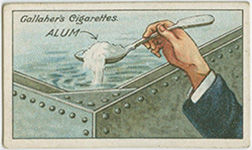
Easy! Stir in a tablespoon of powdered alum.

After 30 minutes the alum cause the particles and the bacteria to bound together and cause them to drop to the bottom leaving a clear purified water.

A tablespoon or half an ounce of alum will purify from sixteen to twenty gallons of water.


6. How to Treat an Animal Bite

First tight a ligature round the limb above the wound. This will stop a little bit the bleeding and it will give you a better visibility to evaluate the wound.

The next advice given back then was: “Thoroughly cleanse the wound and if there is any suspicion of madness in the attacking animal the place should be well sucked and cauterized with luna caustic, or a white hot iron, after cutting away the surrounding flesh with a sharp clean knife.”

The advice was really good for that time, when there were no vaccines. And even today doctors recommend thoroughly washing the wound as soon as possible with soap and water for approximately five minutes (to reduce the number of rabies particles). Povidone iodine or alcohol is then recommended to reduce the virus further. When SHTF and we’ll no longer be able to access vaccines this is your only option available.

(Here are 23 survival uses for honey that you didn’t know about.)


7. How to Detect Escaping Gas

Gas leaks can be caused by faulty appliances, or by those that have been incorrectly installed or poorly maintained.

Some of us don’t even use gas anymore (like me) or some may have gas detectors, but either way, after an earthquake, or a hurricane or a tornado there will always be gas leaks.

This 100 years old method is risk free and quite reliable.

“Paint strong soap solution on the suspected length of pipe and the gas will then cause bubbles at the escaping point, which can be dealt with at once.”


8. How to Light a Match in the Wind

10

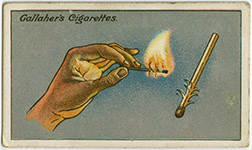
Instructions: “The familiar difficulty of lighting a match in the wind can be to a great extent overcome if thin shavings are first cut on the match towards its striking end, as shown in the picture.

On lighting the match, the curled strips catch fire at once; the flame is stronger and has a better chance.”

Preparedness Hacks: Once a nuke is heading your way, you might think that there isn’t much left to do, but you would be wrong!

Because we will show you America’s natural nuclear bunkers that are also EMP proof. When the sirens start wailing, all you need to do is pick the closest one to your home, where you can take cover before it hits.


9. How to Find a Lost Trail

If a trail is lost, there isn’t much to do but to search for it.

A very good way to do that is to mark the last foot-print or sign you notice as the center of the circle and go round it at a distance of anything from 30 to 100 yards.

The trail should be discovered somewhere crossing the circular track you are following.


10. How to Cure Chilblains

“A simple and homely remedy, which immediately relieves the irritation and pain caused by chilblains, is salt and fresh apple juice.

The affected parts are rubbed gently with a slice of apple dipped in common salt. A good juicy apple should be used.”


11. How to Secure Loose Hammers and Axe Heads

12

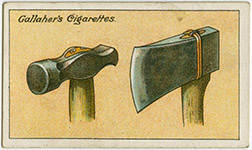
After wedging the handle of hammer as tight as possible, drill two holes at the end of wood and drive in two large screws.

An axe-head can be secured by boring a hole through the haft just bellow head and wiring through the hole and over top.

The wire should be twisted and staple driven into a hold position.


12. How to Tell the Points of the Compass with a Watch

compass

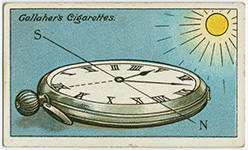
Take the watch of your hand. Point the hour hand at the sun and then lay a piece of wire or a blade of grass crosswise between the hour hand and the figure twelve.

The end of the wire between the twelve and the hour hand points south.


13. A Simple Cure for Catarrh

13

Treatment for catarrh may not be necessary because it often disappears within a few days, after your body has fought off the infection. But in some cases it doesn’t go away and it can be a health problem, especially for the underfed. In food crisis when people are poorly fed, these low-risk diseases kill more people than starvation itself.

Instructions: “Take a pinch of ordinary table salt up the nostrils, just as you would a pinch of snuff.

Then gargle the mouth and throat with warm water, being careful not to swallow it.

Do this each morning before breakfast.”


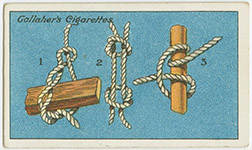
14. Three Useful Knots

15

No. 1 is the Timber Hitch, which is especially useful in lifting all kinds of heavy work, such as huge beams.

No. 2, the Fisherman’s Knot, shows a good method of joining two ropes tightly together.

No. 3 is the famous Clove Hitch, which becomes tighter the harder it is pulled.


15. How to Bandage a Foot

A traditional method used to make the inflammation heal faster (especially for sprain ankles) was to place a leaf of cabbage between the bandage and the ankle.

In the picture: “Rest injured foot on operator’s knee on a clear towel.

Commence bandaging in manner shown by the lower diagram, the bandage being bound over and round the back of foot in spiral fashion, and eventually fixed by means of a safety pin, just beneath ankle, as shown in upper illustration.”

(Here are 21 wild edibles you can find in urban areas.)


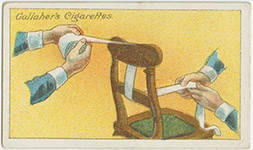
16. How to Make Roller Bandages

17

Instructions: “A roller bandage must be rolled evenly and tightly, so in the absence of a machine a chair will serve this purpose.

The picture illustrates procedure. Whilst one person carefully rolls another pulls tight opposite end of the bandage, and at the same time sees that no folds or creases are allowed to form.”


17. How to Fell a Tree

Having decided which side you wish the tree to fall, cut alternatively a downward and inward cut as you can see in the picture – in this order.

When about half through, proceed to cut the other side a few inches higher, and finally pull tree down with the help of a rope.

In a survival situation (and not only) you can use trees for their nutritious sap.


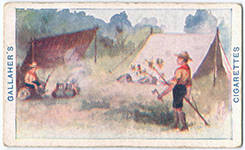
18. How to Build a Simple Shelter

22

Instructions: “A simple shelter can be made by driving two forked sticks into the ground and connecting these by a pole resting on them.

Branches are then laid resting on the pole. The right angle should be around 45 degrees, and the screen fitted up with smaller branches, ferns, etc.”


19. How to Make a Water Fountain for Chickens

Instructions: “A simple water fountain, ensuring a supply of fresh water for the chickens, can be made from a pint wine bottle, supported by wire loops to a wooden upright as shown.

The bottle is inverted over an earthenware pan, with the mouth of the bottle about half an inch above the bottom of pan.”

I see that now there are even some “rodent resistant chicken feeders” which can be used together with the water fountain if you leave for 2-3 days.


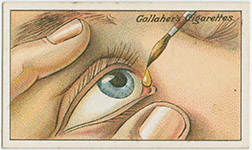
20. How to Remove Foreign Particles from the Eye

7

Few things are more irritating than having something in the eye.

“Drop sweet or castor oil into the corner of the eye. Picture shows a ready method of allowing drop of oil to fall into eye from the poim of a paint brush.”

If the particle is of mortar or lime, bathe eye with weak vinegar and water.


21. How to Make a Chair to Cross a Stream

If your group has one or more people who cannot (maybe there are wounded) or don’t know how to swim, you might want to find a simple solution to help him cross a river. If there are nearby trees – and usually near rivers there are – all you need is a rope.

Fasten a strong rope to a tree and let somebody (who can swim) go across the stream and fasten the other end to a tree on an opposite bank.

Use another rope to improvise a chair fastening it into a running loop. “By means of a light rope fastened to the middle of (the) chair and held by someone at each end, those unable to swim are safely passed over.”

These Solar Backup Generators Deliver 4 Times More Power Than Other Models!


22. Keeping Plants Watered While Away on Holiday

There are many simple and cheap DIY tricks to keep your green friends properly hydrated so that you don’t return home to a house full of wilting and yellowing plants.

A traditional method is to fill a large bucket with water, and place it a little above the level of the plants.

You can group round or near as many plants as you want. Place one end of a strand of wool in the bucket and the other one to the plant.

You can place as many yarns as you want.


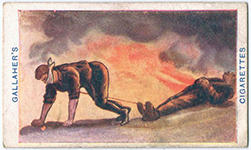
23. Rescue from Fire

24

If it is necessary to enter a burning house in a search of unconscious persons, or to save a family member, first place a wet bandage over your nose and mouth and crawl in on all fours. You do this because the only Oxigen you may find is on close to the floor. (and the visibility is better)

Place a rope around his ankles. The other end of the rope around your chest or shoulders.

Then turn your back on him and drag him out. (you’re going on all fours with rope underneath)


24. How to Preserve Eggs

14

Preserve only eggs that are newly laid. Bury them in a box of salt.

This traditional way of keeping eggs has been almost forgotten. The eggs last about an year when they are totally buried in the salt. No air whatever must be allowed to get at the shells.

This way you’ll have eggs and salt for survival.


25. How to Treat Sprains

Elevate the injured joint and wrap in cloths wrung out in cold water. The picture shows how to keep the cloths constantly wet without having to change them.

Place a jug of water higher than the injured limb and a strip of linen with one end in the jug and the other end resting upon the wrapping of sprained joint.

The water will pass from the jug to compress keeping it constantly wet and cold.

The SHTF we all prep for is what folks 150 years ago called daily life. A hundred years ago people knew how to do a lot of things – that we now take for granted. Learning how to do stuff on your own is one of the most important things that one can do to prepare… And in time of crisis you need to be able to support and sustain your family without much outside aid.

Experts predict that an EMP strike that wipes out electricity across the nation would ultimately lead to the demise of up to 90% of the population. However, this figure begs an important question: if we were able to live thousands of years without even the concept of electricity, why would we suddenly all die without it?

The Four States In America To Live Off The Grid

I grew up in upstate New York. The beautiful rolling hills, the Great Lakes. The lovely farm country. I would never go back if you paid me millions of dollars. Never.

But for the better part of a decade I have resided well south of the Mason-Dixon line. In fact, when I spoke to a relative a short time ago from New York State, they were shocked I didn’t sound like a Yankee, or even speak like one. “You’ve gone native,” they told me. Which is well and good in my book.

New York is about as liberal/progressive of a state as you can get. It’s a state that does not honor life, the sanctity of marriage or gun rights. It taxes its residents to death, does not value homeschoolers and has no more respect for Almighty God than does Richard Dawkins. Since I have left, the New York government has only worsened.

During a SHTF situation, pain could become an annoyance for some, but unbearable for others.

If doctors are scarce and medicine becomes even scarcer, this one little weed, found all over North America and similar to morphine, could be a saving grace.

For many of us who homestead and farm on a small scale, we also raise families, own firearms, go to church and desire a quiet life lived in peace. Sadly judging by the moral and political climate in some places in North America, we often have to leave the place we call home in order to find these things. I believe there are still good places out there to put down roots and farm and raise your children, while other places in the USA have gone quite authoritarian.

(Here are 21 wild edibles you can find in urban areas.)

Here are three areas in the United States for those seeking fair land prices, less government involvement, a religious friendly atmosphere, low taxes, and a place friendly toward gun owners.

South

The land of cotton has changed much in the past half century, but the area is well-known as a bastion of conservative and Christian values in the USA. The land is good for agriculture and there are many homesteaders and small-time farmers who have flocked to this region over the past two to three decades from all over the USA and Canada.

My pick for the southeast:

The Best States In America To Live Off The Grid

Tennessee. The state’s motto of “Agriculture and Commerce” speaks of the beautiful and lush farmlands — and low taxes. There is no state income tax in Tennessee. Gun freedoms are very good, and in fact after a recent shooting, Tennessee’s lieutenant governor urged people to go and get their handgun carry permits. No such thing as an “assault weapons ban” or magazine restrictions exist in the Volunteer State. Land prices are expensive toward the Blue Ridge Mountains, but Middle and West Tennessee land prices are affordable. Homeschooling conditions are great for families.

Experts predict that an EMP strike that wipes out electricity across the nation would ultimately lead to the demise of up to 90% of the population. However, this figure begs an important question: if we were able to live thousands of years without even the concept of electricity, why would we suddenly all die without it?

Southwest

Texas. Don’t mess with the Lone Star State. A conservative government, coupled with excellent gun laws, makes Texas one of the top places to live for the small farmer or homesteader. While not as fertile as some states, ranching is big business in Texas. A farm on the Edwards Plateau will provide your family with water from the aquifer with the same name. In the more fertile east, row crop farming as well as vegetable growing does reasonably well. (Here are 23 survival uses for honey that you didn’t know about.)

With the end of the recent drought, Texas received more rainwater this year than it had in seven years. Beware of buying land near the Mexican-US border and stay away from the more progressive cities like Austin or Dallas. Most Texans value liberty and independence, a great thing for the homesteader or farmer.

West

The Best States In America To Live Off The Grid

Idaho and Wyoming. Both of these states tie for the best places to live out west. Excellent gun laws, conservative government, a fierce independent spirit, and excellent farm country make these Rocky Mountain states ideal for the homesteader/farmer. Rich soil is available, and land prices are cheap. If you want to be away from people, this is the perfect place for you. You want to hunt and fish? This is the ideal location for the sportsman, with teeming populations of deer, elk, pronghorn and even bison. Idaho is the more temperate state, whereas Wyoming is known for its brutally cold winters.

These Solar Backup Generators Deliver 4 Times More Power Than Other Models!

Northeast

New Hampshire. The last bastion of any freedom in the Northeast is the Granite State, but even this state is slipping slowly toward the liberalism that has transformed the Northeast. If you must live in the North, New Hampshire or perhaps the north woods of Maine are really the only two viable options I see

Preparedness Hacks: Once a nuke is heading your way, you might think that there isn’t much left to do, but you would be wrong!

Because we will show you America’s natural nuclear bunkers that are also EMP proof. When the sirens start wailing, all you need to do is pick the closest one to your home, where you can take cover before it hits.

I Don’t Think Cities Will be Completely Devoid Of People In A SHTF Event. I Think Some Will Find A Way to Survive As Humans Have for A Long Time: Is Urban Survival Possible?

There is a mantra within the hallowed halls of prepper knowledge, lore and opinion that goes something like this. The only way to survive TEOTWAWKI is to find a hidden retreat far away from any city of significant size and live there as self-sustainably as possible year round. This idea of the survival retreat has been around for years and it is actually a lifestyle I aspire to for myself and my family. I dream of a fortified home in the woods, streams rolling through my mountain location, solar arrays, livestock in fences, wild game aplenty and wood burning stove goodness all around me. There is one major problem with this mantra though and that is the prospect of moving everything we have and living in a cabin in the woods is nearly impossible for the large majority of us.

If you accept the argument that the hinter boonies are your best chance of survival, then the flip-side of the mantra and conventional wisdom is that everyone living in or near the cities will die. It can give you the idea that you are doomed unless you are living in Northern Idaho, chopping wood for your stove and tending to your garden every day of your life. Is that the only choice we have? Does ultimate survival come down to either living in a small handful of states or you are screwed – no matter what? Is Urban Survival an oxymoron? If you aren’t one of the lucky ones who lives 2 hours away from the nearest Walmart are you doomed to die a horrible death? The real question for the majority of preppers is this; is Urban Survival possible?

The problem with surviving in urban environments

I will readily concede that you have problems living in urban environments that will make survival tougher. Larger cities have a higher population of people living in closer confines. This makes any available resources like food and fuel deplete much faster in times of crisis just because there is greater demand for these resources. Sheer numbers overwhelm the system more quickly and the panic associated with a larger mass of people spreads faster, it is more chaotic and violent. It would be like a swarm of locusts.

Urban environments are a larger risk for terrorist attacks because of the higher concentration of people and media attention. If you blow up a few buildings in New York you will cause a much bigger stir (and kill more people most likely) than blowing up the same number of buildings in Steamboat Springs CO. It is the same with virus or disease in that it spreads much faster in higher concentrations of people. Larger cities pose a larger risk to a numerically higher number of lives so risk to your life is higher.

Additionally, urban environments for the most part have limited natural resources unless you consider buildings, parking lots and concrete or asphalt natural resources. Sure, there are trees in cities, even New York has Central Park, but can you imagine how long it would take for Central Park to have every single one of its trees chopped down if some catastrophe happened and people needed wood fires to keep their families alive? Some major cities are built along rivers, but the water is usually so polluted you wouldn’t want to bathe in it much less try to eat anything that lived in there. Along with that lack of natural resources, there is not an abundance of good soil for growing food, at least not in quantities sufficient to support the populations of those cities.

I am not saying that you have a better chance for survival in cities, but I think we should be looking for options in every prepping scenario.

Are there any advantages to urban environments?

Yes, there are definite problems with urban survival chances, but do cities offer any advantages at all? I think you could find some benefits if you know what you are looking for. For starters, cities offer much more secure buildings than rural environments. Large concrete buildings are much better at stopping bullets than the walls of any suburban home. I think cities would offer you a greater supply of materials to use in a worst case scenario as well. If things got so bad you had to outfit your vehicle, Ala Mad Max, all of those spikes and metal would be much easier to find in cities.

Scrap metal, fencing, chains, wires and building materials as well as spare auto parts (batteries and tires) would be much easier scavenged in a city. Try building a fence out of trees or a coconut battery… Yes, this is a worst case scenario but I wanted to at least discuss some of the potential upsides as opposed to simply saying if you live in the cities you will die. Cities offer a lot of advantages in the form of security and observation simply because you have tall, semi-hardened structures. You can position look outs on 4 buildings a few blocks apart and using simple FRS radios, command a huge area.

What do you need for urban survival?

So now we have discussed some of the drawbacks and possible resources you could take advantage of, what is really needed for urban survival? The simple fact is that you need the same things for survival in the cities as you do in the suburbs. The difference is finding some opportunities you might be able to use to your advantage if you find yourself stuck in the city after a disaster.

Food

Food is a constant survival need and I recommend stocking up as much food that you normally eat as possible and augment that with some amounts of long-term storable food like freeze-dried food or MRE’s. What will you do when your food supplies are gone? You will need to do what the people in the burbs are doing and that is bust up some ground and get your food growing as soon as possible. As a backup I recommend having a supply of Heirloom seeds with which to do this, but starting now will give you the best chance of long-term urban survival. That is assuming your city wasn’t nuked of course.

RoofTopGarden

Food co-ops are a great idea, but you will have to rely on yourself for food in a survival situation. Roof gardens would be one way to grow vegetables. Could this feed a whole building? I don’t know but it is an option you have in the city that could allow for food production within the safety of your higher vantage point. Another option that the city affords is a high number of homes in a relatively small area. Each of these homes may have food or supplies after a collapse (assuming of course nobody is living in there) that could be available for scavenging. Scavenging is a polarizing subject I understand, but would be a possibility in a worst case scenario.

Water

Rainwater collection might be a little harder in the city as most buildings have flat roofs that house equipment, but if you have a flat surface that collects water that can be diverted into tanks, it should work the same as anywhere else. Another aspect of city living is that almost every building has water sprinkler systems and these can hold many thousands of gallons of water that should be safe for drinking or can be filtered with a good gravity filter. The trick would be to find the main drain valve which is commonly found in a stairwell on the same floor as the fire sprinkler heads that it supplies. The water may be draining outside so don’t turn that knob unless you know where the water will be coming out. Optionally, some buildings have water tanks right on the roof.

Fire hydrants also are a good source for water and if you find a low hydrant (lower elevation) you may be able to get millions of gallons from that source alone.

Shelter

This to me seems to be one of the benefits of urban environments that of course is weighed against the risks. There should be an abundance of shelter options for you but safety will be an issue here. In a TEOTWAWKI scenario, many people will leave, many could die. There should be available shelter that you can find. I would try to get up as high as possible and work on fortifying my entryway so that I could really make it difficult for anyone to get in. I would look for warehouses with heavy metal doors before shops with glass windows, but you may have to look at several places before you find a suitable location.

It aint pretty, but it could keep you alive.

Shelter in this regard is primarily going to be focused with keeping you out of the elements initially. For something more permanent, I would be looking to live with a larger group of people for common defense and shared work duties. Could these be the people currently living in your building? Could you control access to your building now or after some fairly simple fortifications?

Security

Safety of the people in your group will be extremely important and this will rely on having observation at all times, a good communication system and a plan to deter threats. Solar panels situated on the roof of buildings could keep your power supply from being noticed (unless there is someone in a higher building) from the ground and reduce the risk of theft.

Solar panels mounted to the roof will reduce risk of detection or theft.

Access control to stairwells could prevent attackers from sneaking up unannounced. Barricades could be easily constructed from old furniture or equipment, even sections of fence. The height of the buildings will give you vantage points and could allow you to funnel any traffic into one location that could be manned by a couple of people with radio access to a spotter on the roof.

Would all of this be possible? It would depend on the disaster, where you are, what you have with you and a lot of other things. Would urban survival be more difficult? Maybe, but I don’t think it is hopeless. Unless there was some serious issue driving you out of the city, it may be safer to stay while everyone leaves and tries to survive on the road or in the woods.

I don’t think cities will be completely devoid of people in a SHTF event. I think some will find a way to survive as humans have for a long time.

Top 10 Friendliest and Top 10 Worst States for Gun Owners

While U.S. citizens enjoy their natural right to keep and bear arms far more than the overwhelming majority of the rest of the world’s residents in other countries, this does not mean that the laws and regulations restricting those rights are applied evenly or consistently throughout the 50 states. This is a fact that any interested and active gun owner will no doubt attest to.

While gun ownership is permissible in every state, some states are far, far more friendly and permissible than others. Some states also show more firearm-friendly culture among the citizenry, while others see it relegated to a comparative oddity.

These different legal landscapes and cultures are of some importance to travelers as well as anyone contemplating a move or relocation who has a choice of where or whither.closeVolume 0% 

In this article, I will be presenting my list of the 10 best states for gun ownership, as well as the 10 worst. Some of you readers firmly nestled into a state which stands as a beacon of 2nd Amendment freedom may enjoy seeing how your state compares to others like it, while those of you sadly trapped deep in “enemy” territory may have some planning to do as you lament your current predicament.

The Criteria

The criteria used for judging each state for placement on my list is simple, and relatively unscientific. I consider each state fares across several 2nd Amendment factors that are important to most gun owners: Legal Landscape (self-defense, stand-your-ground and other law), Concealed Carry, Gun Bans and Culture. I’ll explain each below.

  • Legal Landscape – This category is of extra importance for all gun owners, but especially for gun owners who choose to carry or keep one at home for defensive purposes. Face it: not all states, even in ones where it is “legal” will treat you as the victim if you are forced to fire in self-defense. This category considers the presence or absence of Stand-Your-Ground (SYG) and Castle Doctrine laws and statutes as well as the general bias of the legal system for or against armed citizenry in such states.
  • Concealed Carry – This category examines how easy and affordable it is to get a license to carry your pistol concealed in a given state, if one is required. Also considered here is how laws and regulations regarding prohibited places for carry are interpreted or enforced. Overall, the easier it is to carry concealed legally and in more places, the better a state will fare.
  • Gun Bans – By feature or by type, some states have their own bans in place on use and ownership of what should be completely mundane guns or their components and accessories. Magazine capacity is a big point of contention here, as is banning any firearm by type or class.
  • Culture – Some states bustle with thriving Pro-2nd Amendment groups, activities or commerce. Be it hunting, competition shooting, or manufacture and trade, these states will have guns and the lifestyle surrounding their use and ownership more tightly woven into the day to day life of its citizenry. Such places are always more welcoming and comfortable to gun owners than Meccas of anti-gun animosity.

The following states as placed on my lists are ultimately my opinion. While I have tried to be as fair and balanced as possible with respect to various interests as a whole, what is most important to me may not matter one lick to you, and vice versa. Please bear that in mind as you read on.

Caution: States are not homogenous, even their laws; while states’ laws will always apply within their borders, some localities and cities within them have even more stringent laws, or even entirely different requirements or restrictions on the exercise of your rights.

It is, as always, up to you to know the law backwards and forwards for any place you are considering living and owning guns.

Lastly, this list is not entirely comprehensive as to what a given state offers gun owners or holds against them. Instead, you should consider each entry a snapshot into the greater picture of what they have going on in the gun sphere within their borders.

The 10 Best States For Gun Ownership

Aside from a few standouts, the top 10 was actually a tough list to assemble! We are fortunate that there are so many states in our great country that recognize and enshrine our 2nd Amendment rights within the confines of the law, instead of doing the opposite as we will see later on the “other” list.

Some states are so close in effect of their laws that I had to pick on based on intangibles or even, gasp, my personal preference. So if you are surprised to see a state like Missouri missing, don’t be; I know how great your state is, and great for gun owners, Missourians!

1) Alaska

Alaska tops the list with no-permit-needed concealed carry, the highest rate of gun ownership in the Union and extremely self-defense friendly laws.

Additionally, Alaska no longer requires a law-enforcement officer sign-off on NFA-restricted purchases and transfers, further shoring up an already extremely pro-gun owner stance.

About the only thing that you can hold against Alaska is that it does not have much in the way of commercial or competitive shooting activity, though its hunting opportunities are rightly famous.

2) Arizona

A long-time pro-gun state, Arizona is in many ways the premier destination for gun owners: robust concealed carry law (with no permit needed), open carry statutes and pro-victim use-of-force laws for self-defense, Arizona treats the good guys as what they are when scumbags want to press their luck.

Add to that a bustling commercial industry and competitive shooting scene and you have one of the friendliest and most welcoming places to live a shooter could ask for.

3) Idaho

Idaho does not require its citizens to hold any sort of permit for concealed carry, and also keeps a pretty well hands-off policy on the subject of NFA items and banning guns or accessories by type.

In mid-2018, Idaho took a huge step in favor of gun ownership by finally revising their self-defense laws (a long overdue move) and also deleted the odious and dangerous legal duty-to-retreat statute. With that fell swoop, Idaho is no one of the best places for gun ownership in the U.S.

4) Wyoming

A state of many animals, incredible vistas, and few people, Wyoming is nonetheless quickly becoming a destination location for gun owners. A tune-up to what were previously poorly worded self-defense law clarifying no duty to retreat by citizens in addition to existing no-permit concealed carry has made for a welcome enhancement to what was already a staunchly pro-gun state.

Wyoming’s recreational shooting, training and hunting opportunities are many and vast, perfectly matching this sparsely populated state.

5) Oklahoma

Oklahoma recognizes all other states CCW permits has no restrictions on any kind of guns, magazines or accessories, including NFA items. Oklahoma has long been pushing for proper no-permit carry, but that was unfortunately thwarted this year by their joyless governor.

That quibble aside, Oklahoma has a thriving long-range shooting culture thanks to its wide-open and flat expanses.

6) Kansas

Slowly but steadily moving more and more pro-2A, Kansas recently passed a no-permit carry measure. Totally egalitarian on the subject of ownership and bans, you can have pretty much anything your heart desires in Kansas with minimal invasive checks on ownership.

Kansas, while very gun friendly, is not as booming in the competitive or sporting sector as some other states on our list and that keeps them from ranking a little higher.

7) Utah

Another long-time force for good among gun owners, Utah is still in the top 10 on our list. Comprehensive and pro-victim use-of-force laws and positively no restriction on use or ownership of any specific guns or accessories make Utah a great place to shoot, and also hopefully a holdout against future infringement of gun owners’ rights: a preemption law prevents localities and cities from enforcing their own gun control schemes

Concealed carry requires a permit, but other than that Utah is an excellent state for gun owners!

8) Texas

As befitting the Lone Star State’s proud history of cowboys, gunslingers, and pioneers, Texas remains a pro-gun bastion: Strong concealed carry law (with a permit), self-defense statutes and open carry provisions, no restrictions on firearms or magazines and gun culture that is as much a fabric of the state as the soil.

A positively booming gun culture including competition and manufacture cements Texas’ place in our list.

9) Montana

Montana is home to many firearms manufacturers, and sports a robust legal framework strongly in favor of gun owners. While it has sadly missed out on passing no-permit carry thanks to governor veto twice (buy a clue, Bullock!), it nonetheless remains highly pro-gun with a thriving culture to match. Permits are “Shall Issue” and Montana has both SYG and Castle Doctrine in effect.

10) Tennessee

Tennessee has many places to shoot, some excellent world-class training facilities and an active and busy gun culture. The state does require permits for concealed carry (Shall Issue) but otherwise has excellent laws protecting the rights of gun owners, especially in cases of self-defense. You can hardly go wrong in the Volunteer State.

The 10 Worst States for Gun Ownership

And now the biggest problem on our list. These are the states that bend over backward at every opportunity, that stoop to new lows constantly in their quest to infringe on the right so gun owners. If they could have their way, there would be no 2nd Amendment at all.

It is not enough to say “whew!” and thank your lucky stars you don’t live in one of these states; as we have seen time and time again, these influential states often see their morally bankrupt and corrupt ideologies seep from their borders and spread to other areas.

It is up to all of us, but especially citizens living within their borders to fight these laws and educate our neighbors about gun rights on a grass roots level, lest we all chafe under the same yoke, sea to sea, one day.

Presented in descending order of terribleness.

1) New York

The headquarters of gun-grabbing professional scold Michael Bloomberg and other anti-2A leadership, New York may as well be Mordor for gun owners: handgun registration, magazine and firearm bans, no NFA item ownership, concerted efforts to regulate and attack gun-related businesses and service providers by financial and insurance institutions, the list is endless.

Crowning it all is a “May Issue” permitting system that is beyond draconian, and New York City requires a separate and impossible to obtain permit… Unless you know someone who knows someone and are willing to kiss the ring…

2) New Jersey

New Jersey has had it in for gun owners for some time and a recent flotilla of anti-gun bills signed into law has done nothing to help that reputation or its beleaguered citizens.

Confiscatory “Red Flag” laws, magazine capacity restrictions, caliber and bullet-type bans, May Issue permitting with steep fees, tedious and restrictive requirements, a defacto ban on NFA items (in practice, if not by law) and a hostile legal system prejudiced against gun owners. Bad, and bad to worse. Sadly New Jersey is showing no signs of reversing this trend.

3) Massachusetts

New England states are in many ways the archetype by which freedom-hating, meddlesome liberals would see the entire U.S.’s laws molded. Massachusetts is no exception.

A ban on semi-autos that has withstood legal challenge, magazine capacity restrictions, dangerously vague confiscation provisions, and an overall atmosphere of stigma around gun ownership makes this one state to avoid for sure if you love guns and freedom.

4) Washington, D.C.

While recently forced to concede the point on the issue of CCW permits to subjects- ah, citizens living in the District, D.C. is still hatefully against the rights of citizens when it comes to gun ownership.

Broad bans on types of firearms and capacity, outright ban on NFA items, comprehensive registration requirements and some pretty troubling laws about a citizen’s duty to retreat when confronted make our nation’s capitol a place to avoid unless you want to do so unarmed.

5) California

California is actually an old Native American word for “Gun Grabber.” Ok, that isn’t true but it sure could be. For decades now, California has been the tip of the spear on anti-gun legislation, pumping out increasingly draconian tripe at an unceasing pace.

The state’s assault weapons ban mandates registration of entire classes of formerly legal firearms, and is growing broader all the time. The state also has restrictions on purchase age for firearms and an indecipherable county by county issue-basis for CCW permits.

The weather may be nice, but the legal landscape for gun owners, decidedly, is not. Then again, they also have some of the strictest things such as home ownership, and tax laws (among other things).

6) Maryland

A newly minted “Red Flag” law in the state allows for trial-less confiscation of a person’s guns by court order, and that is just the tip of the Gun-Hating Iceberg. Yet another New England state that likes its subjects disarmed, Maryland nominally issues CCW permits, but is virtually impossible to gain one.

That is a double whammy since purchasing a handgun requires obtaining a permit, creating a bureaucratic bottleneck by design when it comes to citizens’ rights to keep and bear handguns. Many other types of guns are banned, also, though, curiously, NFA items are permitted.

7) Rhode Island

Another signor to the “Red Flag” laws so cheered and championed by anti-2A people, Rhode Island manages to outdo even that egregious slap in the face to gun owners: bump stocks have been banned, CCW permitting is complicated and far from certain even in light of a court ruling in the affirmative for them, no reciprocity and no NFA items of any kind.

Most guns are otherwise allowed by type, and magazines of any size are OK, but the state burdens already beleaguered defenders with a duty to retreat if attacked outside the home.

8) Connecticut

A fresh ban on bump stocks and May Issue CCW permitting form the center of a fairly restrictive state law that also bans magazines holding more than 10 rounds and so-called “assault weapons”.

The only silver lining is that, even though a permit is required to purchase a handgun, if you can qualify to buy a handgun you in essence qualify to get the permit. It is beyond stupid, and an embarrassment to all men of reason, but such is life in the states ruled by the clinically timid.

9) Hawaii

The Aloha State would rather say “au revoir” to gun owners: bump stocks are banned, magazines are all limited to 10 rounds or less and all NFA items, any type, are banned.

Many guns and other accessories are banned by type, and the permitting system for getting your CCW, though classed as May Issue, seems to issue very few permits. Interestingly, Hawaii does have a thriving gun culture, especially centered on hunting.

10) Illinois

Only fairly recently acknowledging their citizens rights to carry concealed, Illinois still has a long way to go to reach parity with other pro-gun states. Long guns require a 3 day wait, and courts may issue protection orders that seize the guns of citizens without a trial.

Some locales have an “Assault Weapon” ban is in effect, as is one on magazine capacity. NFA items are verboten but one saving grace is Illinois’ otherwise strong self-defense laws.

Conclusion

That wraps our list of best and worst states for gun owners. Did your state make the list, and did it make it good or bad?

Do you live in a state that falls somewhere between the two extremes? Be sure and let us know how things are going in your state and locality down in the comments, and don’t forget to pin this on Pinterest for later!

What will police/military do in a WROL situation?

It is a scenario that all preppers ponder and fear: a major disaster or incident has resulted in a situation where law and order have broken down, one where the professional protectors and watchmen that keep our enemies at bay and criminal elements under close watch lose their cohesion or direction and stop functioning as an effective deterrent against the one true social law: the Law of the Jungle.

I am talking of course about a scenario known in prepper parlance as a Without Rule of Law situation, or WROL in shorthand.

A WROL situation is in many ways the worst of conceivable outcomes for preppers since the danger from criminals, opportunists and other rogue elements of society will be that much more unfettered since their chances of being arrested and imprisoned will drop drastically.

This means that your average good guys and gals will be facing far more threat from these same elements. Preparing to meet and escape from the danger posed by the nastiest of two-legged predators, our fellow man, is a core concept of prepping and needs no explanation.closeVolume 0% 

But the scenario above begs the question: just what will the police and military be doing during this time? What will have become of them? I will try to provide some insight into a few possible outcomes and how they might affect your plans in this article.

No Cavalry Coming

The military and, more germane to our concerns, police forces at all levels serve to protect our country and society by functioning as a powerful deterrent for bad guys, be they foreign foes or domestic criminals and troublemakers.

It is the chance that a criminal might be caught and arrested and subsequently tossed behind bars that will suppress or prevent some illicit acts. It is the possibility that our soldiers and sailors will show up with mayhem on their mission statement that keeps would-be enemies of the U.S. in line and at bay.

This is not to say that it is always 100% effective, or that cops and soldiers don’t go out and apply boots directly to asses that need a good kicking. But the numbers don’t lie: are there enough cops to collar and corral every, single criminal, and prevent every crime? No, and if there were on either count we’d have no crime!

Is the threat of military retaliation, even by a military as professional, advanced and mighty as the United States’ enough of a threat to prevent every attack against our soil or interests? Of course not, as we have painfully learned time and again from highly motivated or belligerent actors.

But, overall, they do a damn fine job, and you can tell since we all live (most of us anyway) in one of the most peaceful and prosperous countries on earth. Crimes are petty, minor or isolated in most places, with serious crime occurring only in isolated or sporadic instances or in rare “black swan” events that result in an eruption of criminal action.

But put on your thinking cap and sharpen your pencil. Take a few moments and write down the biggest outbreaks of criminal activity that were both widespread and long lasting. Notice anything common about these incidents?

That’s right: anywhere crime is truly rife and perpetuated is a place where there is little to no effective rule of law, meaning all the many cogs, gears and flywheels of the criminal justice system have ceased turning and believe me the predacious elements in society will notice. With little or nothing left to fear from law enforcement, the scumbags and cutthroats will run wild.

One need only look at the L.A. riots of 1992, the aftermath of Hurricane Katrina in and the Ferguson unrest in 2014 to begin to see what kind of widespread criminal activity could take place in the shadow of an even worse disaster.

But in both of these situations, police and even military forces (in the form of the National Guard) were present, just severely outmanned and in some cases outgunned by a factional populace galvanized and motivated enough to throw down with the forces of law and order.

Just how much worse might it be if they were effectively absent entirely?

What Could Cause a WROL Situation?

It is important to clarify precisely what a WROL situation is. It is not necessarily a “huge disaster=widespread criminality” thing. Some historical examples like the L.A. riots above spawned from a comparatively tiny incident (as bad as it was); no supervolcano, EMP strike or global war needed.

All that is necessary for a WROL situation to exist in a given area is for law enforcement and government forces to lose effective influence and control over an area. This can happen in any one of several ways, some of them major, isolated events, and others a combination of multiple, smaller ones.

There can even effectively be a WROL situation on an ongoing, micro-scale in some major urban centers where the police in essence do not go. Call it the Narrows, the bad end of town or the wrong side of the tracks, most major population centers have a borough or two where police response and presence is spotty to non-existent.

Believe it or not, one of the most common causes of WROL is a simple re-tasking or reallocation of available forces leaving a given area high and dry in a time of need. Face it, there are only so many “uniforms” to go around, and if commanders are forced to “clamp off” a trouble area with what personnel they have you can bet they will do it in such a way that either protects the most people and/or keep the command structure (internal and external) safe.

If that means that Joe Q. Public, prepper extraordinaire and the rest of the citizens on Any St., Hometown, USA have to fend for themselves, so be it.

Another potential cause of loss of law and order could be desertion or no-call, no-shows on the force when it is time to clock in and go to work. Cops and soldiers are still human beings, and a terrible enough situation could see more than a few cut bait and head off to take care of their own families and affairs.

While this is a far greater concern for locally based personnel in any area affected by a major event than those who are “bused in” to assist, it does happen.

Scaling up to events that are regional or national in scope that cause a significant loss of life, the command structure of a police force or military unit (up to and including the President of the United States and other members of the executive branch) could see its forces so disrupted that they cannot effectively organize and deploy, becoming mission incapable.

It might not matter that much of the rank and file are alive and unscathed; if no one is answering the radio, phone or doling out orders, morale and cohesion will crumble.

An unmotivated, sporadic presence is almost as good as no presence at all to criminals, and they will respond accordingly.

What Will LEOs and Military Personnel Be Doing During WROL Circumstances?

It depends on how bad things are, how broad the scope of the event, how many personnel are left ready and able to serve and how disrupted or intact their chain of command is.

The variables are many, and their interplay is complex, but as best as I have been able to ascertain by historical precedent and serious conversations with associates serving on the Thin Blue Line and in various branches of the military, the following basic scenarios will serve as a useful guide.

Major but Localized Event, Relatively Low Intensity, Little Loss of Life

This type of event, ala the aforementioned L.A. riots will be one most likely to see law enforcement suspended or abandoned in some areas in pursuit of a bigger picture goal. Be it the tactical or strategic analysis, no matter, the brass has made the call to cordon or pull back their forces, leaving entire blocks, boroughs or even communities up a creek.

Make no mistake, they will in all probability return when their ranks are swelled by reinforcements or the situation has subsided enough to give them an opening.

In essence, this is a decision versus a condition, and can be more reliably predicted than other more severe outcomes. This is of little consequence for those left to the mercy of predators during this time as you will be 100% on your own and a positive outcome is not guaranteed.

Large bands of criminals will be formed or already formed and ready to depart on their deplorable expedition as soon as word reaches them.

Consider the legendary “roof Koreans” who gallantly and desperately defended their shops and very lives against the pillaging hordes during the L.A. riots, or the trapped and isolated citizens who by choice or chance had to skip evacuating ahead of hurricane Katrina and were left in a drowned dystopia to fend for themselves.

In both circumstances “help” in the form of police or military personnel was often not far away geographically, but they could not or would not attempt to reach them.

Near Regional Event, Moderate Intensity, Significant Loss of Life

Whatever form it takes, something big has happened and the powers that be will be scrambling to allocate the forces they can muster to contain the worst of the damage and prevent more of it.

Focus will be on governmental (command and control) centers, major industrial centers, and other places of major import to the continuance and function of society writ large.

It is at this level that local desertions may occur depending on how badly impacted a given community is, and furthermore local forces might be mustered and ordered to areas outside of their normal jurisdiction or beat in support of greater objectives.

A reduced or cursory amount of personnel may be left behind in an effort to maintain a normal level of law and order, and depending on the situation and dynamics in these places this could see an effective end to rule of law.

The only good news in a time like this is that federal resources and attention will be sharply directed towards such an event, and you can expect the eventual influx of personnel from other regions, agencies and neighboring states.

This takes time, and depending on the severity of the event and efficacy of the intra-agency coordinators this could be a long wait. If you live in an area without much “big picture” worth, you might be waiting quite a while.

Again, a situation where law enforcement and military command structures are largely intact, just disrupted or focused elsewhere.

Regional or National Event, Severe Intensity, Major Loss of Life

It is here that things well and truly begin to fall apart. An event of such ferocity and magnitude has resulted in major casualties, both civilian and otherwise.

You can count on the majority of law enforcement and military personnel being tasked only to areas hardest hit and in greatest need. Areas that do not make this grade will be “triaged” and left to fend for themselves with no discernible time table for the reappearance of significant and institutionalized law enforcement.

At this level, desertions and no-shows will be more significant, and will casualties among the ranks, including potentially senior commanders. This will further result in disruption and uncertainty and contribute to a loss of effective presence.

Some smaller communities may see their integral local police forces or even National Guard units effectively rendered incapable of mustering a significant presence to deter criminal activity.

This situation is still classed as recoverable, but will be a severe test of both citizenry, the government at all levels and of course the peacekeepers themselves. If you live in a place with significant organized criminal activity already, buckle up, as you can expect them to expand and actively consolidate their holdings.

Your best bet for protection will be escape, or being part of an organized group that can present significant counterforce proportional to the threat. Otherwise expect looting and pillaging or at best extortion and “protection” offers from the malcontents.

Individual service members who are cut off from higher command or desert their posts (whatever their reasons) may try to do the best the best they can to help their local communities, but the effectiveness of a disjointed response of this type can only be speculated upon.

National or Global Event, Catastrophic Intensity, Extreme Loss of Life

This is planning at the fringes, and only theoretical. Most local and many state level agencies and units will be rendered ineffective from the get go. Casualties will be many and indiscriminate with those affecting significant portions of the command structure only fracturing already battered groups more.

Even national and global agencies will be left reeling as they try to contain their own damage and come to grips with the scale and scope of the event.

It is now that the stuff of nightmares issues forth. The Law of the Jungle will exert control at once with Need and Greed being the twin arbiters of right and wrong.

What personnel that do survive badly affected regions will likely hang up their uniforms figuratively if not literally, the world and society being remade in a blink or at the crashing finale of a slow-building sequence of unfortunate events.

One unique and unsettling potentiality is the chance that surviving units who are isolated, unsupervised and effectively orphaned, either from the destruction of their parent agency or command or the complete lack of communication with those further up the ladder than themselves may go rogue for good reasons or bad.

It is not impossible to see a National Guard unit or division of state police setting up a local cordon of protection. It is also not hard to imagine a unit of heavily armed, trained and aggressive soldiers or enforcers taking up arms and using their skills to carve out their own kingdom and looting to their heart’s content.

Before you lambast me for such a suggestion, remind yourself that history furnishes ample proof that those who are sworn to protect society and countrymen have and will perpetrate terrible crimes, and are themselves just people, capable of all the good and bad that entails.

Raising your hand for an oath and donning a nice uniform does not necessarily extinguish the blackness lurking in someone’s heart. Ultimately, homo homini lupus est- man is a wolf to man.

In such an occurrence, should you live through it, you will experience a wild and lawless time not seen in America and much of the First World for more than a century and a half. Only your wits, skills and more than a ration of luck will see you survive.

Conclusion

Any time society is going without the rule of law there will be ample opportunity for criminals to take advantage. Knowing something about how local and regional law enforcement will react to such instances will give you an edge when it comes to making short and long term plans.

A short stretch of a few days or a week without uniformed cops sending the riffraff scurrying is a far different trip than months or more of no organized formal policing. Instead of thinking of police and military presence as an on or off affair, learn under what circumstances you can expect to survive WROL and when you can expect it to return.

Post SHTF Economics: How to Survive when Money Becomes Useless

In the event of a social collapse, it will become everyone for themselves. Those who have prepared for that moment may feel like they are sitting pretty, but that does not mean their initial preparations will be sufficient forever. All it takes is one unaccountable factor to throw your plans down the drain.

In this instance, you may not struggle to survive–depending on your knowledge of survival–but you will still be doing without. Moreover, the natural progression of time will ultimately cause your stores of rarer items to diminish as well. As such, you will want to be able to acquire various goods and items no matter the quality of your preparations. But once society collapses, so too does the economy–or does it.

Without a government to ensure the value of a currency, people will naturally return to a barter system. Of course, disaster will place certain goods and services above all others, but that is where a bit of thought and further preparation can lead to security and even profit.closeVolume 0% 

  1. Gold

It is a fairly well-known fact that valuable metals have a tendency to maintain their value even through the harshest of conditions. Even thousands of years ago who many people were still struggling to scrabble out a consistent means of living, the luster of gold still pulled strongly at the desires of people.

As such, when disaster strikes and the current paper fiat money is considered worthless except as kindling and toilet paper, it will be a good idea to have some non-functional item that can still be reliably bartered with value. If you have been prepping for any length of time, then you have likely already stumbled across numerous people and posts suggesting that you purchase gold.

This is a great investment in a survival economy as gold will retain a fairly high value while remaining durable and resistant to the elements. Just make sure that the gold is stored safely away in a secure location, preferably one that is not in or next to your bug out location.

Because of its durability, gold can be burrowed away pretty much anywhere and suffer little to no damage beyond some minor tarnishing that can be easily cleaned. Also, do not get bullion. It may be “efficient,” but people will not often be able to trade with it at value, and bullion can be difficult lugging around.

  1. Alcohol

Alcohol has existed since the Stone Age, and there is no reason to suggest that demand for the intoxicating elixir would do anything but rise should society and the economy collapse. It has been well-documented even in relatively modern times that when the world struggles or seems to be going mad, people often retire to the comforts of drunkenness to ease their worries.

Of course, alcohol can come in handy for other reasons as well. Isopropyl alcohol, or rubbing alcohol, will only last for so long. After that, people will have to once again return to ethanol alcohol to disinfect open wounds to prevent infection and tissue corruption. In this instance, alcohol will be able to provide value even to people who do not want to drink it.

One thing to keep in mind is that you will want to stockpile hard liquor over wine or beers. For beer the reasons are manifold in that once the beer can no longer be kept refrigerated, it will quickly sour. However, for both wine and beer, the relatively low alcohol content of both will decrease their overall trade value.

As such, any alcohol you stockpile for trading purposes should be at least 80 proof, or 40 percent alcohol by volume. For one, weaker alcohols will not work effectively as a disinfectant, but it also comes down to economics. Stronger alcohol will be worth more and can even be traded in smaller amounts.

  1. Cigarettes

Much like alcohol, tobacco is another item that is generally seen as a vice which can maintain a high degree of value once the economy collapses. Moreover, cigarettes have the additional advantage of creating a physiological addiction in smokers, making them far more likely to engage in barter or trade for them–potentially to your advantage.

Beyond serving as a simple product of vice, tobacco can also be used for a number of genuine survival applications as well–something we cover in my extended bug out guide. This makes cigarettes similar to alcohol in regards to providing value and appeal to non-smokers as well–though you may need to explain this to them.

One issue that tobacco presents that alcohol does not is a limited shelf life. In fact, compared to alcohol, cigarettes are downright fragile, though they will last for up to five years if properly stored. Beyond that, the tobacco will begin to break down, though, by that point, smokers will likely still be willing to trade just to take what they can get.

When selecting cigarettes for stockpiling purposes, do not get menthol varieties. For one, not everyone who smokes prefers menthols, but all smokers will smoke non-menthol cigarettes. Also, menthol cigarettes get their minty quality not from mentholated eucalyptus or some other plant but from fiberglass. This can reduce its survival effectiveness in other areas.

  1. Social Skills

As noted previously, one should not underestimate the value of strong social skills when disaster strikes. Aside from the fact that it will aid your own party in communicating, your interactions with other people will carry with them a much heavier weight than they do today. As such, ensuring that those interactions occur as much in your favor as possible is a vital resource.

For one, you may very well need to explain to people why your trade goods are worth the value you assign them. For alcohol, many people are likely to know that it can serve as a disinfectant. However, the therapeutic effects of tobacco may not be nearly as well represented. Being able to effectively and convincingly explain this and other qualities can go a long way in not only ensuring you receive a fair value for your goods but in brokering a deal in the first place.

One thing to keep in mind, you will not want to present yourself as the holder of the goods you are trading. This simply makes you a target for other people who might use the prospect of trading to find people to loot. Instead, position yourself as the “middle man” of your own goods. That way, even if the potential traders would otherwise intend to steal the goods, they may think twice before burning such a resourceful “contact.”

  1. Survival Skills

Following the principle of using social skills to explain the value of items to those who may not be as well versed in survival preparation, survival skills, in general, can be equally as valuable as a trade when it comes to a post-collapse economy. Remember, chances are the overwhelming majority of the population will not possess these skills.

Instead, people will simply revert to a scavenger system for as long as supplies last. Once those supplies are gone through, then people will be desperate. Being able to trade with survival skills can actually work to your benefit in two ways. First, you are able to provide a service that costs you little more than time and elbow grease. Second, you may help ensure that a scavenger does not feel the need to become a looter making you and your party safer.

Another great benefit of survival skills in a barter system is that you do not necessarily need to teach your trading partners the skill. Instead, you can simply perform the skill while retaining the knowledge. This will ensure a steady demand for your services and make you indispensable as a resource not to be abused. Conversely, you can teach some skills, like fire making, which will be necessary more when you are not present than when you are, at a higher trade value.

  1. Performance Skills

Rounding out our list of tradable services for a barter economy, performance skills can be deceptively valuable. Keep in mind, you will definitely only be able to play this kind of trade if you are above average in the performative skill, but if you are, it can serve as a lucrative service which will similarly be in short supply.

Keep in mind, when society collapses, people will likely be far too focused on survival to worry much about entertainment. However, this does not mean that their need for entertainment and a break from the struggles of survival will simply fade away. In this regard, performative skills can serve similarly to alcohol except their supply never exhausts.

Granted, you are unlikely to command a significant value for performance skills–even at a master level–in a disaster scenario, but being able to acquire some rare food or another type of supply for five to ten minutes of light labor is no small task. Of course, identifying the performative skill will be the trick.

Music is an excellent option here. If you know how to play an instrument that can easily be carried, make it a point to practice and maintain or improve your skills. Storytellers can also ply their trade, though this one will be a bit more difficult to barter with. Regardless, performances of any sort at a high enough skill level can serve well for low-value trade that costs you little to nothing.

  1. Entertainment

Following the performance skill premise, people will still want to be entertained even when you are not nearby–which will likely be most of the time. In this instance, they are liable to turn to items that can be easily carried and still provide an extended and enduring form of entertainment. Chances are, you have already prepped for such a need.

In this regard, entertainment items can provide a high value, especially if they are kept in good condition. Arguably the most easily tradable entertainment item will be a deck of cards. With hundreds of possible games all easily held in a compact and light form, cards can provide limitless entertainment and be easily carried for trading purposes. Remember, most people are liable to ignore this need at first, and by the time they get around to it, playing cards may be in short supply.

Another decent, though by no means as efficient, entertainment item is a book. Because they have a lengthy investment, they can serve adequately for this purpose. However, books have a fairly low repeat value–depending on the genre. Moreover, books are also much bulkier and heavier than playing cards. As such, this potential trading item is more suited for barter once you have already settled into your bug out shelter than when you are still bugging out.

  1. Hygiene

This is another category that is liable to get lost in the shuffle by unprepared people–in the beginning at least. With the constant need for food, water, shelter, and clothing, hygiene is liable to fall precipitously down the list of priorities. For as much of a priority as it is in modern, civilized life, hygiene takes a back seat in a survival scenario.

That being said, even those struggling to survive will welcome the opportunity to wash the grime of the world off of their bodies. Even more, the ability to maintain your hygiene can also improve your survival chances, something most preppers already know. As such, hygiene items can be billed as both a vanity and necessity item. Just remind your potential trade partners of the various issues poor hygiene can present, and they will likely beg to trade with you. After all, no one wants to die because they did not have soap to wash up after removing a splinter.

In this instance, bars of soap, tubes of toothpaste, and toothbrushes are liable to be your most valuable hygiene items. Bars of soap are long-lasting and compact, making them great for travel. Toothpaste and toothbrushes may have a shorter shelf life–the former at least–but a reminder of how poor oral health can quickly lay them low should be all it takes to broker an exchange.

  1. Food

This is where things can get a bit tricky. If you have already made all of the necessary preparations, food should not be much of an issue. Your stockpiles should be able to handle months to years worth of feeding your party. Moreover, you should likely have started some form of homesteading ahead of time and even some potential husbandry.

As such, this resource falls under the assumption that your own food needs are more than met with abundance. If this is the case, then food will likely be one of the highest value items that you can trade. Of course, as such a high-value item, food will also be coveted and one of the more likely to draw the attention of looters pretending to trade.

Regardless, it is important to balance your own needs with the potential value different foodstuffs offer. For instance, canned and other preserved food will fetch the highest value after a few months once all the stores have been scavenged. Of course, this holds true for you as well, so make sure you have a steady supply of fresh food while still ensuring you keep plenty of preserved food just in case.

Still, meat will easily be the most valuable food you can trade since most people will have difficulty obtaining it. Fishing, hunting, and traps can all serve as a reliable source of meat. If your bug out location has chickens or other egg-laying fowl, this too can fetch a high value for those who cannot otherwise get their hands on protein.

  1. Water

Similarly to food, water is another resource that is extremely valuable. In fact, water will arguably be the most valuable resource in the event of societal collapse. That said, your ability to procure clean, fresh water for you and your party first becomes even more of a priority when considering water as a bartering tool.

If you do not have a source of clean, fresh water nearby, this may not be a viable option. Of course, once you settle into your bug out shelter, you can set up water farms. Solar stills, beach wells, and transpiration bags may help you survive in moderation, but if you can set up twenty or more, you can likely collect more water than you need to drink.

If your bug out shelter and location is large enough, you may be able to set up dozens of these water collectors. Depending on the size of your party and the necessary tasks for maintaining your shelter, this can actually become a bit of a cash crop–especially if you are located in an arid region.

That said, this is another situation where simply trading the resource can be risky. However as food may be valuable to a hungry person, water is far more valuable to someone who is dehydrated. As such, be careful when trading water, and definitely, make sure to present yourself as a middleman in this situation.

Conclusion

Some people might suggest that you should use ammunition as a bartering tool if society collapses. This is a trap. Ammunition will become one of the most important items after a collapse, and even if you have a large stockpile, it is not worth it. In fact, you should be the one trading for ammunition, even if you have crates of ammo.

Still, many of the items on our list are either extra, effort, or in excess should you properly prepare ahead of time. As such, all of the entries on our list are excellent bartering tools and should place you in a prime position to master the emergent economy after SHTF.

Do You Know Your Rights Under Martial Law?

In 1861, following a riot and the destruction of the transportation system Abraham Lincoln enacted Martial Law in Maryland. 12 voters from the General Assembly were arrested and prevented from voting on secession. The scars of the civil war are so deep that many of them are hard to believe. Its very hard to understand the necessary evil that was required to keep the nation whole.

We have seen glimpses of what Martial Law might look like in America. After the nightmare of Hurricane Katrina, the desperate people of Louisiana had to deal with the threats of looters and hand over their guns to armed police. Curfews were put in place and, in my opinion, it made a bad scene even worse.

We are fast approaching the 2020 Election and there is a lot of talk about radical action leading up to and after the results of the election. If we see a new level of civil unrest and disobedience, flavored by extremist violence, will we see some form of Martial Law in our biggest cities?

What Do You Lose Under Martial Law?

It’s been said many times, many ways, Martial Law is the suspension of most of your rights under a regional military leaders’ rule.

From the moment it was enacted in the civil war, all the way to 2005 Martial Law has been used sparingly in times of disaster and rebellion. It was part of the war of 1812, the San Francisco Earthquake of 1906, the Dock Workers Strike of 1934 and even Hawaii was placed under Martial Law after Pearl Harbor.

While these instances were swift, Americans will never come to grips with the idea of Martial Law. Even if it results in turning chaos into order. That is because the sheer loss of rights under this militaristic rule are many and are invasive.

Worst of all, it’s a situation that has the potential for radical corruption and abuse of power.

In Martial Law the suspension of many, or all, of your constitutional rights is possible.

  • Gun confiscation is common and your right to bear arms is infringed
  • Your right to free speech is also at risk
  • Your free travel will be impeded or suspended
  • You will have no protections against search and seizure
  • Curfews are often instilled

Do You Know Your Rights Under Martial Law?

In 1863 Lincoln imposed the suspension of habeas corpus through a congressionally authorized martial law. However, that wasn’t the last word on the subject. Through checks and balances, the president’s proclamation was opposed, and the Supreme Court ruled it unconstitutional.

While this might sound like a victory for the people, this small battle was far from over. What happened next is a very important lesson on government overreach.

The counsel for the US swayed the court and the man who brought the issue to bear, Lambden Milligan, was sentenced to be hanged. Milligan was tried by the military commission under the current Martial Law.

Milligan was not going to go quietly into the night and petitioned the circuit court arguing his arrest and conviction were all unconstitutional. This put an end to military leadership being judge, jury and jailor in a Martial Law situation.

Do You Know Your Rights Under Martial Law

While the average American loses more rights than they retain in Martial Law, this standout circumstance assured our constitutional right to our day in court. Of course, nothing is set in stone and you could still be arrested but likely not sentenced in Martial Law.

Martial Law is a Numbers Game

Remember, Martial Law in the America is about regional tactics. It has been successfully implemented on regional levels in this nation to stop unrest and aid in recovery from disasters. In small areas the numbers are on the side of the imposing force.

In these circles there is this idea that the whole of the nation will be subjugated to Martial Law. This makes for fear inducing YouTube videos and blog articles, but the reality is there aren’t enough soldiers, police, national guard members or even hired heads to conduct a nationwide Martial Law. Keep that in mind.

There are 1.2 million people in the city of Philadelphia alone. Do you know what kind of presence it would take to place the entire city under Martial Law? That is not to mention surrounding suburban areas and counties. Some counties outside of Philly have as many as 500,000 people in them or more!

Now consider the numbers if we added NYC, Chicago, Boston, Miami, Austin, LA and Phoenix. That is nearly 20 million people in those 7 cities alone. It’s a numbers problem. There is no force capable of inducing something like Martial Law on a National level.

If it got to the point where foreign armies were being brought in by the government, then that is no longer Martial Law. I say to you, that is war by any definition.

Two Bullet Proof Solutions for Dealing with Martial Law

There are two great ways to avoid Martial Law. You cannot be sure that your region will not be affected by a disaster that could create calamity. However, there are some steps you can take to make it less likely.

Small Cities and Towns

In large scale disasters, small cities and towns will be last on the list when it comes to Martial Law. These areas will struggle with the same number issues we mentioned earlier. They do not have an unlimited number of resources to pull from.

This means locals will likely take action to restore order, with the help of the police.

Get Rural

Do You Know Your Rights Under Martial Law

If you wanna take it even further, get away from people altogether. If you live in a rural area where town is a bit of a drive, well, you will never see Martial Law. NEVER!

There is no benefit in rolling the military into a stretch of road that is 5 miles long and has 4 neighbors on it. There is just no reason for it, and it will never happen. At most, you might get a knock on your door from the sheriff and he will be asking you for help in town.

Conclusion

Looking at the clock and worrying about curfew is not going to be fun for anyone. Hiding your guns, because you damn sure aren’t giving them up, is also not going to be a good time. However, that is what could be and what has been in Martial Law in the US.

Understanding your position and the population density in your area will help you understand your risk.

Maybe it’s time to make a change in terms of your living circumstances! If you are hell bent on avoiding Martial Law at all costs, it can be done. Remember, this is merely a numbers game and a population game.

What Happens When the Government Becomes Your Worst Enemy- Under martial law, police and military forces have beaten hundreds or perhaps even thousands of innocent people

Chile has struggled to become a thriving democracy. Once a dictatorship under Augusto Pinochet, the country has gone through considerable turmoil since his death. Capitalism has not treated everyone fairly in this country, even though Pinochet was once lauded for the dynamic free-market economy he created, once cited as the “model for the developing world.”

By no means has Chile been the only country which has struggled to become a free-market democracy. Russia is still struggling, decades after the collapse of the Soviet Union. Iraq really hasn’t accepted democracy as a political model, even after enormous amounts of investment by the US government. Other countries have struggled as well, but not with the same results.

Much of the problem that Chile has been experiencing has been due to the vast income inequality that exists in that country. While there are portions of the population which are thriving, many others are still suffering, especially those who are dependent on retirements that were established under the Pinochet regime. Many schoolteachers are still working into their 80’s, because they can’t survive on their $300 a month pension.

For those working in non-skilled jobs, public transit to take them to and from their work costs as much as 21% of their weekly wages. Thus, when the government announced a 30 peso rise in the cost of the metro, it was met with anger. A student-led protest, called evasión swarmed the metro, jumping the turnstiles to avoid paying the increased fare. Workers took advantage of the opportunity to save a little money and joined the protest.

While protests are nothing new in Chile, these seem to have gained traction. A demonstration which started in the capital has now spread to many of the major cities, with continued evasión of fares and widespread protests in the streets.

It appears that socialist organizers and anarchists have joined in the protests, working to turn it to their political ends. As in many such cases, word coming out of Chile is a bit confused, with each side accusing the other of what they themselves are doing. Much of the reporting is tainted by the political leanings of the reporters who are on the scene. But one thing is certain, the government’s response doesn’t stand up under scrutiny.

The Government’s Response

President Sebastián Piñera has declared that his country is “at war.” But if it is, it’s a war between the government and the citizens. While some government response is required to the violent acts of the protesters, that should be a police response, arresting the worst of the offenders and those who are inciting others to commit illegal acts. Protests, as our own government has learned, are not the reason to call out military forces armed and equipped to use deadly force.

What Happens When the Government Becomes Your Worst Enemy

We’ve seen that before in this country; at Kent State University in 1970. National Guard troops were called out in response to a protest. Although the National Guard does receive some training in how to respond to a riot, they are first and foremost soldiers, equipped and trained to kill, not to arrest people. In this case, the results were four dead college students and another nine who were injured.

The soldiers on the streets of Chile reminded many of the older citizens of the years of Chilean dictatorship, when such sights were common; a parallel that was lost on the students who started the protest. For the older citizens, that sight struck fear in their hearts.

The government has admitted to eight people being killed in the protests, but information leaking out of the country claims over 20 killed. There are also widespread reports of police and military brutality against the population, including against people who were not protesting, but merely in the wrong place at the wrong time.

Martial law was declared by the President, early on in the protests, allowing for the use of military forces and imposing ever more restrictive curfews on the people. Interestingly enough, whenever the protesters have gotten the upper hand, troops have retreated to wealthy areas of the cities, focusing on protecting the wealth centers. It seems clear from that action alone, that the leadership of the country is only interested in protecting their financial standing, not protecting the people.

Under martial law, police and military forces have beaten hundreds or perhaps even thousands of innocent people, often plucking them off the streets in civilian clothes, in an attempt to hide their identity. Civil rights are being trampled daily, as the government attempts to regain control.

Could that Happen Here?

Regardless of where you stand politically, Americans have grown afraid of politicians on the other side, especially as the political divide has grown. Each side assumes that the other is likely to declare martial law, on the thinnest of pretexts, imprisoning those who have declared themselves aligned with the other side. Yet that sort of thing has never happened in this country. For that matter, we haven’t seen people rounded up and put in any sort of detention camps since World War II.

Those on the left decry the “oligarchy” regularly, declaring that this country is actually run by them. But I’d like to propose a different viewpoint on that. That is, every government that has ever existed has been an oligarchy of one sort or another. Even monarchies are oligarchies, as the wealth is concentrated in the hands of the royalty.

Successful merchants could buy themselves titles under such a regime, gaining political respectability. But that’s not all they bought; they bought access to the throne, the seat of power. That’s what their titles and their money did for them, just like the oligarchy we have today.

Why is this important? Because in reality it has always been the oligarchy, the elite, who have been in control. I don’t care if you’re talking about the Rothchilds, the Bilderberg group, George Soros or our own political parties, they have kept the power to themselves. Much of the reason why they hate President Trump, is that he has defied their rule and has been working to do whatever he can to overthrow it.

What Happens When the Government Becomes Your Worst Enemy

As we’ve seen in the last few years, these power-brokers will do whatever they have to, in order to keep their power. Rumors have existed for years about how the Clintons have done away with anyone who could be a whistleblower on their nefarious actions. The same sort of rumors existed about Obama when he was in office. I’m sure if we searched around the world, we would find many more examples.

The accumulation of power and money is the central focus of these people’s lives. As such, they will do whatever it takes to retain that money and power. They don’t mind if we “little people” accumulate wealth or even some local power; but they aren’t sharing theirs with us. They will use whatever they have to, in order to keep control. Whatever they have to includes military forces.

These power brokers have control of large portions of our government, just like they do in other countries. As long as things go their way, they will allow us the illusion of our freedom. But if things don’t go their way, you can be sure they will take the necessary action to retain power.

What that Means for Us

One big difference between the United States and Chile is the Second Amendment. Even though there are those who are constantly chipping away, trying to take that right, the Second Amendment guarantees our right to keep and bear arms. There is no such equivalent in Chile.

That’s not to say that the Chilean people can’t own firearms. They can; but there are huge hurdles to overcome in order to get a permit to own one. Even bigger hurdles exist to having a permit to carry that gun outside your home. On top of that, private ownership of semi-automatic arms is prohibited.

Should martial law ever be declared in the United States, you can almost guarantee that it will be accompanied by widespread gun confiscation. This happened in New Orleans, in the wake of Hurricane Katrina. Probably the only thing that kept that from turning ugly and kept armed citizens from defending their right to keep and bear arms, was that there were so few of them still in the city; government forces had them outnumbered.

Many have declared that widespread gun confiscations would result in civil war. I tend to agree with that. While there are many gun owners who would give up their guns, albeit reluctantly, rather than fight government troops, there are enough of us who would stand up for our rights. How that war would end is anyone’s guess.

Recently, the new Democrat majority in Virginia’s state legislature passed a number of very restrictive gun control laws, without taking into account public opinion. They ended up being forced to retract those laws, when citizens got up in arms about it and law enforcement officers declared that they would not enforce those laws.

The same thing has happened in other parts of the country, as Democrat controlled state legislatures have tried over and over again to tamper with our Second Amendment rights. But in each and every case, while there have been some who have complied like good little sheeple, the majority refused.

This means that any protests against government overreach here in the United States have the potential of becoming much more violent than they do in other countries. While those of us on the right, who own most of the guns, are not the kind to take violent action, there are always a few who don’t see it that way. All it takes is one or two of them to start the ball rolling, and things could turn ugly, real quickly.

A second American Civil War would be even bloodier than the first. Not only are there more privately owned guns in the hands of citizens, than there are citizens, but the level of military technology has increased by several orders of magnitude. Hunters alone have our military grossly outnumbered. On the other side, the military has all the tanks, planes and artillery. As I said, it would be bloody.

This is probably why there are those in government service who are so bent on disarming the population. It also explains why the AR-15 is the main target of these people. You can’t win a war with pistols and even trying to win it without semi-automatic rifles would be difficult. Those who want to control us don’t want us to be able to fight back.

Throughout the last century, there have been numerous examples of what happens when the government disarms the civilian population. What we’re seeing in Chile today is nothing new; it has been done time and time again. Those who want to be despotic dictators (regardless of what political name they hide behind) know they must disarm the people first. It’s much easier to get sheep to submit, than it is to get sheep dogs too. The sheep dogs have teeth.

If anything, Chile serves as one more reminder as to why we need to defend our Second Amendment rights. Otherwise, it’s much too easy for those who would take away what remains of our liberty, the freedom to do so.

Why Do Government Officials Want to Ban Ham Radio? It’s Already Begun in California

HAM Radio has been around since the very beginning of radio, back in the 1890s. A loose-knit, but globe-spanning group, they are brought together by their common love for what they do. They are not a club, but comprise many clubs together. While mostly ignored and left to their devices, HAM Radio operators provide several essential services, such as providing military personnel in hazardous duty postings overseas a means of talking to their families. When other communications fail, it is the HAM Radio operators who provide emergency communications to the nations.

Yet HAM Radio may be in trouble. It appears that there are those in government service who don’t like the idea of a group of people who can do things the government can’t do for themselves; and HAM Radio operators have a long history of doing just that. When Admiral Byrd led his expedition to the South Pole, the Navy couldn’t maintain contact with him. But a HAM Radio operator by the name of Collins could, leading that HAM to create the Collins Radio Company to build his equipment and sell it to the Navy.

During a SHTF situation, pain could become an annoyance for some, but unbearable for others.

If doctors are scarce and medicine becomes even scarcer, this one little weed, found all over North America and similar to morphine, could be a saving grace.

The First Inklings of Trouble

In 2012 the federal government launched a $47 billion Cell Phone Network, called FirstNet. Intended to be a public safety nationwide broadcast network, FirstNet was already obsolete the day it was turned on.

Conceived in the wake of 9/11, FirstNet is supposed to provide police and firefighters with a means of communication in times of emergency. But like many government projects, it went overtime and over budget. Fifteen years after the event which prompted its inception and four years after the due date, all that FirstNet has accomplished is to create another government bureaucracy that has spent taxpayer money.

So, how did this boondoggle start? After-action review of 9/11 determined that police and fire commanders had problems in communicating with each other. Supposedly because of that, information from police helicopters, which reportedly could see that the buildings were about to fail, never got transmitted to fire commanders, so that they could pull their people from the buildings. That was blamed for the death of 120 firefighters.

But while the media-hyped that conclusion, anyone can see there are a number of large holes in that theory. First and foremost, who designated the police officers flying those helicopters civil engineers, able to make that determination? Even if they did and even if they transmitted that information to the various fire departments involved, why would the firefighters believe them. Firefighters run into damaged, dangerous buildings all the time, why would they suddenly run out, based upon such an unreliable report?

If you’re looking for an example of the government doing something wrong, then this could be it. Two years after congressional approval, the only accomplishment the quasi-independent agency could show for itself was hiring a skeleton staff. Even that was questionable, as many of the key people seemed to have issues with conflicts of interest. Another two years went by before this group of bureaucrats managed to issue requests for proposals (RFP), asking contractors to bid on building and operating the system.

That alone is enough to make one wonder why the agency is even needed. If the actual work of running FirstNet was going to be done by contractors, what were the government workers going to do? Even worse, if the government workers in question were that slow doing their jobs, how would they ever manage to get information to first responders in a timely manner?

Besides, technology has outstripped the FirstNet system in the years it has taken to develop it. Digital cell phone networks can far outperform what the FirstNet system is intended to do, providing interconnected user groups, which have a priority for communications in an emergency.

Many major metropolitan areas have already dealt with the problems that FristNet are supposed to solve; and they’ve done it for much less money. So why bother creating such a solution? Could it just be for smaller communities? The RFP makes this a very real possibility, since coast-to-coast coverage is a requirement. But then, why should those first responders have such coast-to-coast communications, when the people who would be calling them for help won’t have it?

Basically, the system was designed for failure, right from the start. Yet thanks to bureaucratic inertia, development of the system continues, gobbling up dollars which could best be spent elsewhere. But even worse, the push to replace the HAM Radio network with this non-working and probably unworkable network continues.

Preparedness Hacks: Once a nuke is heading your way, you might think that there isn’t much left to do, but you would be wrong!

Because we will show you America’s natural nuclear bunkers that are also EMP proof. When the sirens start wailing, all you need to do is pick the closest one to your home, where you can take cover before it hits.

So California Gets Involved

California has seen the writing on the wall and is already preparing. Convinced that at some undetermined day, still in the future, they won’t have to depend on HAM Radio operators for emergency communications, they’ve decided they don’t need them now. Therefore, they have sent a letter to all HAM Radio operators in the state, informing them that their repeaters will no longer be allowed to be on “public” land or buildings for free, but would instead have to pay hefty fees to locate them there.

The repeaters in question are privately owned and operated radios that boost the signal of communications that will otherwise not reach their intended destination. They are not owned by corporations which have deep pockets to pay government fees, but by individuals who provide emergency communications for free. Yet the government is now expecting them to pay for that privilege.

The repeaters don’t cost the government of California one cent. They are totally funded by the HAM Radio operators; people who provide this as a public service, out of their own pockets, in order to help ensure public safety in a time of emergency.

Perhaps this is just one more way for California’s government to squeeze a few more dollars out of taxpayers’ wallets. If so, it’s the wrong way to do it; the classic case of cutting your nose off to spite your face. The individuals who own those repeaters will either be forced to shut them down or move them to other, privately owned properties, where they probably won’t perform as well.

But one of California’s biggest goals, politically speaking, is to be the most progressive of all progressive states. Therefore, even if it does require cutting their own nose off, they will make things harder for HAM Radio operators. Then, when they need help that the HAM Radio operators can no longer provide, they’ll blame those same operators for “sabotaging” the system.

If California is truly leading the charge against HAM Radio operators with this move, they are making the nation less secure, not more secure. HAM Radio is the single most reliable and effective means of communication in any emergency and has been for over 100 years. Cutting it off at the knees, in the name of progressivism isn’t progress, it’s putting your own people at danger, in the name of ideology. Oops.