Depression Recipes – Simple Meal Ideas for Hard Times

The Great Depression is almost universally thought of as the darkest time in recent U.S. history from at least a financial standpoint. Like many of you, I know close family members who lived through the depression and their stories of the hardships, but more precisely how they made do regardless of the times, always seem to fascinate me. People were much hardier back then I believe. This period of time is how we imagine life at its hardest; and the realities that so many people faced during that roughly 10 year span seem to loom larger in our collective consciousness to this day. All we need are the right present day events for us all to see how we fare in a similar situation and the worst predictions seem to point to a time where the Great Depression will look like a picnic by comparison.

During a SHTF situation, pain could become an annoyance for some, but unbearable for others.

If doctors are scarce and medicine becomes even scarcer, this one little weed, found all over North America and similar to morphine, could be a saving grace.

There are some that say we are already living through another great depression but we don’t know it because of the social safety nets, which over 100 million people rely on daily to get by. Rather than waiting in line for soup and bread, you are given a credit card so you can buy junk food at the store like everyone else. Remove the stigma of public poverty and one could argue the actual harsh effects, and you might struggle less to get out of it. At a minimum, if nobody sees the outward face of poverty, why worry? Not that people on welfare have it good, but the poor in this country live like Kings and Queens compared to the poor in India or China.

(Here are 23 survival uses for honey that you didn’t know about.)

Regardless of where you live, it can’t be argued that the prices of food are rising. When the price of groceries increases too far or your ability to pay is decreased, that is when creativity comes into the kitchen and you will need to adjust your menu. During the depression, meat was a luxury that was often only eaten once a week. When I say meat, I am talking about Hot Dogs. Forget having your steaks if we enter another depression. Meals were frequently based on a few simple ingredients like potatoes, flour, onions and vegetables that were grown in the family garden.

Clara's Kitchen
Clara’s Kitchen: Depression Recipes

Our society faces a few problems, not the least of which is the ability to grow our own food. In the 1930’s we didn’t have frozen dinners, fast food restaurants and microwaves. Most rural families had their own gardens. If we were to suffer an event now, like the great depression that saw 25% of all workers out of a job, there would be a lot of people unable to eat. That is one of the reasons preppers talk about starting to garden now so that you will not be behind the curve when it’s too late.

If it does come to that and you find it is time to tighten your belt and start making do with less, I thought it would be a good idea to look back in time to see some of the depression recipes that people used to make. I know that we stock up on food that we eat now in the hopes that we will have enough to last us, but I doubt anyone here has stocked up 10 years’ worth of food. If another great depression happens, we will be required to be more frugal and these depression recipes allow you to feed your family with much less.

I have included a few recipes below, but there are also some great books like Clara’s Kitchen: Wisdom, Memories, and Recipes from the Great Depression. Clara also had her own YouTube Channel and you can see her prepare her Poor man’s Meal and talk about living through the great depression below.

In addition to Clara’s Poormans’ Meal, here are a few other options.

Great Depression Pork Stew – Serves 4-6

Ingredients

  • 2 -3 large pork chops
  • 4 large white potatoes
  • 2 large yellow onions
  • 6 stalks celery, include leaves
  • 1/2 gallon water
  • 1/4 cup flour
  • salt and pepper
  • 2 chicken bouillon cubes

Directions

  1. Boil pork until it falls from the bone. Cut into small bite sized pieces (fat as well) and return to pot with some salt and pepper and keep on slow simmer.
  2. Peel and cut potatoes into bite size chunks.
  3. Roughly dice the onion and celery. Add all vegetables and bouillon cubes to the pot and bring to a boil. Simmer low until vegetables are done. Thicken with a mix of flour and cold water. Taste for salt or pepper.
  4. The stew is white with some green so you might want to add a chopped carrot for color.
  5. Serve in deep soup bowls with biscuits on the side. Some may want to add ketchup to their bowl of stew. This is OK – I do it.
  6. You may substitute and inexpensive cut of pork for this recipe.

Here are 23 survival uses for honey that you didn’t knowabout.

Old Fashioned Corn and Potato Salad– Serves 4-6

Ingredients:

  • 2 1/2 cups cooked corn (canned is fine)
  • 2 cups diced potatoes
  • 1 tablespoon butter
  • 1/4 cup onion, diced
  • 1/2 teaspoon salt
  • 1/8 teaspoon pepper
  • 1 1/2 cups boiling water
  • 2 cups hot milk
  • 1 tablespoon flour, mixed with
  • 1 tablespoon water

Directions

  1. Combine, in a large pot, all ingredients except milk and flour/water.
  2. Cook until potatoes are fork tender.
  3. Add milk and flour/water, stirring well.
  4. Bring to a boil and cook for 10 minutes.
  5. Serve with chopped green onion and shredded cheese as a garnish.

Creamed Tuna on Toast – Serves 4

Creamed Tuna on Toast

Ingredients

  • 1/4 cup margarine
  • 1/4 cup flour
  • 2 cups milk
  • 1 can drained tuna fish
  • 1 cup frozen peas (or to taste)
  • salt and pepper
  • bread (for toasting)

Directions

  • Thaw frozen peas in a colander.
  • Melt the margarine in a saucepan.
  • Add the flour and blend.
  • Add the milk, stirring constantly to prevent clumping and stir until creamy.
  • Add the tuna, peas, salt and pepper and warm through.
  • As the tuna is warming, toast bread.
  • After toasted, cut in triangles and spoon tuna mixture over the toast.

Cornmeal Griddle Cakes – Serves 10-15

Cornmeal Griddle Cakes

Ingredients

  • 1 cup cornmeal
  • 1 cup flour
  • 4 teaspoons baking powder
  • 1 1/2 teaspoons salt
  • 1 egg, well beaten
  • 2 1/2 cups milk
  • 2 tablespoons fat, melted

Directions

  • Mix and sift dry ingredients.
  • Combine beaten egg and milk.
  • Add to dry ingredients.
  • Stir in shortening.
  • Pour on a hot griddle.

Wacky Cake – 1 Cake

This gained fame during the depression because unlike traditional cake recipes, the wacky cake didn’t need milk or eggs. It is still delicious!

Wacky Cake
Wacky Cake

Ingredients

  • 1 1/2 cups all-purpose flour
  • 1 cup white sugar
  • 4 tablespoons unsweetened cocoa powder
  • 1 teaspoon baking soda
  • 1/2 teaspoon salt
  • 1 teaspoon vanilla extract
  • 1 tablespoon cider vinegar
  • 6 tablespoons vegetable oil
  • 1 cup water

Directions

  1. Preheat oven to 350 degrees F (175 degrees C).
  2. Sift flour, sugar, salt, soda, and cocoa together into an 8×8 inch ungreased cake pan. Make three depressions. Pour oil into one well, vinegar into second, and vanilla into third well. Pour water over all, and stir well with fork.
  3. Bake at 350 degrees F (175 degrees C) for 30 to 40 minutes, or until tooth pick inserted comes out clean. Frost with your favorite icing.

Preparedness Hacks: Once a nuke is heading your way, you might think that there isn’t much left to do, but you would be wrong!

Because we will show you America’s natural nuclear bunkers that are also EMP proof. When the sirens start wailing, all you need to do is pick the closest one to your home, where you can take cover before it hits.

Do you have any depression recipes your family loves?

Report: “Hoarding Response Teams” being activated in Canada to locate and eliminate “hoarding” of supplies

Government overreach in Canada is ratcheting up yet again, as nanny state officials there are now creating so-called “Hoarding Action Response Teams” (H.A.R.T.), which threaten to basically sic S.W.A.T. teams on people who choose to stock up on emergency supplies for worst-case scenario situations.

The claim by the city of Vancouver, where the concept of H.A.R.T. appears to have been concocted, is that these police state squads are necessary to address what the government claims is a “public health hazard” posed by people who have too much stuff.

The goal is to have local fire departments team with property inspection departments and mental health “experts” to pursue residents of British Columbia (B.C.) who hoard things “that seem unusable or of limited value to others, such as old newspapers, clothes, and broken or old gadgets,” the city of Vancouver explains.

It’s an entirely subjective approach to dealing with the problem of “clutter” that opens wide the floodgates of government intrusion into people’s personal lives – including people who choose to stock up on emergency supplies that others might perceive as dangerous “hoarding.”

“Since 1999, (the) government has been mobilizing strategies to combat what they perceive as hoarding,” writes Celeste for Shepherd’s Heart about the Canadian government’s backdoor scheme to gain access to people’s homes without due process.

“They have made tremendous strides in their campaign … Over the next months you will notice firefighters being trained to take proactive steps against hoarders. You will see firefighters using the same template that they have for Defensible Space to minimize wildfires, only this strategy will include the inside of your home.”

American Psychiatric Association says hoarders have a “mental disorder” – will “mentally ill” preppers eventually be deprived of their Second Amendment rights?

According to government officials in B.C., people who “hoard” have questionable physical and mental health, and thus need an “intervention” by the state – which is where this whole situation gets disturbingly Orwellian.

The justification for raiding people’s homes uninvited will be that they’re somehow “mentally ill,” and in need of “help” by state workers, presumably armed, who will come into their homes and conduct “inspections.”

If it’s found that such folks are stocking up on things that the government determines to be “dangerous,” whether it’s piles of old newspapers or boxes of canned food, then the state will proceed to seize all of the “dangerous” items and make the homes “safe.”

“Hoarding has a very subjective definition and is in the eyes of the beholder,” writes Celeste, echoing this sentiment.

“For instance, having two dogs or two chickens, in some areas can qualify you to be labeled as a hoarder. Having more ‘essentials’ than the government recommends, can activate the Hoarding Response Team to your home for a mental evaluation.”

While it’s true that some people truly are hoarders who are putting their own lives and the lives of their families in danger, there are many others whom, seeing the writing on the wall, are simply prepping for the worst – and others who are blind to what’s going on might misunderstand their intent, and consequently report them to the authorities.

This precedent could even become a threat to preppers who stock up on firearms and ammunition, as they could eventually be accused of “hoarding” weapons.

“When you do stock up with preparations you do need to learn how to manage those preparations. That is part of the art of wisdom of this Preparedness Skill-Set,” Celeste adds.

“My concern is that there are certain Executive Orders at all levels of government ready to unload your hoarded supplies as an asset of the government. There is no doubt, that our current laws and regulations have made that threat very real to your family.”

The collapse will be LOCAL: Former military intelligence, special forces veterans explain why your proximity to left-wing cities may determine your fate

With all the talk about the risk for civil war in America — and the new Nancy Pelosi push for impeachment that will drive America into more conflict — it’s crucial to realize how your proximity to left-wing population density hubs will largely determine your fate.

Over the last several months, I’ve been asking many of my best contacts what they think about the risk of civil war and what such a conflict would actually look like. These contacts include former military intelligence, special forces and law enforcement. They all agree that several upcoming events could trigger a rampage by the increasingly hysterical Leftists, including if Trump wins re-election in 2020, or if Ruth Bader Ginsberg passes away, giving Trump the opportunity to nominate another U.S. Supreme Court Justice.

There’s also the increasing risk of systemic financial collapse, which the central banks are desperately trying to stave off through “repo” actions that are just another form of quantitative easing. The writing is on the wall, however: Even the central banks know this is the final blowout chapter in the history of global debt. It’s only a matter of time before the ability to create new money can no longer fund the runaway debt spending of the governments of the world, include the U.S. government.

During a SHTF situation, pain could become an annoyance for some, but unbearable for others.

If doctors are scarce and medicine becomes even scarcer, this one little weed, found all over North America and similar to morphine, could be a saving grace.

Practical actions that can help keep you alive

One of my goals in all this is to translate intelligence into practical action that can help keep you safe. When I learn things that might help you survive, or relocate, or defend yourself against what’s coming, I make it a point to share those conclusions publicly. That’s why I routinely talk to so many well-connected individuals who are either former or active military and law enforcement. These people know far more about what’s really going on than you might suspect, and they are almost universally supportive of defending America (and our president) from domestic enemies.

What they’ve recently told me has reshaped some of my own thinking on this subject, and the new analysis they’ve offered seems so important that it just begged for this article to share everything.

Here’s what I learned, in the aggregate, from multiple sources, many of whom have operated inside collapsing, war-torn cities and countries:

  • There won’t be a nationwide kinetic civil war fought like America’s first Civil War. Instead, outbreaks of kinetic violence will be very limited to the areas in and around high-density population centers dominated by Leftists (i.e. Antifa and similar left-wing lunatics).
  • This means your proximity to left-wing cities largely determines your risk of being caught up in any kind of kinetic engagement. The closer you are to the “zombies,” the worse off you’ll be when it hits the fan.
  • At the same time, if you live in rural America, far from left-wing strongholds, your risk of being involved in kinetic engagement is virtually zero, according to my sources. They do not expect any mass exodus from liberal cities, since it is well understood that liberal zombies are incapable of doing anything that requires effort (such as walking a distance, or reading a topo map, etc.).
  • Evacuating those cities will be largely impossible. Law enforcement isn’t even planning to try to run such evacuations for the largest cities like Los Angeles. The strategy is to keep people in place and attempt to support them with deliveries of food, water and medical supplies, should circumstances require. In effect, the response strategy will be to quarantine cities that are collapsing, and not risk National Guard troops trying to enter those cities once they’ve passed a certain point of lawlessness. (I was specifically told that the first responders already realize that trying to stop crime is just playing a game of “whack-a-mole” once the crime rate passes a certain point.)
  • Ironically, the closer you live to left-wing stronghold cities, the more likely the government has restricted your ability to own firearms and normal-capacity magazines. Thus, the very people who will need firearms the most are being stripped of their Second Amendment rights in advance of the coming chaos. (Hint: Move to somewhere else.)
  • When it comes to safety buffer zones from liberal cities, there are three distances that matter. First is the walking distance from your nearest liberal city. In other words, how long would it take the zombies to reach you if they are on foot? 25-50 miles away is generally considered to be sufficiently far away from the majority of walkers, although such distances are considered quite small for military veterans. The second distance to consider is the driving distance, which means how far someone might get on one tank of gas. This is roughly considered to be about 400 miles, although in a collapse scenario, even the zombies won’t have much success driving anywhere since the roads will likely be either jammed up or rigged as ambush points. The distance of 400 miles means there is practically no place along the East Coast that is a safe distance away from a liberal city. You have to head West — into Texas, Oklahoma, Colorado, Utah, Arizona, Idaho, Wyoming, etc. — to get away from the cities. Along the Left Coast, you of course have to head inland, getting yourself situation in Eastern California, Eastern Oregon or Eastern Washington rather than risking proximity to collapsing cities like Los Angeles, Portland or Seattle.
  • By the way, as a relevant side note, when it comes to cross-country fleeing via vehicles, stupid zombie liberals will drive their cars at night with their headlights on and tail lights functioning. Experienced veterans will pull the fuses for all their lights and drive using night vision, which is very dangerous but not as dangerous as running with your headlights at night, right into an ambush.
  • If you live far from the liberal “zombie” cities, your biggest issue will be collapsing infrastructure such as grocery deliveries, fuel deliveries, communications infrastructure, medical supplies and possibly regional power grid failures. Thus, the strategy for those who are not in close proximity to liberal cities is to stockpile supplies and prepare to ride out a period of chaos and disruptions. During this chaos, there will of course be local looting and crimes of desperation, but there will not be organized left-wing waves of communist lunatics trying to sweep across the geography.

Experts predict that an EMP strike that wipes out electricity across the nation would ultimately lead to the demise of up to 90% of the population. However, this figure begs an important question: if we were able to live thousands of years without even the concept of electricity, why would we suddenly all die without it?

  • This means the survival strategies are very different depending on your proximity to left-wing cities. To summarize, if you’re close to a city, you may be swept up in kinetic engagement initiated by the lunatic Leftists. If you’re in rural areas, your most likely challenge will be surviving disruptions of logistics, deliveries and essential services.
  • The biggest gap in the preparedness efforts of most people today is a lack of communications capabilities. Even many preppers don’t have radio skills to monitor frequencies, use repeaters or coordinate community defense or rescue operations when needed. Most people have no idea what frequencies are used by local police and emergency services, and they don’t even have practical radios to communicate with neighbors or family members who may be on patrol around their own property. Even the simple MURS or GMRS radios can be incredibly useful, but acquiring and learning to use radios that can listen to a far large spectrum of frequencies is strongly recommended.
  • One website that’s been recommended to me is ForwardObserver.com, which will soon be indexed by Censored.news as well. Forward Observer is written by individuals with impressive real-world skills in intelligence gathering and action responses to incoming intel. The mission statement of this website is, “Deliver high impact intelligence to shape a real-world, ground level understanding of America’s likely tumultuous future.” The site is largely written by U.S. Special Operations and Intelligence personnel, which explains how I came to know about this work (I know the people who know those people, in other words). As you’ll learn on this site, it’s also highly recommended that you acquire detailed topo maps for your local area so that you can navigate streams, roads, railroad tracks, etc., when needed.
  • All the standard preps such as food, emergency medicine, water filters, ammo, etc., are obviously needed no matter what happens. But beyond the bullets and band-aids, you need intelligence, communications and ground-level familiarity with your geographic reality if you hope to shore up your community defenses and resilience. We’ve got a decent selection of some preparedness gear at HealthRangerStore.com, including our ever-popular Ranger Buckets which are certified organic, lab-tested storable food pails that come with bonus survival gear items. We can barely keep these in stock, but we’ve recently added more personnel to our operations, so we hope to have more inventory over the next few months. If those are out of stock, we offer an alternative, which is sealed #10 cans packed with a variety of lab-verified freeze-dried fruits, vegetables, miso soup powders, spirulina and more.
  • The goal of rural communities that don’t have to deal with left-wing zombie waves will be to maintain the rule of law, re-establish barter and trade in a safe environment, and keep the roadways safe and usable so that citizens can engage in trade. From this, communities can survive and even thrive.
  • As recent attacks in Saudi Arabia revealed, key infrastructure in America are now highly vulnerable to drone attacks. In the United States, this includes power grid substations, oil refineries, communications towers and water delivery facilities. Drones enable an ease of attack that has previously never existed. For example, how hard would it be for domestic terrorists to fly a drone filled with some sort of high potency poison right into the water canals that feed a city like Phoenix or Los Angeles? There are essentially zero defenses against such acts, and similar vulnerabilities exist for power grid substations and power generation stations that feed the power consumption of large cities. Without power, large cities very quickly collapse into chaos.
  • If you do not yet own some sort of night vision device such as a PVS-14 (or something better), you are already behind the curve and are hopelessly out-geared from an equipment point of view. Such devices allow you to see the IR designation beams or IR illuminators of organized attackers. They also allow you to see and maneuver in low-light or nearly no-light conditions, especially if you have your own IR illumination device. 

Preparedness Hacks: Once a nuke is heading your way, you might think that there isn’t much left to do, but you would be wrong!

Because we will show you America’s natural nuclear bunkers that are also EMP proof. When the sirens start wailing, all you need to do is pick the closest one to your home, where you can take cover before it hits.

Should you get a Ham Radio License or Hide from the Government?

In another video this same guy went on to explain and demonstrate his own personal Ham Radio setup complete with a really nice antenna that was suspended from trees and hidden from view with additional comments about how he would not get his Ham license because he didn’t need to be on any government lists and if TSHTF, the first place they would go would be the Ham operators and take them offline.

This got me to thinking a while back and I really debated whether or not I should be like this guy and be a conscientious objector to the whole notion of licensing and just be a rebel with my antenna hanging in a tree. After a lot of thought and some research I decided to pull the trigger and get my Ham license and I want to explain why and discuss why you might want to do the same.

During a SHTF situation, pain could become an annoyance for some, but unbearable for others.

If doctors are scarce and medicine becomes even scarcer, this one little weed, found all over North America and similar to morphine, could be a saving grace.

Isn’t Ham something yummy and delicious?

As context, let me explain what Ham is to those of you who aren’t familiar with the term. Ham Radio is also known as Amateur Radio and is a network of radio communications that rely on antennas and individual pieces of equipment to communicate using radio waves. Ham Radio has many strengths but chief among them for Preppers is its ability to be counted on in a disaster. Ham radio is perfect for grid down communications.

Ham Radio operators can still communicate if there is no electric power, satellites or cellular service. That is the primary reason they are the go-to method of communication for preppers as well as emergency response teams in virtually every large city. With the right equipment, Ham operators can talk to people in other countries using technology that was around in the early 1900s. If some disaster knocks out the cell phone service, emergency communications can be routed through Amateur Radio and you can keep in touch with others in your family, group, region or state pretty easily.

Ham radio is a valuable Prepper skill.

Ham or Amateur radios fall under the control of the FCC and there is a licensing process associated with being able to communicate on the radio. In order to speak on the air legally, you must first obtain your Technician level license and a call sign from the FCC. Your name and information will be listed in at least one public database and this information is freely accessible to anyone who wants to look.

Reasons Why You shouldn’t get a license

Like my friend above, I had some initial concerns regarding licensing because like any good Prepper, I am concerned with OPSEC. Even if I wasn’t into prepping, I wouldn’t want my name and address posted anywhere that someone could easily access it and part of communicating on Ham Radio is that you are required to give your call sign. Anyone you are talking to, or anyone simply listening in can look up your call sign and see where you are from. After learning all of this I started to weigh my options with Ham radio.

Like I mentioned above, Ham radio is probably the single best – disaster proof communication method the average person can use. As I began prepping my own family, the topic of communications came up several times. How would I communicate with my family in an emergency? How would we get news from others if for some reason there was a media blackout? The ubiquitous walkie-talkies that everyone has are effective at limited ranges, but what about longer distances? Ham Radio addressed both of those concerns nicely.

The only problem was that darned license.

At this point I could do one of two things. I could either get my license and put my name and address out there for everyone to see or I could simply buy the radio equipment and use it illegally. The thought process for some people is that if TSHTF, nobody is going to care if you have a license so the latter option is one I considered just like the YouTube guy above.

Experts predict that an EMP strike that wipes out electricity across the nation would ultimately lead to the demise of up to 90% of the population. However, this figure begs an important question: if we were able to live thousands of years without even the concept of electricity, why would we suddenly all die without it?

How hard can it be?

IMG_4073
Ham radio works when other traditional communication methods are offline.

It turns out that two things influenced my decision on whether or not to be a law abiding citizen. The first and most obvious was my address out there on the interwebs. To get around that, I simply purchased a PO Box in a nearby town and used that for my FCC information. This is perfectly legal and still protects my address somewhat. Could someone look up my name, and then cross reference me in the phone book? I guess so, but who are we talking about here? If you have a psychopath running around trying to find you, chances are there are much easier ways of getting to your house. If this is in a post-collapse scenario, I have bigger problems.

Now, does that mean I should let my guard down and talk about anything on the radio? Not at all. The airwaves are public and anyone can listen in. For that reason alone, you should take great care in choosing what you talk about or divulge when you are talking on the Ham bands.

The second and more important factor that influenced my decision was the learning curve that is associated with Ham Radio. Getting started is pretty simple and once I had a radio, I was listening in on channels fairly quickly, but there is so much you can do that is outside of dialing through some frequencies. To fully take advantage of Ham Radio, I would need to practice and you can’t do that illegally, well without risk that is. Technically you can get on the radio and start talking without a call sign or you could lie, but just because radio waves are invisible, that doesn’t mean you can’t be found. Hams make a game out of finding antennas and it’s called a fox hunt. If you are talking on the radio and

shouldn’t be, someone can report you, they will find you and the fines from the FCC are steep.

Baofeng makes a great, affordable radio for preppers.

On the Radio – Almost

So with all that said, I went and took the exam for my Technician level license and passed. Now, as soon as the Government opens back up, and the backlog clears I will have a call sign and my name will start appearing in those databases. I am looking forward to finally being able to talk on the radio, but more importantly learning about the different frequencies and antennas I can use to communicate to others should our normal method of communications go down. I think of this as a decent trade-off for being able to communicate legally over the radio and besides, it isn’t like my name isn’t in several databases already. I am in the database for prior military service, the firearm database, IRS database etc. etc. If they want to find me they already know where I am and just because I have a radio now, that won’t be much more motivation to come get me I don’t believe. We’ll see.

I will add some Ham links to the site on our Resources page and will post from time to time on this subject as I learn more. I think if you are seriously considering how you could communicate in a grid-down environment, HAM radio deserves a close look.

Preparedness Hacks: Once a nuke is heading your way, you might think that there isn’t much left to do, but you would be wrong!

Because we will show you America’s natural nuclear bunkers that are also EMP proof. When the sirens start wailing, all you need to do is pick the closest one to your home, where you can take cover before it hits.

Government will use anti-hoarding laws to take your food, water and supplies

On April 5, 1933, with a desperate nation in the throes of the Great Depression, President Franklin D. Roosevelt signed Executive Order 6102, “forbidding the Hoarding of gold coin, gold bullion, and gold certificates within the continental United States.” The effect of the order, in conjunction with the statute under which it was issued, was to criminalize the possession of monetary gold by any individual, partnership, association or corporation, and at a time when Americans were desperate to regain lost wealth.

The order was issued to allow the Federal Reserve to bypass restrictions contained in the Federal Reserve Act of 1913, regarding the amount of gold reserves it had to retain in relation to the amount of Federal Reserve notes (dollars) it was creating.

Fast forward to 1994. Then-President Bill Clinton issued an executive order that combined a number of laws that would take effect in the event martial law was declared. One of the laws including in his order, EO 10998, permits the federal government to seize hoarded food supplies from both public and private holders.

Preparedness Hacks: Once a nuke is heading your way, you might think that there isn’t much left to do, but you would be wrong!

Because we will show you America’s natural nuclear bunkers that are also EMP proof. When the sirens start wailing, all you need to do is pick the closest one to your home, where you can take cover before it hits.

“Some people may feel the federal government does not have the right to confiscate stored food in the event of a national emergency where access to food is limited, they believe the Fourth Amendment of the Constitution — which prohibits unreasonable search and seizure — protects their privacy and should be upheld to protect their food supplies even if other people do not have access to food in a disaster.”

Only, that’s not going to be the case, as any declaration of martial law would essentially nullify any constitutional protections and civil rights that inhibit the government from self-preservation and preservation of the civil society.

In fact, the government’s hand – not yours – was strengthened even further in March 2012, when President Barack Obama signed the National Defense Resources Preparedness executive order, which “grants the Department of Homeland Security, the Department of Agriculture, the Department of Labor, the Department of Defense and other agencies complete control of all U.S. resources, including the ability to seize, confiscate or re-delegate resources, materials, services, and facilities as deemed necessary or appropriate to promote the national defense as delegated by the following agencies.

Included in the order is all farming equipment; all forms of energy and energy production; “food resources,” which means all food commodities; all water resources; and so forth.

What’s more, under the order all Americans are automatically registered with the government according to their skill level, so – like the military draft – they can be forced to perform jobs and services the government deems vital to the nation’s functioning [as part of a National Defense Executive Reserve].

And by the way, it won’t just be your food and water the government will take; if you’ve stored fuels, weapons, medicines and other supplies, Uncle Sam will help himself to those items, too, leaving you nothing but dependent (and vulnerable).

We bring you this information not to make you angry, but to make you think – about who you tell of your preparedness plans and what items you’re stockpiling; about where you may consider moving your stash to avoid detection; about finding additional ways to feed yourself in times of trouble. A food-and-water stash won’t do you any good if it’s confiscated “for the greater betterment of the country,” so you ought to take the time now to consider ways to protect what you’ve built or what you’re building.

During a SHTF situation, pain could become an annoyance for some, but unbearable for others.

If doctors are scarce and medicine becomes even scarcer, this one little weed, found all over North America and similar to morphine, could be a saving grace.

Will The United States Government Survive When the SHTF?

Tell me, if someone mentions “The United States of America”, what do you picture in your mind? The American flag? The White House? Mount Rushmore? Or perhaps you see a map of the Unites States, like this.

United States Map1

What you’re looking at is the sovereign territory that is both claimed and incorporated by the United States Federal Government. But in reality, that is not the United States. Would you like to know what it really looks like?

United States Map military bases

That’s more like it. What you’re looking at is a map of every military installation in the lower 48 (that we know of) according to Google Maps. There are a few more in Alaska and Hawaii, and hundreds more across the globe.  Now imagine a map of every police station, capital building, post office, courthouse, and every other federal and state agency. That, is the real United States.

To some of you that may sound obvious, but hear me out. Every government on Earth has a territory that they claim as their own. They have certain boundaries that legally exist as their jurisdiction. But then there are places that are disputed like Eastern Ukraine or the Senkaku Islands, and there are places that no employee of any state has ever set foot in like the depths of the Amazon Rainforest. They may legally belong to a government, but practically speaking is another story.

During a SHTF situation, pain could become an annoyance for some, but unbearable for others.

If doctors are scarce and medicine becomes even scarcer, this one little weed, found all over North America and similar to morphine, could be a saving grace.

In truth, the government is not a series of lines on a map. It is the sum total of people who work for that government, and the areas where those people can successfully wield influence. I personally experienced this reality several weeks ago when I went hiking in a national forest. I was 15 miles away from the nearest cell reception, nobody knew I was there (long story) and there were small trees sprouting in the middle of the gravel road that led into the park. It was clear that not only had nobody been to my particular location in several months, but there had been no members of the park service there either in a very long time.

If you look at a map it would say that this place belongs to the United States Government, but the situation on the ground said otherwise. If someone attacked me in the park, my safety lies solely in my own hands, and what I do after the fact (if I survive) is totally up to me.

I suppose I could call the police, but if I didn’t nobody would know, and if I lost that particular fight, it’s unlikely anyone would be punished. There is no legal recourse for either party at that particular time and place. That piece of land, for all practical purposes, belongs to no one.

The reason I’m bringing any of this up is to illustrate a point about our government’s ability to survive a major disaster. I’m not very confident that they could. I’m sure they have an extensive series of bunkers that will shield the political and financial elite of our nation during any disaster, but when they emerge months or years later, will they have the infrastructure and personnel to enforce the boundaries they claim as their own?

I’m sure it would depend on the disaster, but in this case I’m talking about something catastrophic. Think EMP attack or nuclear war. Heck, even a major financial correction might get the dominoes tumbling into a wider disaster.

Experts predict that an EMP strike that wipes out electricity across the nation would ultimately lead to the demise of up to 90% of the population. However, this figure begs an important question: if we were able to live thousands of years without even the concept of electricity, why would we suddenly all die without it?

Most preppers would assume that they will quickly lose control of large swaths of the rural countryside. I would have to agree. If you look at most wars that have occurred over the past 100 years, one fact stands out. The cities have always been bastions of government authority, while the countryside is quickly overrun by rebels or foreign invaders. This can definitely be said of our own military.

When you compare our wars in Vietnam and Afghanistan, you’ll see the same situation. Our forces clung to cities and far-flung outposts, while occasionally sending patrols into a countryside that they would never successfully control. Cities are just easier to manage, plain and simple. But it’s hard imagine them maintaining control over a vast countryside that is filled with people who don’t like the government, who have lived without their help for many years, and are now dealing with an influx of desperate people who have fled the cities.

However, they do have those urban areas, and once they make contact with what’s left of the local authorities in small towns across America, they might be able to start exerting their previous control over those regions. The only problem is, they may not be able to keep the lid on our cities. You have to ask yourself, if they can’t control an area that is traditionally easy pickings for a government, will they be able to raise a flag anywhere else?

As of now, our cities are already bursting at the seams. In cities like Chicago, the number of police in their gang enforcement division is actually outnumbered by gang members with a 500-1 ratio. In other major cities, you might hear stories about certain neighborhoods that police just flat-out refuse to enter without extensive backup (again, is it really the United States if their employees can’t show their faces in that neighborhood?).

Their ability to solve murders has been declining for years, and the public’s trust with the police is in the toilet. Simply put, our government’s authority has been slipping at the local level for a long time, and this doesn’t even account for the mobs of panic-stricken citizens that might emerge after a disaster. It also doesn’t account for situations like Hurricane Katrina, where numerous police officers abandoned their posts in the wake of the storm.

If you ask me, it looks like our government would crumble at every level if faced with a widespread disaster, and they may not be able to recover from it after the fact. The police will be outmatched, and the military will either be stranded in overseas outposts, or tied up with the police in our urban areas.

Really, it boils down to this. If there is an event that is so catastrophic, that it shatters our police and military into isolated units with little communication to the outside world, will they be able to survive? And for those cops and soldiers who do survive, will they be willing to pledge allegiance to our current politicians and bankers, when they emerge from their fortified bunkers?

At the end of the day, our government is nothing more than the people who work for it and their ability to enforce the law in any given area. It’s hard to say if they would prevail in their current form during any widespread disaster.

So what do you think? If it hits the fan, will the federal government weather the storm, or will they be completely overwhelmed by the chaos?

Preparedness Hacks: Once a nuke is heading your way, you might think that there isn’t much left to do, but you would be wrong!

Because we will show you America’s natural nuclear bunkers that are also EMP proof. When the sirens start wailing, all you need to do is pick the closest one to your home, where you can take cover before it hits.

30 Survival Skills Modern People Have Forgotten

Every generation is skilled at using the technology of its era. For example, people today are very good at driving cars, using smartphones, setting up home entertainment systems, and so forth. The problem is, if the end of the world as we know it ever happens, all those skills will be useless. The skills of our forefathers, on the other hand, will never be useless.

Below, we’ll take a look at 30 survival skills from our past that have mostly been forgotten today. If you want to be able to survive in a world where relying on technology isn’t an option, these skills are certainly worth learning.

During a SHTF situation, pain could become an annoyance for some, but unbearable for others.

If doctors are scarce and medicine becomes even scarcer, this one little weed, found all over North America and similar to morphine, could be a saving grace.

Note: For each skill, I included links to resources where you can learn how to develop that skill.

1. Hand Washing Clothes

These days, almost everyone owns a washer and dryer, and those who don’t are able to rely on a visit to the laundromat. Washing clothes without these conveniences, though, is a forgotten skill.

2. Marksmanship

Being able to accurately fire a gun is a skill that takes dedication and practice. At one time, it was an essential skill for survival. Today, though, few people know their way around a firearm.

3. Navigating Without a GPS

GPS’s have made navigation incredibly easy. But now that almost everyone has a powerful GPS in their pocket at all times, not many people know how to navigate without one.

4. Building a Fire

Building a fire isn’t as easy as they make it look in the movies. Even with the right tools and ideal conditions, getting a fire started can sometimes be a challenge – and it’s a skill that few people today have acquired.

5. Hunting

Prey animals have spent their entire lives avoiding predators, and they are very talented at it – which makes hunting a real challenge. In an era where fresh meat is always a trip to the supermarket away, hunting has become a forgotten skill.

6. Fishing

Fishing may be a slightly easier skill to acquire than hunting, but it still requires a lot of learning and practice. Without the right gear and strategy, fish can be very difficult to catch.

7. Purifying Water

Constant access to clean, pure drinking water is a very modern convenience. In the past, though, knowing how to purify water was essential for survival.

8. Preserving Food

Thanks to our abundant supply of food as well as the invention of freezers and refrigerators, knowing how to preserve food is no longer a necessity. Without these modern-day conveniences, though, food preservation is essential for survival.

9. Tying Knots

Everyone knows how to tie a knot in a string, but few people these days are able to tie a wide range of more-complicated knots.

Experts predict that an EMP strike that wipes out electricity across the nation would ultimately lead to the demise of up to 90% of the population. However, this figure begs an important question: if we were able to live thousands of years without even the concept of electricity, why would we suddenly all die without it?

10. Raising Animals

Outside of farmers, few people raise their own animals these days. However, animal husbandry still remains a very useful skill to know.

11. Sewing

Sewing used to be a skill that almost all women and even many men were taught at an early age. Today, though, few people know even the simplest sewing methods.

12. Cooking from Scratch

Putting together meals is now easier than it has ever been in the past, but this also means that most people have forgotten the skills necessary to cook at a tasty, healthy meal from scratch.

13. Predicting the Weather

Today, figuring out what the weather is going to be like is as easy as turning on the television or pulling up an app on your phone. In the past, though, being able to predict the weather without these modern conveniences was essential for survival.

14. Self Defense

There was a time when it was common for fathers to teach their sons how to defend themselves. Today, self-defense is an important skill for men and women alike, but it is certainly less common for people to know.

15. Butchering An Animal

Even if you know how to raise your own animals for meat, you’ll also need to know how to butcher them. This is a more complicated process than many people realize and it’s a skill that must be acquired. (Here are 23 survival uses for honey that you didn’t know about.)

16. Using Cloth Diapers

Before the days of disposable diapers, cloth diapers were all that was available. If the day comes when you can no longer purchase disposable diapers, learning how to use cloth diapers is going to be a necessity.

17. Gardening

Our abundance of food and the ease in which we are able to acquire it has eliminated the need for many skills, including gardening. As far as survival skills go, though, gardening is one of the most important.

18. Keeping Yourself Entertained

We have so many sources of entertainment and distraction these days that not many people are comfortable entertaining themselves without outside stimulation. In a world without electronics, knowing how to keep yourself entertained is very useful.

19. Mechanic Work

Though we are very reliant on mechanical things, not many people know how to work on them without the help of a professional. At one time, though, most everyone knew how to repair their own cars, motorcycles, and other mechanical products.

20. Bartering

We aren’t used to having to barter for the things we buy today, but bartering used to be a way of life. It’s an important skill to know should we ever have to go back to purchasing things locally rather than buying them from a nationwide chain.

21. First Aid

Thanks to the convenience of modern medicine, few people have to worry about treating their own wounds. Nevertheless, first aid remains one of the most valuable forgotten skills that a person can learn.

22. Keeping Warm

Not many people today have to worry about dying of hypothermia. But in the past, knowing how to keep warm – both inside and outside the home – was essential for survival.

23. Making Do With What You Have

We live in an era of excess. If we ever return to a time when life isn’t so full of plenty and abundance, many people will struggle to adapt.

24. Making Cleaning Products

People didn’t used to purchase pre-made cleaning products from the store. Instead, they made their own cleaning products with the raw materials that were available at the time.

25. Home Maintenance

In the past, when something broke down in the home, people would fix it themselves. Today, however, the skills of home maintenance are only known by a select few.

26. Building a Shelter

Knowing how to build an effective shelter is key to wilderness survival. During the times where people would travel out into the woods without the convenience of a portable tent, knowing how to build a shelter was a vital skill.

27. Driving a Vehicle With a Manual Transmission

Automatic transmissions haven’t always been around, and there was a time when everyone drove a manual. Today, the ability to drive a vehicle with a manual transmission is becoming increasingly less common.

28. Locating a Campsite

Not every spot in the woods is suited for a campsite, and choosing the right spot to set up camp is a skill in and of itself.

29. Avoiding Panic

We live very comfortable lives compared to the lives of our ancestors, which means that most people today are a lot more likely to panic when things take a turn for the worse.

30. Repurposing Items

Throwing things away used to be unheard of. Instead, people would repurpose old items and find new ways to make use of them.

Preparedness Hacks: Once a nuke is heading your way, you might think that there isn’t much left to do, but you would be wrong!

Because we will show you America’s natural nuclear bunkers that are also EMP proof. When the sirens start wailing, all you need to do is pick the closest one to your home, where you can take cover before it hits.

Conclusion

Even mastering just a few of these skills will put you leagues ahead of the average person, thus giving you a much greater chance of survival after a disaster. Pick one that interests you the most and start practicing. Once you get a little burnt out on it, move on to a different skill. Just be sure to get back to the first one later. With this list of survival skills, you’ll never be bored again!

5 Delicious Recipes Made with Ingredients that Last 100 Years

Imagine some 2000 years ago a Pharaoh was buried in the great pyramids and adorned in gold and riches. Radical wealth disparity in that ancient Egypt, huh?

Not only did the great pharaohs spend eternity under a blanket of gold and jewels, they were also entombed with all kinds of trinkets and even foods! In fact, Archeologists have found honey in these tombs that is easily 2000 years old. The oldest sample has been dated at 3000 years old!

An ingredient like honey basically lasts forever! Of course, it’s not the only ingredient that will last for a very long time. As preppers we see the value in ingredients that have a long shelf life.

If food can sit on your shelves for a lifetime than that means you have food for any and all circumstances. For preppers and those seeking a lifetime of self-reliance and independence, FOOD is going to be the single most important commodity in your life in the 21st century.

During a SHTF situation, pain could become an annoyance for some, but unbearable for others.

If doctors are scarce and medicine becomes even scarcer, this one little weed, found all over North America and similar to morphine, could be a saving grace.

Best by Confusion

Most people believe that the date on the can of food or the package of food at the supermarket is religion. They believe that food past that date is trash.

These best by dates are part of a very interesting misunderstanding that few people clarify. The industry has used this confusion to sell more food!

If people knew the intent of the best by date, rather than the perceived notion, they would buy less food and hold onto what is in their pantry for much longer.

Best by is a quality date. When a food item is produced in a batch, the company is putting its name and reputation out on the market with that product. That food item will not taste the same way forever. There will come a time when a can of soup starts to taste different because of the time in the can. A packaged baked good will taste different after a length of time passes.

Once the taste is compromised, it is no longer representative of that brand and its reputation. It is no longer at its BEST.

Of course, it can be eaten for a long time past that date. Keep that in mind.

Here are 5 delicious recipes with ingredients that last 100 years:

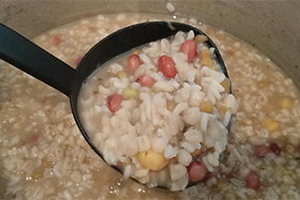
#1. Rice and Bean Soup

5 Delicious Recipes Made with Ingredients that Last 100 Years

The ingredients you will need are:

  • 1 Cup of Red Beans
  • ¼ Cup of Rice
  • 6 Cups of water
  • 1 Tsp of Chili Powder, Garlic Powder and Turmeric, each
  • 1 Bouillon Cube.

The first thing to do is soak your beans in warm water overnight.

The next day, start by cooking your beans in 6 cups of water and simmer them for about 4 hours or until they are soft. Do not add salt until your beans are soft, or it could prevent them from ever getting tender.

Once the beans have gotten tender, you will add your bouillon cube and spices. Next add your rice and simmer the soup until your rice has cooked through. At this point you can adjust seasoning to your preference with salt and pepper.

Here are 23 survival uses for honey that you didn’t knowabout.

#2. Smoked Fish and Dried Potato Cakes

5 Delicious Recipes Made with Ingredients that Last 100 Years

For this second recipe you will need:

  • 1 Cup of Smoked White Fish
  • 2 Cups of Dried Potato Flakes, Dices or Powder
  • ¼ Cup of Flour
  • ¼ Cup of water
  • 1 Egg.

Mix all your ingredients together in a bowl. Form them into patties. Fry on both sides in a cast iron skill with oil. Once they are crispy on both sides, they are ready. Drain excess oil and eat.

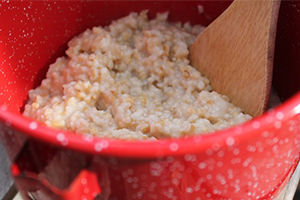
#3. Red Wheat Berry Cereal

5 Delicious Recipes Made with Ingredients that Last 100 Years

The ingredients needed are:

  • 2 Cups Hard Red Wheat
  • 7 Cups Water
  • 1 Cup of Oats
  • ¼ Cup of Powdered Milk
  • 1 Cup Cooked Wheat Berries
  • Salt to taste
  • Cinnamon.

First, cook the wheat berries for one hour in your 7 cups of water, and add salt to make them tender.

Next cook your cup of oats ’till almost done and add your powdered milk and wheat berries. Stir in some cinnamon to taste and you are ready to serve this breakfast up.

New Survival Energy Product Makes Every Window A Powerful Solar Charger

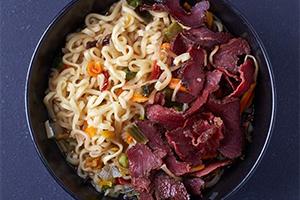
#4. Ramen with Jerky and Egg

5 Delicious Recipes Made with Ingredients that Last 100 Years

The ingredients you’ll need are:

  • 4 Packs of Beef Ramen
  • 1 lb of Beef Jerky
  • Fresh or Frozen Soup Vegetables (corn, peas, potatoes)
  • Tbsp of Dashi Powder.

This is a super easy recipe. Make your Ramen by package directions. Add your soup vegetables, dashi and bring back to a simmer. Take it off the heat and stir in your jerky.

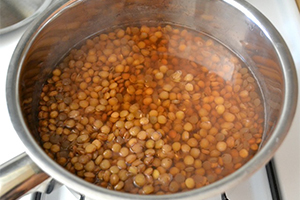
#5. Pemmican and Lentils

5 Delicious Recipes Made with Ingredients that Last 100 Years

This recipe calls for 6 ingredients only:

  • 1 Cup of Lentils
  • 1-2 lbs of Pemmican
  • 2 Cups of Water
  • 1 Beef Bouillon Cube
  • 1 Tbsp of Curry Powder
  • 1 Onion, Diced

Start your onion in a pan with a little bit of oil. Sauté the onion over low heat until it goes translucent. Add your lentils and cook them for a minute or so.

Add your water, curry powder and bouillon cube to the pan. Simmer your lentils until they are soft.

In a separate bowl add your pemmican. Drain your lentils and add them to the bowl. Toss the mix sparingly and serve.

These ingredients that last 100 years or more, should be found in every prepper’s pantry.  Which of these ingredients are in your pantry?

Preparedness Hacks: Once a nuke is heading your way, you might think that there isn’t much left to do, but you would be wrong!

Because we will show you America’s natural nuclear bunkers that are also EMP proof. When the sirens start wailing, all you need to do is pick the closest one to your home, where you can take cover before it hits.

6 Winter Tricks That Keep Livestock Water From Freezing

During winter, the cold can cause homesteaders numerous headaches, but one that can’t be overlooked is our livestock’s need for water. Ice forms easily on exposed water tanks, buckets freeze up and crack, and fields are often far from power sources and water pumps. But don’t despair. You don’t need to spend this winter hauling water and banging ice. There is a better way!

The Ice Problem

Winter time will see cows’ and horses’ water needs increase. Animals expend more energy combatting the cold and as a result, they eat more to stay warm. With increased food intake, their water needs go up.

“Studies by the University of Alberta and Saskatchewan discovered that a mature cow needs at least 10 gallons of water a day in the winter. When the only water source available was snow, both dairy cows and beef cattle consumed less and showed marked deterioration in body condition and output. Animals that consume only snow suffer from mineral deficiencies that cause spontaneous abortions, poor vitality and impactions” (Wayne and Jerry Cook – Countryside Magazine online). Horses experience similar issues when water intake is limited, “the most common threat being impaction colic” (South Dakota University Extension, January 2013).

Try these ideas:

1. The Simplest Methods

Group water troughs together. This can form a “heat island,” especially when livestock gather. Having a number of water troughs also allows weaker animals a chance to get water without having to fight their way to the trough. Experiment to determine how much water your animals are drinking. If you fill the troughs to the amount they drink, you will have less ice buildup as the animals drink all, or most, of the water before it has a chance to freeze. Just be sure that your livestock are not receiving too little water. If the tanks are bone dry when you go to fill them, put more water in. Use common sense and check often when you first start regulating water.

Another great farmer’s hack is to enclose the water tank partially in a well-insulated shed. This slows heat loss from the water. On really cold days you can run a small heater or lamp inside the shed and this should keep the water from freezing over. If you can’t build a shed, consider insulating your water tanks and covering much of the top of the trough. Just be sure that weaker animals are still getting a chance to drink.

If the above measures still aren’t enough to keep ice from forming, then you may want to consider several available systems. There are varying costs of money and time required, but you can select what will work best for your setup.

2. Automatic Watering Units

These units generally require larger numbers of animals to be using them to keep the water flowing and not freezing, although some units may have a continuous running water system set up. There are units with built-in heating components as well. Generally, watering units are best installed by a professional, but they work like a gem once in place.

3. Electric Tank Heaters and Deicers

Image source: Wikimedia

There are numerous heaters for most sizes of tanks. The downside is that they require a ready supply of electricity and will fail to work once power is lost. However, they keep water above freezing quite well. Submergible heaters are the best as the animals won’t bother them as much. Look for a unit that has a built-in thermostat so that it will shut off during warmer weather and spare you extra trips to the paddock or pasture. However, be sure to check that the unit is working during colder weather and that your animals haven’t accidentally removed it.

4. Heated Buckets

Heated buckets can work well for solo animals, but they generally need to be secured to something so they aren’t ripped from their electricity source. Buckets work especially well in run-in shelters and unheated barns.

5. Propane Stock Tank Heaters

When electrical sources are an issue, propane stock tank heaters can be an excellent option. Large portable units can be placed far from buildings and always run, even when power outages may affect the rest of your operation. Be sure to check, however, that the pilot light isn’t extinguished by strong wind. Also, check fuel levels periodically.

6. Water Circulators

Water circulators don’t use heat to keep ice from forming, but rather work the same way that a stream or creek does. Moving water doesn’t freeze as fast. Circulators generally run off of batteries and you have the option of hooking the batteries up to a solar power system to recharge them. Keep in mind, though, that circulators work best with automatically filled tanks, as the circulators need to be in contact with the water to keep working.

Keeping your livestock’s water supply at optimum levels during winter’s freezing temperatures can be intimidating, but with the options shared above, you can get started on changing this wintertime hassle to something that practically takes care of itself. Don’t be afraid to get creative if the options above don’t quite suit you.

Areas of the country often handle freezing temperatures differently and using creativity to employ the above solutions may solve your winter water problems. You just might become “that guy” who others turn to for country wisdom.

6 Winter Tricks That Keep Livestock Water From Freezing

During winter, the cold can cause homesteaders numerous headaches, but one that can’t be overlooked is our livestock’s need for water. Ice forms easily on exposed water tanks, buckets freeze up and crack, and fields are often far from power sources and water pumps. But don’t despair. You don’t need to spend this winter hauling water and banging ice. There is a better way!

The Ice Problem

Winter time will see cows’ and horses’ water needs increase. Animals expend more energy combatting the cold and as a result, they eat more to stay warm. With increased food intake, their water needs go up.

“Studies by the University of Alberta and Saskatchewan discovered that a mature cow needs at least 10 gallons of water a day in the winter. When the only water source available was snow, both dairy cows and beef cattle consumed less and showed marked deterioration in body condition and output. Animals that consume only snow suffer from mineral deficiencies that cause spontaneous abortions, poor vitality and impactions” (Wayne and Jerry Cook – Countryside Magazine online). Horses experience similar issues when water intake is limited, “the most common threat being impaction colic” (South Dakota University Extension, January 2013).

During a SHTF situation, pain could become an annoyance for some, but unbearable for others.

If doctors are scarce and medicine becomes even scarcer, this one little weed, found all over North America and similar to morphine, could be a saving grace.

Try these ideas:

1. The Simplest Methods

Group water troughs together. This can form a “heat island,” especially when livestock gather. Having a number of water troughs also allows weaker animals a chance to get water without having to fight their way to the trough. Experiment to determine how much water your animals are drinking. If you fill the troughs to the amount they drink, you will have less ice buildup as the animals drink all, or most, of the water before it has a chance to freeze. Just be sure that your livestock are not receiving too little water. If the tanks are bone dry when you go to fill them, put more water in. Use common sense and check often when you first start regulating water.

Another great farmer’s hack is to enclose the water tank partially in a well-insulated shed. This slows heat loss from the water. On really cold days you can run a small heater or lamp inside the shed and this should keep the water from freezing over. If you can’t build a shed, consider insulating your water tanks and covering much of the top of the trough. Just be sure that weaker animals are still getting a chance to drink.

If the above measures still aren’t enough to keep ice from forming, then you may want to consider several available systems. There are varying costs of money and time required, but you can select what will work best for your setup.

2. Automatic Watering Units

These units generally require larger numbers of animals to be using them to keep the water flowing and not freezing, although some units may have a continuous running water system set up. There are units with built-in heating components as well. Generally, watering units are best installed by a professional, but they work like a gem once in place.

Here are 23 survival uses for honey that you didn’t knowabout.

3. Electric Tank Heaters and Deicers

Image source: Wikimedia

There are numerous heaters for most sizes of tanks. The downside is that they require a ready supply of electricity and will fail to work once power is lost. However, they keep water above freezing quite well. Submergible heaters are the best as the animals won’t bother them as much. Look for a unit that has a built-in thermostat so that it will shut off during warmer weather and spare you extra trips to the paddock or pasture. However, be sure to check that the unit is working during colder weather and that your animals haven’t accidentally removed it.

4. Heated Buckets

Heated buckets can work well for solo animals, but they generally need to be secured to something so they aren’t ripped from their electricity source. Buckets work especially well in run-in shelters and unheated barns.

5. Propane Stock Tank Heaters

When electrical sources are an issue, propane stock tank heaters can be an excellent option. Large portable units can be placed far from buildings and always run, even when power outages may affect the rest of your operation. Be sure to check, however, that the pilot light isn’t extinguished by strong wind. Also, check fuel levels periodically.

6. Water Circulators

Water circulators don’t use heat to keep ice from forming, but rather work the same way that a stream or creek does. Moving water doesn’t freeze as fast. Circulators generally run off of batteries and you have the option of hooking the batteries up to a solar power system to recharge them. Keep in mind, though, that circulators work best with automatically filled tanks, as the circulators need to be in contact with the water to keep working.

Keeping your livestock’s water supply at optimum levels during winter’s freezing temperatures can be intimidating, but with the options shared above, you can get started on changing this wintertime hassle to something that practically takes care of itself. Don’t be afraid to get creative if the options above don’t quite suit you.

New Survival Energy Product Makes Every Window A Powerful Solar Charger

Areas of the country often handle freezing temperatures differently and using creativity to employ the above solutions may solve your winter water problems. You just might become “that guy” who others turn to for country wisdom.

Preparedness Hacks: Once a nuke is heading your way, you might think that there isn’t much left to do, but you would be wrong!

Because we will show you America’s natural nuclear bunkers that are also EMP proof. When the sirens start wailing, all you need to do is pick the closest one to your home, where you can take cover before it hits.