Survival Lessons From The 1930’s

This article is a long read but it’s interesting in the respect that it gives you an idea of just how much life will change after a SHTF event. All of our common comforts that we take for granted will be gone. You’ll have to adapt or die! “X-Beast”
I always remember my grandmother saying the “good ole days”, wasn’t all that good. I remember playing in the old chicken coop, smoke house, barn, & even the outhouse, all of them not used anymore in the 1970s. A fairly long read, but after reading this, I understand what she was talking about.

It’s one or two years after an EMP attack and you are safely tucked away in your retreat somewhere in the middle of nowhere. Your storage foods have mostly been used and your high tech electronics is useless. The really bad stuff is mostly past. Now it’s try to stay fed and alive and pray that civilization as you know it is coming back. You’re going to have to work your environment to live. Ever wonder what life might be like? What would it really be like to have no running water, electricity, sewer, newspaper or Internet? No supermarket or fire department close at hand?

Experts predict that an EMP strike that wipes out electricity across the nation would ultimately lead to the demise of up to 90% of the population. However, this figure begs an important question: if we were able to live thousands of years without even the concept of electricity, why would we suddenly all die without it?

I have a good imagination but I decided to talk to someone who would know first hand what it was like: my mother. She grew up on a homestead in the middle of Montana during the 1920s and 1930s. It was a two room Cottonwood cabin with the nearest neighbor three miles away. She was oldest at 9, so she was in charge of her brother and sister. This was her reality; I feel there are lessons here for the rest of us.

There was a Majestic stove that used wood and coal. The first person up at four thirty A.M., usually her father, would start the fire for breakfast. It was a comforting start to the day but your feet would get cold when you got out of bed. (21 wild edibles you can find in urban areas)

A crosscut saw and axe was used to cut wood for the stove and after that experience, you got pretty stingy with the firewood because you know what it takes to replace it. The old timers say that it warms you when you cut it, when you split it, and again when you burn it. The homes that were typical on homesteads and ranches of the era were smaller with lower ceilings than modern houses just so they could be heated easier. The saw and axe were not tools to try hurrying with. You set a steady pace and maintained it. A man in a hurry with an axe may loose some toes or worse. One side effect of the saw and axe use is that you are continuously hungry and will consume a huge amount of food. Lights in the cabin were old fashioned kerosene lamps. It was the kid’s job to trim the wicks, clean the chimneys and refill the reservoirs.

The privy was downhill from the house next to the corral and there was no toilet paper. Old newspaper, catalogs or magazines were used and in the summer a pan of barely warm water was there for hygiene. During a dark night, blizzard, or brown out from a dust storm, you followed the corral poles-no flashlights.

There were two springs close to the house that ran clear, clean, and cold water. The one right next to it was a “soft” water spring. It was great for washing clothes and felt smooth, almost slick, on your skin. If you drank from it, it would clean you out just as effectively as it cleaned clothes. Not all clean water is equal.

In this video, i will unearth a long-forgotten secret that helped our ancestors survive famines, wars, economic crisis, diseases, droughts and anything else life trew at them.
So pay chose attention because this video will change your life forever for the good!

The second spring was a half mile from the cabin and it was cold, clear, and tasted wonderful. The spring itself was deep – an eight foot corral pole never hit bottom- and flowed through the year. It was from here that the kids would fill two barrels on a heavy duty sled with water for the house and the animals. They would lead the old white horse that was hitched to the sledge back to the buildings and distribute the water for people and animals. In the summer, they made two trips in the morning and maybe a third in the evening. In the winter, one trip in the morning and one in the evening. They did this alone.

Breakfast was a big meal because they’re going to be working hard. Usually there would be homemade sausage, eggs and either cornmeal mush or oatmeal. More food was prepared than what was going to be eaten right then. The extra food was left on the table under a dish towel and eaten as wanted during the day. When evening meal was cooked, any leftovers were reheated. The oatmeal or the mush was sliced and fried for supper. It was served with butter, syrup, honey or molasses.

The homemade sausage was from a quarter or half a hog. The grinder was a small kitchen grinder that clamped on the edge of a table and everybody took turns cranking. When all the hog had been ground, the sausage mix was added and kneaded in by hand. Then it was immediately fried into patties. The patties were placed, layer by layer, into a stone crock and covered with the rendered sausage grease. The patties were reheated as needed. The grease was used for gravies as well as re-cooking the patties. Occasionally a fresh slice of bread would be slathered with a layer of sausage grease and a large slice of fresh onion would top it off for quick sandwich. Nothing was wasted.

Some of their protein came from dried fish or beef. Usually this had to be soaked to remove the excess salt or lye. Then it was boiled. Leftovers would go into hash, fish patties, or potato cakes.
The kitchen garden ran mostly to root crops. Onion, turnip, rutabaga, potato and radishes grew under chicken wire. Rhubarb was canned for use as a winter tonic to stave off scurvy. Lettuce, corn, and other above ground crops suffered from deer, rats, and gumbo clay soil. Surprisingly, cabbage did well. The winter squash didn’t do much, only 2 or 3 gourds. Grasshoppers were controlled by the chickens and turkeys. There was endless hoeing.

Washing clothes required heating water on the stove, pouring it into three galvanized wash tubs-one for the homemade lye soap and scrub board, the other two for rinsing. Clothes were rinsed and wrung out by hand, then hung on a wire to dry in the air. Your hands became red and raw, your arms and shoulders sore beyond belief by the end of the wash. Wet clothing, especially wool, is heavy and the gray scum from the soap was hard to get out of the clothes.

Personal baths were in a galvanized wash tub screened by a sheet. In the winter it was difficult to haul, heat and handle the water so baths weren’t done often. Most people would do sponge baths.Everybody worked including the kids. There were always more chores to be done than time in the day. It wasn’t just this one family; it was the neighbors as well. You were judged first and foremost by your work ethic and then your honesty. This was critical because if you were found wanting in either department, the extra jobs that might pay cash money, a quarter of beef, hog or mutton would not be available. Further, the cooperation with your neighbors was the only assurance that if you needed help, you would get help. Nobody in the community could get by strictly on their own. A few tried. When they left, nobody missed them. You didn’t have to like someone to cooperate and work with him or her.

Several times a year people would get together for organized activities: barn raising, butcher bee, harvest, roofing, dance, or picnics. There were lots of picnics, usually in a creek bottom with cottonwoods for shade or sometimes at the church. Always, the women would have tables groaning with food, full coffee pots and, if they were lucky, maybe some lemonade. (Lemons were expensive and scarce) After the work (even for picnics, there was usually a project to be done first) came the socializing. Many times people would bring bedding and sleep out overnight, returning home the next day.

A half dozen families would get together for a butcher bee in the cold days of late fall. Cows were slaughtered first, then pigs, mutton, and finally chickens. Blood from some of the animals was collected in milk pails, kept warm on a stove to halt coagulation and salt added. Then it was canned for later use in blood dumplings, sausage or pudding. The hides were salted for later tanning; the feathers from the fowl were held for cleaning and used in pillows or mattresses. The skinned quarters of the animals would be dipped into cold salt brine and hung to finish cooling out so they could be taken home safely for processing. Nothing went to waste.

Here are 23 survival uses for honey that you didn’t know about.

The most feared occurrence in the area was fire. If it got started, it wasn’t going out until it burned itself out. People could and did loose everything.

The most used weapon was the .22 single shot Winchester with .22 shorts. It was used to take the heads off pheasant, quail, rabbit and ducks. If you held low, the low powered round didn’t tear up the meat. The shooters, usually the kids, quickly learned sight picture and trigger control although they never heard those terms. If you took five rounds of ammunition, you better bring back the ammunition or a critter for the pot for each round expended. It was also a lot quieter and less expensive [in those days] than the .22 Long Rifle cartridges.

Preparedness Hacks: Once a nuke is heading your way, you might think that there isn’t much left to do, but you would be wrong!

Because we will show you America’s natural nuclear bunkers that are also EMP proof. When the sirens start wailing, all you need to do is pick the closest one to your home, where you can take cover before it hits.

If you are trying to maintain a low profile, the odor of freshly baked bread can be detected in excess of three miles on a calm day. Especially by kids.

Twice a year the cabin was emptied of everything. The walls, floors, and ceilings were scrubbed with lye soap and a bristle brush. All the belongings were also cleaned before they came back into the house. This was pest control and it was needed until DDT became available. Bedbugs, lice, ticks and other creepy crawlies were a fact of life and were controlled by brute force. Failure to do so left you in misery and maybe ill.

Foods were stored in bug proof containers. The most popular was fifteen pound metal coffee cans with tight lids. These were for day to day use in the kitchen. (I still have one. It’s a family heirloom.) The next were barrels to hold the bulk foods like flour, sugar, corn meal, and rice. Everything was sealed or the vermin would get to it. There was always at least one, preferably two, months of food on hand. If the fall cash allowed, they would stock up for the entire winter before the first snowfall.

The closest thing to a cooler was a metal box in the kitchen floor. It had a very tight lid and was used to store milk, eggs and butter for a day or two. Butter was heavily salted on the outside to keep it from going rancid or melting. Buttermilk, cottage cheese and regular cheese was made from raw milk after collecting for a day or two. The box was relatively cool in the summer and did not freeze in the winter.

Mice and rats love humanity because we keep our environment warm and tend to be sloppy with food they like. Snakes love rats and mice so they were always around. If the kids were going to play outside, they would police the area with a hoe and a shovel. After killing and disposing of the rattlesnakes- there was always at least one-then they could play for a while in reasonable safety.

The mice and rats were controlled by traps, rocks from sling shots, cats and coyotes. The cats had a hard and usually short life because of the coyotes. The coyotes were barely controlled and seemed to be able to smell firearms at a distance. There were people who hunted the never-ending numbers for the bounty.

After chores were done, kid’s active imagination was used in their play. They didn’t have a lot of toys. There were a couple of dolls for the girls, a pocket knife and some marbles for the boy, and a whole lot of empty to fill. Their father’s beef calves were pretty gentle by the time they were sold at market – the kids rode them regularly. (Not a much fat on those calves but a lot of muscle.) They would look for arrow heads, lizards, and wild flowers. Chokecherry, buffalo berry, gooseberry and currants were picked for jelly and syrups. Sometimes the kids made chokecherry wine.

On a hot summer day in the afternoon, the shade on the east side of the house was treasured and the east wind, if it came, even more so. Adults hated hailstorms because of the destruction, kids loved them because they could collect the hail and make ice cream.

Childbirth was usually handled at a neighbor’s house with a midwife if you were lucky. If you got sick you were treated with ginger tea, honey, chicken soup or sulphur and molasses. Castor oil was used regularly as well. Wounds were cleaned with soap and disinfected with whisky. Mustard based poultices were often used for a variety of ills. Turpentine, mustard and lard was one that was applied to the chest for pneumonia or a hacking cough.

Contact with the outside world was an occasional trip to town for supplies using a wagon and team. A battery operated radio was used very sparingly in the evenings. A rechargeable car battery was used for power. School was a six mile walk one way and you brought your own lunch. One school teacher regularly put potatoes on the stove to bake and shared them with the kids. She was very well thought of by the kids and the parents.

These people were used to a limited amount of social interaction. They were used to no television, radio, or outside entertainment. They were used to having only three or four books. A fiddler or guitar player for a picnic or a dance was a wonderful thing to be enjoyed. Church was a social occasion as well as religious. 
The church ladies and their butter and egg money allowed most rural churches to be built and to prosper.

The men were required to do the heavy work but the ladies made it come together. The civilizing of the west sprang from these roots. Some of those ladies had spines of steel. They needed it. That’s a partial story of the homestead years. People were very independent, stubborn and strong but still needed the community and access to the technology of the outside world for salt, sugar, flour, spices, chicken feed, cloth, kerosene for the lights and of course, coffee. There are many more things I could list. Could they have found an alternative if something was unavailable? Maybe. How would you get salt or nitrates in Montana without importing? Does anyone know how to make kerosene? Coffee would be valued like gold. Roasted grain or chicory just didn’t cut it.

I don’t want to discourage people trying to prepare but rather to point out that generalized and practical knowledge along with a cooperative community is still needed for long term survival. Whatever shortcomings you may have, if you are part of a community, it is much more likely to be covered. The described community in this article was at least twenty to thirty miles across and included many farms and ranches as well as the town. Who your neighbors are, what type of people they are, and your relationship to them is one of the more important things to consider.

Were there fights, disagreements and other unpleasantness? Absolutely. Some of it was handled by neighbors, a minister or the sheriff. Some bad feelings lasted a lifetime. There were some people that were really bad by any standard and they were either the sheriff’s problem or they got sorted out by one of their prospective victims. 
These homesteaders had a rough life but they felt they had a great life and their way of life was shared by everyone they knew. They never went hungry, had great daylong picnics with the neighbors, and knew everyone personally within twenty miles. Every bit of pleasure or joy was treasured like a jewel since it was usually found in a sea of hard work. They worked hard, played hard and loved well. In our cushy life, we have many more “things” and “conveniences” than they ever did, but we lack the connection they had with their environment and community.

The biggest concern for our future: What happens if an event such as a solar flare, EMP, or a plague takes our society farther back than the early 1900s by wiping out our technology base. Consider the relatively bucolic scene just described and then add in some true post-apocalyptic hard cases. Some of the science fiction stories suddenly get much more realistic and scary. A comment out of a Star Trek scene comes to mind “In the fight between good and evil, good must be very, very good.”

Consider what kind of supplies might not be available at any cost just because there is no longer a manufacturing base or because there is no supply chain. In the 1900s they had the railroads as a lifeline from the industrial east.

One of the greatest advantages we have is access to a huge amount of information about our world, how things work and everything in our lives. We need to be smart enough to learn/understand as much as possible and store references for all the rest. Some of us don’t sleep well at night as we are well aware of how fragile our society and technological infrastructure is. Trying to live the homesteader’s life would be very painful for most of us. I would prefer not to. I hope and pray it doesn’t ever come to that.How long would it take us to rebuild the tools for recovery to the early 1900 levels?   Beans? There was almost always a pot of beans on the stove in the winter time. Chickens and a couple of milk cows provided needed food to balance the larder. They could not have supported a growing family without these two resources.

Solar energy is a renewable source of energy with has many benefits.

The best thing is that you’ll save money on you electric bill.

To build your own solar panel almost for free, you’ll need to watch this video

Do You Know These 25 Native American Survival Skills?

Native American survival skills included crafting their own survival tools and building their own shelters. They foraged for their food and hunted their prey, all by hand. It is astounding to think how well they survived and thrived based on necessity alone. Would someone like you or me be able to do the same if we were put into such a hostile environment? Probably not, and that it is why it is good to be aware of old-school Native American survival techniques. How did the Native Americans survive? How were they so deftly able to sustain themselves in the unforgiving North American wilderness?

It is very easy to forget, in our modern times of the Internet and instant heat, cooling, food, and shelter, that people use to live a much simpler and much harder life before the advents of these modern comforts. The Native Americans are the prime example of how people use to live off the land and survived the threats of nature with basic and cultivated survival tactics.

In this video, i will unearth a long-forgotten secret that helped our ancestors survive famines, wars, economic crisis, diseases, droughts and anything else life trew at them.
So pay chose attention because this video will change your life forever for the good!

Native American Survival Skills We Can All Learn From

This list will highlight 25 of some of the more interesting Native American survival skills commonly used by the tribes of North America. Let this list be an insight into the lives of these fascinating people, an educational tool for our modern culture, a means of appreciating a society that is so rare and thin today and a reminder that the human spirit and will are much stronger than what we give them credit for.

25. Community

The tribal mindset and lifestyle of the Native Americans of yesteryear play a huge role in their survival tactics. As you probably are already aware, Native Americans distinguished themselves by tribes. You have probably already heard of the more common and prominent tribes like the Apache, Navajo, and Mohican. The sense of community, sharing of resources and wisdom and collective protection between tribesmen cannot be understated when considering how Native Americans were able to survive.

24. Footwear

If you have ever worked a day in your life wearing the improper pair of shoes then you know how important footwear is to comfort and bodily health. Footwear was integral to Native American survival and moccasins made of tanned leather and sewn together were common in North American tribes. Although designs and cuts differed from tribe to tribe, features like rabbit pelt for added warmth and hardened rawhide for increased durability were common attributes of moccasins.(21 wild edibles you can find in urban areas)

23. The Fox Walk

The fox walk was a method of tracking, traversing and hunting stealthily for Native Americans. This specific style consisting of wearing thin moccasins to feel the ground better, landing on the heel first and rolling your foot down, and traveling in lines to conceal your numbers was used in battle and in hunting.

22. Preserving Meat

Meat got many Native American tribes through harsh winters, but there were no chemical preservatives or refrigerators back then. Instead, Native Americans would preserve meat by cutting it into lean strips, eliminating fat, and drying it in the sun. This is essentially what we know today as beef jerky. This thin, dried meat can keep for a very long time and was an essential food supply for Native Americans. We put together a guide to preserving meat in the wilderness.

21. Animal Hides

Animal hides were essential to Native American life and key to their survival. By honing a process of tanning and smoking, Native Americans were able to turn raw animal hides into moccasins, clothing, and even shelter.

20. Natural Observation

Being able to tell what kind of weather was on the horizon was a huge asset for Native Americans. They used the natural signs of the environment to predict weather and to prepare accordingly. They would study the behaviors of animals who have much keener senses for weather than we do and read the clouds. Here are 23 survival uses for honey that you didn’t know about.

19. Using Plants

How Native Americans were able to discern the healing powers of certain plants is an unknown but we do know that these practices were handed down from generation to generation so it was probably a case of trial and error. They would use plants, herbs, and other life found in nature to heal wounds and treat illnesses.

18. Artful Crafting

Native American skills and crafts work with materials from their environment. By turning the crafting of basic survival tools and shelters into works of art, Native Americans were able to make the essentials of life that would stand up to the rigors of their environment. Native Americans took their time to craft tools and shelters thus ensuring their durability and overall quality and helping them survive in harsh conditions.

17. Body Paint

Before hunts, Native American tribes would paint their bodies so that they could blend into the natural scenery, as stealth was a very important aspect of survival in those times.

16. Clothing

Proper clothing is essential for anyone to survive in any situation, and the Native Americans had their clothing crafting skills down to a science. They used animal hides and smoked leather to create warm clothing for the cold winters. They also used certain colored clothing for stealth when hunting prey.

15. Camps

The Native Americans often built temporary camps for hunting excursions but they still needed to maintain a certain level of stealth. They would build these camps with earth-toned materials and animal skins and tuck them into the base of foothills or other strategic natural sites so that they would be hard to spot from a distance.

Preparedness Hacks: Once a nuke is heading your way, you might think that there isn’t much left to do, but you would be wrong!

Because we will show you America’s natural nuclear bunkers that are also EMP proof. When the sirens start wailing, all you need to do is pick the closest one to your home, where you can take cover before it hits.

14. Blow Guns

These have become something of a novelty in today’s day and age but blow guns were actually used for hunting and in warfare by Native American tribes such as the Cherokee. They would fashion these weapons out of cane or reed. The reed would be hollowed out to a tube wherein a dart would be inserted and propelled by a strong breath towards a target. Blowguns were used primarily to kill small game like birds, rabbits, and squirrels and were sometimes tipped with poison extracted from venomous snakes and even Gila Monsters.

13. Deadfalls

Deadfalls are a kind of trap that was used by Native Americans to kill their prey. A heavy rock or log would be elevated by rope or a lever made of wood over a piece of meat or food to entice an animal. The deadfalls usually had a trigger that when the animal touched it, would activate the primitive trap and send the heavy object crashing down on them.

12. Snares

Trapping was one of the main ways that Native Americans caught their food and snares were among the most common types of traps utilized. A snare uses a vine that is tied in a loop and attached to a young sapling that is bent over and is fastened by tying it to a stick driven into the ground. The loop goes around a piece of meat to entice an animal and when the animal puts its head through the loop and tries to make off with the bait, the stick is dislodges and the loop turns into a noose around the prey’s neck and is suspended in the air as the sapling, free of its fastener, springs back into an upright position.

11. Trapping Pits

This is one of the more straightforward survival tactics utilized by the Native Americans. As the name suggests, this trap is simply a dug pit sometimes fitted with spikes at the bottom to kill or bleed the trapped animal. The dug pit would be covered up by branches and earth so that unsuspecting animals would walk over it and fall in.

10. Fishing Weirs

Fish is an indispensable food for Native Americans and among the ways that they would catch fish were fishing weirs. Fishing weirs are essential traps built by rock or wood that would lead fish migrating up or downstream to a corridor built to be narrow, ultimately trapping the fish.

9. Spearfishing

Another way the Native Americans caught fish was by spearfishing. There were different methods of spearfishing employed depending on the time of year. In the winter when the lakes would freeze over, a hole was cut into the ice and a lure made of bone was used to entice the fish toward the hole. Then, a spear made of wood for the shaft and copper or bone for the tip punctured the fish.

8. Hunting Tactics

It may seem simple now that we look back but many hunting tactics devised by Native Americans were learned over the generations and used to help them survive. Simple tactics like reading the wind and standing downwind from a target increased the chances for success of a hunt dramatically.

7. Nomadic Practices

Not all Native American tribes stayed in one place. After the Spanish visitors brought horses to the great plains, many tribes such as the Blackfeet, Crow, and Comanche adopted a nomadic lifestyle in order to hunt buffalo across the plains all year round. This supplied for them a stable food source and ensured, to a certain degree, survival.

6. Teepees

Of course, there can be no survival without some form of shelter. The Great Plains Native Americans knew this very well and built teepees which are essentially tents. They were commonly made from buffalo hides and long wooden poles.

5. Dedicated Tribe Roles

A lost every aspect of Native American life was spurred by survival. This is even true of the gender roles of the Native Americans. The men were the hunters and to prevent any waste which could mean the difference between life and death in the North American frontier, the women were the cooks. They would prepare the meat that the men brought back immediately so as not to waste a single morsel and ensure that they had plenty of food.

4. Bows

An indelible image that most people have of Native Americans is the bow and arrow which was vital for the survival of all tribes in North and South America. Most bows were fashioned out of wood and strengthened with animal tendons. Bowstrings were made from animal tendon or yucca and similar natural fibers.

3. Axes

There are certain tools that are as essential now as they were in the days of the Native Americans for survival. Among them is an ax. While Native Americans used axes for warfare, they were also used to chop wood that would be used for many different causes and to hunt prey.

2. Water

This may seem a simple and almost thoughtless aspect of survival but the fact of the matter is that if the Native Americans did not have sources of fresh water to draw from, they would have never survived. The plentiful rivers and lakes of the Americas helped sustain the Natives and they regarded water sources with great reverence.

1. Fire

There is no life without food and warmth and fire is number one on the list of 25 essential survival skills that kept Native Americans alive because it provided both. There were many methods of building fires among Native Americans but among the most common were striking stones like pyrites together to create a spark that would be caught be a pile of tinder. The friction caused by rubbing two sticks together also generated enough heat to combust tinder. Bow drills and fire pump drills were also common methods of starting fires. These contraptions used string wrapped around a stick and controlled by a bow to generate the heat needed to start a flame.

Check out this cool video from Tim Jones for some Native American fish trap idea:

Though the methods and practices of Native Americans varied from tribe to tribe, the innovation for the sake of survival was universal. They borrowed methods from each other and created ones unique to their tribe. They even borrowed from foreign settlers and visitors. The Native Americans were a group of humans that had to learn how to adapt and we are all the richer and wiser for their survival efforts. It is hard to separate the survival tactics we employ today from those introduced to us by the Native Americans. Thus, we owe a debt of gratitude to these people who learned how to tame the wild Americas and make them a place hospitable for human life.

Solar energy is a renewable source of energy with has many benefits.

The best thing is that you’ll save money on you electric bill.

To build your own solar panel almost for free, you’ll need to watch this video

Have you tried any of these Native Americal survival skills in real life? Share your thoughts about them with us in the comments section below!

How to Tell in 5 Minutes If It’s a Power Outage or an EMP and Get a Massive Head Start

Would you know how to diagnose an EMP strike within five minutes of the event? Do you know the steps to take to be sure it’s not just a power outage?

The threat of the EMP can come from the life-giving sun or from nuclear weapons. The worst part about a weaponized EMP or HEMP (High Altitude Electro Magnetic Pulse) is that it has the potential to come without warning.

The direct threat to human life does not come from an EMP itself. Rather, it comes from a tidal wave of circumstances that will follow. If the attack is placed properly, or if there are multiple, the three major power grids of the United States could be destroyed. That means a nation without power and there is nothing we take for granted more than light switch and a water faucet.

The good news is that tech and early detection are working together. The most recent SpaceX launch was a success and its payload, headed to deep space to provide warning of solar storms that could potentially create and EMP. Some people are paying attention.

Preparedness Hacks: Once a nuke is heading your way, you might think that there isn’t much left to do, but you would be wrong!

Because we will show you America’s natural nuclear bunkers that are also EMP proof. When the sirens start wailing, all you need to do is pick the closest one to your home, where you can take cover before it hits.

After an EMP most preppers will look to take shelter at an undisclosed bugout location. This is because there will be many threats that soon follow a world without power.

  • Civil Unrest
  • Starvation
  • Disease
  • Martial Law
  • Societal Collapse

Maybe, in that order.

So, what on Earth do we look for to tell us an EMP has struck and everything has changed?

Before an Emp

The precious moments between the time the lights go out and when you get on the road to safety will make all the difference. If you are on the road or making moves long before the rest of the panicked nation, you will at least be able to survive the early stages of a nationwide, catastrophic EMP.

Pre EMP Intel

While you might be looking for information to aid you immediately after an EMP, we are preppers so there are things that need to be done long before an EMP strikes.

Whether you know it or not there are ways of staying on top of the threats posed by an EMP. While many will point to HAM radio to get intel during a disaster, remember, after an EMP your HAM radio is going to be out of order unless you take precautionary measures. You will need some sort of Faraday cage or bag to store your precious electronics in.

Are you familiar with NOAA Space Weather Prediction?

You can see up to date information of the sun and its patterns. This could give you a heads up when dealing with a sun born EMP.

Of course, this will not protect your against and EMP that is triggered by a nuclear weapon. That threat is harder to identify.

Threat Alert Systems

A relatively new idea, threat alert systems do some of the leg work for you. The best ones look at a variety of threats and intel from all over the world and determine the risk. These systems could be just what you are looking for if you are a little too busy to deal with crawling the internet for information.

There are lots of agencies like the DHS that offer free alert systems. You don’t have to pay for anything. Still, these small alerts could alert you to a serious storm in your area or the threat of a terrorist attack.

During an EMP

There is one telltale sign that you are dealing with an EMP and not a power outage, it will reveal itself early on.

Surges and Explosions

I read a lot of articles about EMP preparedness. A lot of them talk about an EMP strike happening at night without much of a change to the outside world. Its often depicted as the street lights go out and never come back on.

If an EMP hits near a highly populated area it will  create a power surge. We know this because of what happened to the telegraph lines during the Carrington Event in the 1800s. People operating the lines were shocked and some even caught fire. Now consider that on a grand scale with transformers and substations going BOOM!

These power surges would affect the area around you and it would be a pretty terrifying situation. It might even seem like a bombing with a succession of flashes and booms happening in a short time frame.

An EMP hitting a targeted area will cause these damaging surges. These surges may not happen in all areas but if you experience something like this, it will be a good sign that something more than a power outage is afoot.

5 Minutes After

A lot will change immediately after an EMP. Some of the changes will leave you speechless, if you know where to look. Let’s go through a few steps to take immediately after a suspected EMP power outage.

#1. Check the lights.

#2. Check the breakers to be sure its not just your home.

#3. Check your phone as it is a close by device that is not tied to your homes power.

#4. If none of that is working its time to go check your vehicle. The car and the radio in the car will be worth checking. If both are out its time to get worried. Here you can find a couple of affordable vehicles that can survive an EMP.

#5. You may want to do one final check with a neighbor to follow up just in case it’s an extremely rare coincidence that your car battery died, and your phone ran out of charge at the same time as a local power outage.

#6. Finally, if its night time, look to the horizon. Because of the surges we mentioned earlier there will likely be fires. There could be many fires and in a blacked-out night sky, following an EMP, fires will be easy to notice. If you see a glowing horizon that is another great sign.

Very rarely do we see fires that stem from normal power outages. The idea that all those items could be out of power at once is so improbably that you better take it very seriously. If steps 1-6 yield poor results, its time to take action.

The first thing people will notice is that their cell phones aren’t working and that will make everyone scared. While they are panicking you could be making your next move.

It will only take weeks before areas are completely shifted into disorder. The food will be gone in days and once people realize the water is not safe to drink everyone will get desperate. Make every adjustment you can to get away from crowded areas and find a place with a natural water source to start your new life.

Some experts estimate it would take 4 years to fully repair the electrical grid after something like this. Who is going to be alive after 4 years? Not many. No, an EMP means you get clear of crowded areas and do your best to survive the new world.

This guide below can help you in a survival situation

Guns have been referred to as “the great equalizer,” and there’s no weapon which can come close to them in that regard.

A lot of the popularity of firearms is due to the fact that anyone can use them effectively, not only the strong and agile. The young, the old, men, women and child can take up firearms in defense of home and family and do so effectively.

But what do you do if you can’t use a gun – or if you don’t have a gun — to protect yourself?

Why 90% of the Population Would Die Without Electricity

Experts predict that an EMP strike that wipes out electricity across the nation would ultimately lead to the demise of up to 90% of the population. However, this figure begs an important question: if we were able to live thousands of years without even the concept of electricity, why would we suddenly all die without it?

While it may seem as if going without electricity would be nothing but an unfortunate inconvenience, the truth is much more harrowing. To better understand why 90% of the population would die if the lights went out, consider the following ways in which losing electricity would impact our society.

In this video, i will unearth a long-forgotten secret that helped our ancestors survive famines, wars, economic crisis, diseases, droughts and anything else life trew at them.
So pay chose attention because this video will change your life forever for the good!

No Electricity Means No Water

Almost no one in the United States still carries a bucket to a well to draw up water. What this means, though, is that our water sources are now dependent on electricity. If an EMP strikes, the vast majority of the population would lose access to fresh water as soon as the water towers run dry.

Some people would be able to find other sources, but many would not. For those without water, the length of their lifespan would be measured in days.

No Electricity Means No Food

Those who are able to find water sources not dependent on electrical power now have another concern: food. Almost everyone who lives in an urban location is completely dependent on markets and grocery stores for their food supply. Even those who live in rural locations are largely, if not completely, dependent on buying food from outside sources.

However, if the electricity goes out, the supermarkets are going to be looted and possibly never restocked. From transportation to refrigeration, to even the growing of the food itself, our entire system of keeping the population fed is reliant on electricity.

Sure, there will be small farmers who are able to feed small amounts of people nearby, and there will be those who are able to adapt and grow their own food, but an alarming number of people would starve to death in a matter of months.

No Electricity Means No Climate Control

Some areas of the United States, such as Minnesota in the winter and Arizona in the summer, are only habitable because of climate control. If not for indoor heating and cooling, these places wouldn’t have been inhabited by so many people.

Once indoor heating and cooling disappear, surviving during the hottest and coldest times of the year will become a real problem. Some people would relocate or figure out a way to get by, but many who are unable would die of heat stroke or freeze to death.

No Electricity Means No Modern Medicine

Think of all the things that used to kill so many people before modern medicine. From polio to a ruptured appendix, there are countless things that once would have been fatal that are now either treatable or wiped out.

Modern medicine, however, is entirely dependent on electricity. Without it, all of these things would come roaring back with a vengeance. Hospitals that didn’t close their doors would lose a large majority of their effectiveness without all the machines they rely on.

Meanwhile, pharmaceutical companies would be unable to produce the wide array of prescription drugs that are keeping so many people alive.

To make matters worse, the fact that access to fresh water would be greatly diminished means sanitation would become a real problem. Without proper sanitation, diseases would spread at an exponential rate. Due to these factors, no electricity means far more sick people and fewer ways to treat them.

No Electricity Means More Murders

Within days of the electricity going out, our society is almost guaranteed to collapse into chaos. If you aren’t convinced that would happen, just look at what happens when a natural disaster devastates just a single area of the US, then multiply that by the entire country. Looters would quickly steal anything they could get their hands on, and armed gangs would roam the streets.

Law enforcement would clash with them at first, but they would almost certainly be overwhelmed in little time at all. The chaos would cause people who were once law-abiding citizens to turn to crime, and the number of criminals law enforcement would have to deal with would go through the roof.

In addition, effective law enforcement is largely dependent on good communication and teamwork – both things that become a lot more difficult in a world without electricity.

All of this is to say that, without electricity, going outside your home would suddenly become a much more dangerous endeavor. Those who are able to avoid starvation, dehydration, disease, and death by the elements would constantly have to look over their shoulders to avoid being killed. It’s not a pretty picture of human nature, but it’s a grim reality.

Preparedness Hacks: Once a nuke is heading your way, you might think that there isn’t much left to do, but you would be wrong!

Because we will show you America’s natural nuclear bunkers that are also EMP proof. When the sirens start wailing, all you need to do is pick the closest one to your home, where you can take cover before it hits.

How to Avoid Being One of the 90%

As you’re probably well aware by now, surviving in a world without electricity would be a very tall order. The fact that a single detonation could devastate us so completely is disconcerting, to say the least, which is why many of the nation’s top defense experts agree that an EMP is the most troubling threat we would face if we ever went to war with a country that was able to hit us with one.

That said, 90% of the population dying without electricity means that 10% will make it, and a little preparation will go a long way toward ensuring you and your family are one of the 10%. Start by making sure you have access to food and water supplies that are not dependent on electricity, and stockpile all the medical supplies you can.

If you live in an area where climate control is necessary for survival, either plan for an alternative way to heat or cool your home or put together a bug out bag and be prepared to leave fast. Lastly, make sure to lay low and avoid going out unless absolutely necessary.

Surviving without electricity certainly wouldn’t be easy, and the threat of an EMP is one that should not be taken lightly. However, it can be done.

Check out this video for more information on what the world might look like after a widespread EMP.

BY ALAN From: urbansurvivalsite.com

An EMP Strike On Our Nation Will be An Absolutely Catastrophic Event- 7 Actions to Take Immediately Following an EMP Strike

A huge EMP is like opening a Pandora Box:

1 – At a community level because we haven’t experienced one yet and we don’t really know how bad it can get. Frank Gaffney – president of the Center for Security Policy predicted that:

“Within a year of an EMP attack, nine out of 10 Americans would be dead, because we can’t support a population of the present size in urban centers and the like without electricity. And that is exactly what I believe the Iranians are working towards.”

Experts also agree that the next nuclear war will start with at least an EMP. If one of the nuclear powers blasts a nuclear weapon 275 miles above the US it will produce an EMP that will basically send us, the Canadian and the Mexicans back to the Dark Ages. Can we fight back (after an EMP) or we will be nothing more than sitting ducks for Russian’ nukes? I have something you need to watch. It’s much better than I am at explaining the threat.

2 – At an individual scale because you don’t really know where you’ll be when it happens. There won’t be any kind of transportation or telecommunication. You’ll have to walk your way home. If you work 40 miles away from home, you better have a plan. If your car gets stuck with your family on the highway on a cold winter – you got to have a back-up plan. If your child is at school you got to get him… and so on.

Of course it’s imperative to have (at the back of your mind) a list of things to do immediately after an EMP. But just like in an economic collapse, you won’t be able to do a lot of things after the crisis begins. The information you’ll find bellow it’s good to know and should be considered as a plan. But it’s not 100% prepping. If you want to prepare for an EMP you need to have some things ready in advance.


So what actions should you take immediately following an EMP strike? Remember that time will be critical, the first few hours (days at most) will enable you to get a jump on everyone else and set the stage for your success. You will immediately know that an EMP, be it from a nuclear weapon or massive solar flare, will have struck your area. Your car will no longer work, your cell phone won’t work, the power will be out everywhere, planes will have fallen from the sky. You will know it was an EMP but the vast majority of the public will not, they will be quite literally sitting around waiting for someone to tell them what to do.  You won’t know how large the scope of the strike is but you will have to assume the worst, which would be a nationwide outage.

First things first, if you are at work, get home.  Your boss no longer has authority over you, your co-workers no longer are a priority. They will be trying to restart a computer that will never again work, trying to restart their smartphone, sitting in the break room trying to call 911 and saying things like: “This is ridiculous, I’m going to miss my 3pm sales call!” You on the other hand will go to you car and change into the extra set of clothes and shoes you keep in the trunk. You will don your “get home bag” and start walking, hopefully your walk will not take more than a day.

Once home it is time to start implementing your plan. Remember time is absolutely critical and you only have a small window of it in order to set yourself up for success.  During these initial hours and days people will still have faith that some sort of government agency will come in to make everything better.  They will expect to see the power come back on any minute because someone will surely do something. They will tell each other to sit tight, just hold on for a day or so because eventually the HMMWV’s will roll in loaded with supplies and some military officer or government official will explain that this is merely a temporary problem, nothing to worry about, sorry for the inconvenience. You know better because you realize just how devastating an EMP strike is and the reality is that it could be months before systems start to come back online. It will only take a week or two (at most) before things start getting really ugly because people start going hungry.  With all of that that in mind you take these 7 actions because you were prepared for this to happen.

1 – Use your cash. In the first few days after an EMP strike cash will still have value.  Take all of your cash and that radio flyer wagon your kids have and walk down to the corner store.  Avoid the big retail stores, I suggest finding the corner gas station or local drug store.  The owner of the store will no doubt be there, concerned that the items in the store are unprotected during a power outage.  Explain to the owner that you are in need of some supplies, can pay cash and do not require change.  Tell him/her that you will give them an extra $100 to allow you to “shop” for a few minutes.  Load up your wagon with anything you can find to include medication, candy bars, water bottles, pop tarts, lighters, hand sanitizer etc etc.  Of course you should be well stocked at home but you might as well get rid of your worthless paper money in exchange for any amount of extra supplies you can get your hands on.  In a week (maybe less) most stores will be completely looted so you need to take advantage of this moment.

tube

2 – Fill up the tub(s) with water. Hopefully you have a water bob for each bath tub in your home in addition to several other water storage devices and water purification/filtration devices.  Remember a down grid means that fresh water will stop flowing to your home very quickly. Fill up your tub as soon as you can, that extra hundred or so gallons could prove invaluable. If you are concerned about the quality of the water remember you can add 8 drops of regular Clorox bleach per gallon to help purify what you have in the tub.

3 – Talk to your neighbors. This step is absolutely critical, you have to get out and talk to your close neighbors and explain to them what is going on.  They will be in denial for the most part, hopefully you have copies of the EMP report printed off which you can distribute as you go door to door.  Explain to them what is going on and that time is critical, let them know a worst case scenario means that there will be no help coming for quite a long time.  Additionally mention the following to them.

a. Discuss a neighborhood watch.  Tell them that in a few days or weeks things will get dangerous with hungry people roaming the streets.  It is essential that you define your neighborhood’s boundaries and set up a neighborhood watch of sorts, assigning people to different shifts.

b. Offer to hold a meeting.  Set a time that you will have a meeting at your home, say every day after sunrise in your garage.  Tell them they are invited and that every day you will be there passing out information.  At first you might not have anyone attend these meetings, in a few days there will be a handful and in a week you might have 50 or more hungry, scared, tired people demanding answers.  If you are going to assume the role of a leader, be prepared to do just that.

c. Tell them to use their cash.  Much like you should have already done, tell them that their cash will soon be worthless and that they need to get down to the market to spend it.  Most people have no cash on hand, so this probably won’t be a real issue.

d. Tell them to inventory their supplies. Most people have 3 to 5 days food on hand in their home. You should mention that they need to start rationing what they have, and taking inventory of everything else.

e. Start identifying those with skills. I wrote about how to organize a survival community as well as what skills will be valuable after T-SHTF in a few recent articles. While making the rounds in your neighborhood you should start identifying who has special skills and make note of it. Cops or military personnel could help with security, doctors have obvious value, and so on and so forth.

4 – Start rationing food. Hopefully you have at least a 1 year supply of food for your family, if not more. Start rationing immediately because more than likely you will have to share some of your food with your neighbors. It will be unavoidable, you will need their help to survive as a community and there is absolutely no way that they will starve while watching you and your family live high on the hog. This doesn’t mean that you cannot oversee how some rations are distributed, or seek out other sources of food, but just remember nobody gets through SHTF alone.

5 – Hygiene preparations. Consider where you are going to dispose of your human waste, it might be a good time to start digging that pit. Also consider where you will dispose of your trash and if you will bury it or burn it. Remember the trash man won’t be around next Sunday and your toilets will stop flushing very quickly.

6 – Listen to your weather radio. Prior to the EMP strike you had a small solar/hand crank weather radio secured in an old microwave in the basement, it still works. You should monitor NOAA Weather Radio frequencies throughout the day in case there is information being published which you can use to stay informed. Maybe the strike only covered 500 square miles and help will be on the way in a week, or maybe there is nothing but static…not a good sign.

7 – Consider your own security plan. Despite all of the actions you are taking, trying to help those within your community by reaching out to organize them, realize that not everything goes to plan. There could be dissenters within your neighborhood or those outside of your community who might choose to take advantage of the situation. Looting will become prevalent very quickly and no neighborhood will be immune. Consider your security plan, this is no time to rely on the charity and goodness of mankind.  Remain suspicious of all activity and never walk around unarmed. Never allow your family members to venture out alone and remember to stay in after dark. All of that said I would caution against using deadly force unless absolutely necessary. Protect yourself and your family but remember that there will come a time when the power does come back on and people will be held accountable for their actions.

An EMP strike on our nation will be an absolutely catastrophic event and while I’m sure all of us hope that something like this never happens, hope is never a course of action.   Despite our best efforts to prepare for such an event there is a good chance that many will not survive.  Some have predicted that within a year of a strike, 9 out of 10 Americans would be dead. In sports success or failure on the field of play is determined months before the actual game by how much dedication the athletes displayed during practice. In much the same way success or failure following an EMP strike will have been determined by how seriously we took our prep strategy in the months or years prior, as well as actions which we take immediately after. Life isn’t fair, plan accordingly.

25 Forgotten Pioneer Survival Lessons Worth Finding And Learning

Pioneer life has a special meaning in America. In less than 300 years, civilization spread across a vast continental wilderness. From the first landings in Virginia and Massachusetts in the early 1600’s, American settlers kept pushing westward behind an ever moving frontier. Into wild country went hunters, trappers, fur traders, miners, frontier soldiers, surveyors, and pioneer farmers. The farmers tamed the land and made it productive.

Preparedness Hacks: Once a nuke is heading your way, you might think that there isn’t much left to do, but you would be wrong!

Because we will show you America’s natural nuclear bunkers that are also EMP proof. When the sirens start wailing, all you need to do is pick the closest one to your home, where you can take cover before it hits.

Every part of America had its pioneers. Whatever their surroundings, the pioneers had to depend on themselves and on the land. Self-reliance was a frontier requirement. Game provided food and leather clothing. New settlers gathered wild fruits, nuts, and berries. For salt they boiled the water of saline springs. Maple sugar was made by tapping maple trees in early spring and boiling the sap until it thickened into a tasty sweetening. Substitutes for tea and coffee were provided by boiling sassafras root and brewing parched corn and barley. With an ax and adze for cutting tools, the pioneers made beds, tables, benches, and stools. They split logs into rails to make the zigzag fence that enclosed their clearings. (Here are 23 survival uses for honey that you didn’t knowabout.)

25 Forgotten Pioneer Survival Lessons Worth Finding And Learning

Soap Making

The pioneers used to make soap themselves using the copious amount of wood ashes, a natural result of their homesteading activities, with also a plentiful supply of animal fat from the butchering of the animals they used for food. Soap with some work and luck could be made for free. Soap making was performed as a yearly or semiannual event on the homesteads of the early settlers. As the butchering of animals took place in the fall, soap was made at that time on many homesteads and farms to utilize the large supply of tallow and lard that resulted. On the homes or farms where butchering was not done, soap was generally made in the spring using the ashes from the winter fires and the waste cooking grease, that had accumulated throughout the year. Soap making takes three basic steps.

  1. Making of the wood ash lye.
  2. Rendering or cleaning the fats.
  3. Mixing the fats and lye solution together and boiling the mixture to make the soap.

Food Preservation

The food preservation played a very important role in a pioneer’s life. Not having a refrigerator his only way to maintain the food edible was to preserve it. The most used process to preserve the meat was smoking. I’m going to share with you an old recipe for curing and smoking hams. The process of smoking is still used by a few die-hards, but most folks take a shorter route to preservation – canning, freezing or diluted methods using “smoked” chemicals applied directly to the meat.

New Survival Energy Product Makes Every Window A Powerful Solar Charger

Old-timer Everet Starcher of Sinking Springs gave his directions to smoking hams in 1976. He was in his 80s when he shared his recipe.

Put your hams on a table or flat surface where mice or nothing can get on them. Rub Morton Salt Sugar Cure liberally over the cut surface of the hams.

There is a place in the hams where you can put your finger in, so be sure that you fill that cavity with the sugar cure.

Let your hams “cure” on the flat surface for a month or month and a half.

For your smoke, use hickory, sassafras or corn cobs. Smoke about four days. Some people smoke them for up to two weeks.

You can tell how brown the hams are getting.

The fire is for smoke only, a very small fire. You might use an old iron pot placed inside another heavy metal surface so it doesn’t burn the floor.

All you want is a trail of smoke coming up toward the hams which will be hung by placing a heavy wire through the shank and securing the hams to a rafter or ceiling of your smoke house.

These Solar Backup Generators Deliver 4 Times More Power Than Other Models!

After you have finished smoking the hams, run them liberally with black pepper. Use plenty. Then wrap the hams in an old sheet or something and put each ham in something like a muslin bag or cotton feed sack.

Canning was also a very familiar preservation method. If you are familiar with canning fruits and vegetables then you’ll know how to can meat too. All you have to do is make sure that you take the meat’s temperature high enough to kill all bacteria before sealing the jars.

Thelostwaysvideo

Cooking Over Open Fire

Cooking over open fire differs substantially from kitchen-based cooking, the most obvious difference being lack of an easily defined kitchen area. As a result, campers and backpackers have developed a significant body of techniques and specialized equipment for preparing food in outdoors environments. Such techniques have traditionally been associated with the Plains Indians and pioneers of North America, and have been carried down and refined in modern times for use during recreational outdoors pursuits. Closely associated with the American Old West, the Dutch oven of tradition is a heavy cast iron pot, traditionally made with three short legs and a concave cover for holding hot coals on top. While such pots are generally considered too heavy for backpackers, Dutch ovens are often used in group camp-outs and cookouts.

10 Dutch Oven Recipes That Survived The Oregon Trail

Dutch ovens were traditionally specially designed for camping, and such pots (often with legs and a handle, both for suspending the pot over a fire) are still widely available, though sometimes at a premium over flat-bottomed stove-top models. The oven is placed in a bed of hot coals, often from a keyhole fire with additional coals placed on top of the lid, which in camp ovens usually has a raised rim to keep the coals from falling off. Dutch ovens are convenient for cooking dishes that take a long time such as stews, joints of meat and baked goods. They are not the only option for baking on a campout as devices for baking on portable stoves exist and clay ovens can be constructed at longer encampments.

A pot hanging over the fire, although picturesque, may spill, and the rigging may be difficult to construct from found wood. Generally this is done with metal rigging, much of it identical to that historically used in home fireplaces before the invention of stoves. Two vertical iron bars with an iron cross-piece allow pots to be hung at various heights or over different temperatures of fire. Griddles, grills and skewers can also be hung over the fire. When working with wood, one may use two tripods, lashed with tripod lashings, but the rope will be liable to melt or burn. Dovetail joints are more secure, but difficult to carve.

( HERE ARE: 21 wild edibles you can find in urban areas)

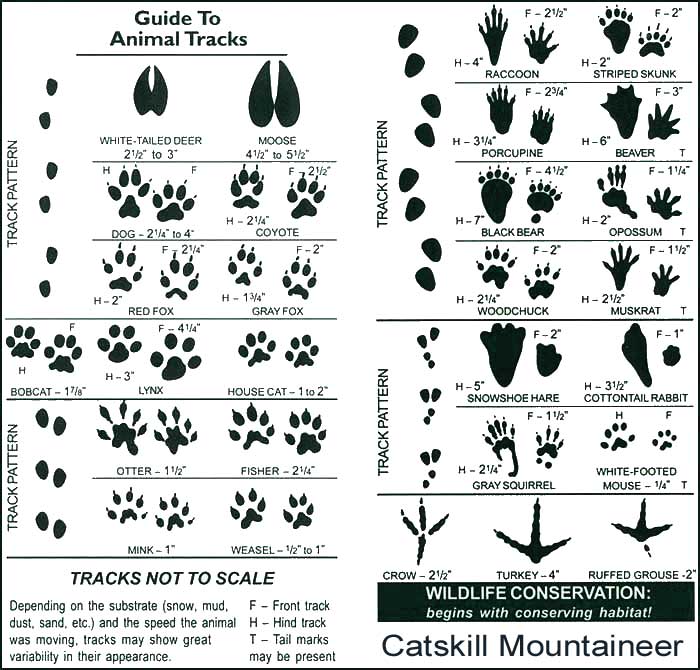
Tracking

Our ancestors used many skills to survive.  They used their tracking skills to find and hunt the animals used for food, clothing, and tools.  They had to make the bows and arrows, traps and snares, clubs and tomahawks used in hunting. While hunting, they had to know what plants, or parts of plants, were edible and how to prepare them.  They also knew what plants were used for medicinal purposes, and how to prepare the medicines. They knew how to find their way through forests, mountains, and unfamiliar terrain without the aid of compasses and maps.

Our ancestors had many skills essential to survival.  We should never forget these skills or how to use them.

Tracking is identifying an animal by the footprints the animal left on the ground, by its scat, and by the environment surrounding those footprints.  By identifying the animal in question, a person can know whether to pursue the animal or evade it. Such things as gait, along with the distance between prints, can tell you if the animal is running or walking. Becoming familiar with the footprints of an animal is just the beginning of understanding tracking. The size and depth of the print can help tell you the size of the animal.

animal-tracks-02

Butchering

Raising an animal is one thing, butchering it is another. Few hunters even know how to properly butcher an animal, as most take them to a butcher for cutting up and packaging. Yet, an animal which is not properly cleaned and butchered can cause disease. You can also waste a lot of good meat by not doing it correctly. The pioneers knew how to butcher an animal the right way and never wasted anything. Every part of the animal had a use.

Tanning

This is the first step in tanning hides and making leather the old fashioned way. Sometimes called brain tan, smoke tan, Indian tan or home tan. Watch this demonstrator scrap the hair and grain from the hide.

Sewing

Sewing can seem like such and olden thing, but it’s really not! Being able to patch up holes in clothing and tarpaulin among many other things can useful in survival. It’s not a skill that should be left to the Grandmothers of the world it’s one that should be passed on down the generations.

We’ve just mentioned some of the obvious uses for sewing so far, being clothing and tarpaulin, but what if you need to sew up a wound? This may seem simple, but if you’ve never sewn before you having nothing to base this assumption on.

Weaving

In a post crisis world, not only will it be impossible to buy clothes, you may also find it just as hard to buy material, patterns, and tools for making your own clothes and shoes. As someone that learned how to knit, crochet, weave, and hand sew by the age of nine, I can safely say there is far more to good quality, long lasting clothes than what you see in the stores. Our ancestors readily turned cotton, wool, hemp, and other plant based goods into textiles by using spinning wheels and looms. By the same token, stretching and tanning animal hides (including brain tanning) also offers a source of fabric from just about any animal you take for food. When it comes to bugging out or preparing for a crisis, you will eventually realize that it does not make much sense to stockpile clothes. Even though modern fabrics are convenient, they can easily be replaced later on using materials that you grow or hunt.

Well Drilling

Having your own well on your property is a good idea even if you just want fresh, clean water that isn’t full of fluoride and chlorine like city water is. If SHTF, you’ll have one major problem already solved. Even if it doesn’t come to a survival scenario, having your own water supply means that you’re basically off the grid. You’re not dependent upon third parties and that’s awesome in my book. All these things considered, learning how to dig a well is a good lesson that every prepper should master.

Gardening

I’ve found that I increasingly prefer old fashioned gardening techniques (or at least those that I think of as “old fashioned”). I’m not saying they’re the best. I think my preference has something to do with my personality–but also that I’m gardening in a harsh subtropical environment where these techniques really work for me.

24 Lost Gardening Tips from 100 Years Ago

Some of these techniques are:

Set thin plants to the maximum recommended distances  (or more) for good air circulation, increased drought tolerance.

Cultivate (with a good sharp hoe)to keep down weeds and improve water penetration

Rotate crops and leave a bed fallow every few seasons

Amend soils with finished compost

Level the planting area (a gardening book tip that I’ve learned the hard way and extremely important in sandy soil)

Basic Carpentry and Shelter Building

The pioneers were very good carpenters. On every new frontier the pioneers made homes for themselves, using what the wild land provided. In the great forests of the Ohio and Mississippi valleys the land provided timber. Here the pioneers’ essential tool was the ax. The ax would clear the forest for the plow. But its first task was to shape a pioneer shelter.

When a family of settlers arrived at the spot where they planned to make their home, they began chopping saplings and trimming poles to build a lean-to. Between two forked trees they laid a crosspole. With the help of oxen or horses they rolled up a log, which was banked with dirt to form a low back wall. Then they laid poles, slanted upward, from the back log to the crosspole. The sloping roof was covered with bark and branches. The ends of the lean-to were walled with shorter poles and pickets. This was the pioneers’ “half-faced camp.” It always faced south, away from wind and rain. In front of the open side they dug a fire pit. Logs smoldered there day and night, giving warmth and protection.

Trading

The concept of private barter and alternative economies has been so far removed from our daily existence here in America that the very idea of participating in commerce without the use of dollars seems almost outlandish to many people.

One thing is certain, though: in the aftermath of a widespread disaster or the collapse of civil society as we know it, you’ll want to have useful skills and items that you can barter or trade with. Once society collapses, bartering will become a business. Individuals will have items they can barter with, but in most cases, a person would not be able to afford to part with the items they do have. Anyone not prepared will have nothing to barter with, so looters will be active as well as desperate. Real trading will be based On ‘long term’ items. Seeds, not food. Arrows, not ammo. Tools, not filters. See, once the ‘short duration expendables’ are consumed, you won’t be re-supplying, you’ll be making your own or doing without. From turning your own arrow shafts, to cutting arrowheads from old license plates; from building filtration weirs to filter water, to needing copper tubing to make ‘wood-fired-water-heaters’. Knowledge and durable supplies (axes, hammers, spoke shaves, saw blades, etc.) will be the real money. He who has stocked dozens of saw blades will be king. He who sits on a case of toilet paper will be sad he didn’t learn how to replace it with what they used 200 years ago, instead (FYI, toilet paper is only about a 100-year old concept – ask yourself, what did they use before then, and get a real clue – because THAT is VERY valuable in the long term!)

So, forget stocking for that 2-week event, it’s not that difficult. The hard part is stocking for the total paradigm shift, that few remember how to do much of. You won’t be making your own saw blades anytime soon. Now, ask yourself, what else will you NOT be making, that you need to learn how to make, or replace with older technology, before you need it (or need to trade it)?

Navigation

Being able to read a compass and a map is maybe one of the most important skills that will make the difference between life and death. Imagine the pioneers that had to make huge journeys to the old west from Independence Missouri to Oregon City. They were able to orientate by the stars and by the sun. Nowadays is easier to use a GPS but if SHTF and the GPS won’t work no more the old ways will come handy.

Trapping

Having the skill of trapping small game for food will be a great advantage. Knowing how to set multiple types of traps for different animals will ensure your survival and the survival of your loved ones. Here’s a great article on trapping:

Saving Seeds

Saving seeds is maybe a known skill but it is vitally important to the survival of your garden. By saving seeds you ensure the continuity of your food supply over the years. Start by saving your seeds and planting them in spring to practice this skill.

Start A Fire Without Matches

There’s a primal link between man and fire. Every prepper should know how to start a fire with the resources around them, even if that means creating fire without a match or lighter. This is an essential survival skill as you never know when you’ll find yourself in a situation where you’ll need a fire, but you don’t have matches. Maybe your single engine plane goes down while you’re flying over the Alaskan wilderness, like the kid in Hatchet. Or perhaps you’re out camping and you lose your pack. It need not be something as dramatic at these situations-even extremely windy or wet conditions can render matches virtually useless. And whether or not you ever need to call upon these skills, it’s nice to know you can start a fire, whenever and wherever you are.

Maintaining Proper Hygiene

Thelostways5 Pioneer Survival Lessons

Maintaining a proper hygiene one of your top priorities because sickness can and will cause you problems. After SHTF water will be scarce and showers may not work so people must take in consideration this aspect when prepping. Bathing on a regular basis is necessary to avoid illness due to bacteria building up on your skin and causing health problems. You should take in consideration sponge baths as an option.

Off The Grid Hygiene Guide

Knowing Herbal Remedies

For medicines the pioneers had to provide for themselves. Women soon learned the use of herbs for healing. They used boneset for fever, pennyroyal to purify the blood, horehound for coughs, and ginseng for tonic. Syrups and salves were made from cherry root, horseradish, and witch hazel. Wild mustard, poplar root, and red sumac root went into teas, poultices, and powders. The standard cure for a chest cold was to rub the chest with goose grease and apply a mustard plaster.

Some frontier remedies were based more on superstition than science. Among these were potions of walnut bark “peeled upward,” boiled nettles, and “nanny tea,” made from sheep dung.

Foraging

From all the skills mentioned here, this is probably the most well known. However, we’ve seen that many people either focus on the ability to hunt, or the ability to forge. In order to give you the best chances of survival, knowledge of both skills is extremely necessary. Developing on from that you’ll also want to think about clothing, because those really nice winter jackets you’ve brought probably won’t last forever. Skills like skinning will come into their own here.

Making Alcohol From Fruits And Grains

Back in the old days making alcohol was a common thing amongst the pioneers. Alcohol is a great disinfectant, great for entertaining and a very valuable trade item. Knowing how to make alcohol will give the ability to trade both alcohol and the skill itself which will be in great demand.

Basic Firearm Repair

Back in the old west guns were something vital. Everybody had one. So the demand for this skill was very big and everyone knew the basics to repair their gun and had some basic spare parts around. I bet you think you got everything you’ll need, right? Covered all the basics didn’t you?
Bet you forgot one critical thing that will keep you alive more than a weapon or cleaning kit…
What is it? FIRST AID KIT for your primary weapons.
Yea I thought so. Firing pins, extractors, detents springs. Places won’t be around to get parts. They are small and don’t weigh much. Pass this on…

Raising Livestock

The ranchers went west to raise cattle. The open plains were ideal for grazing huge herds, and the completion of the transcontinental railroad in 1869 made it possible to ship the cattle to market in large and profitable numbers. Cattle ranching was a tough business that gave the West its cowboys. Cowboys tended the herds while they were grazing, branded them when they were of age, fought off cattle thieves, and managed the long drives of thousands of cattle over hundreds of miles of open prairie to the railroads. They followed well-known trails, like the Chisholm Trail, that have become a part of the landscape of U.S. folklore.

Hunting

Hunting requires spending a lot of energy, and there’s a reason that settled humans moved from hunting to cultivation in the form of growing food and rearing livestock. The ability to grow fruits and vegetables not only saves you from having to hunt as much, but it also provides nutrients for your diet that you might not otherwise obtain, especially when attempting to survive in the longer term. There are illnesses that can be brought on simply by not getting enough nutrition like Scurvy. This is something avoidable. The rearing of livestock would be a harder task but not unimaginably so. This will not only yield food, but it’s also a good way of keeping busy especially if you’re trying to survive in an environment far from the general population

Blacksmithing

The mighty smith of folklore was the blacksmith, who worked with iron and steel and whose hammer wielded more force than his fellow craftsmen, the tinsmith and the whitesmith, who worked in lighter metals. The word “smith” derives its meaning from the word “smite,” transformed over time to mean “a man who strikes.” Blacksmiths were valuable in every frontier community because they could make tools: crowbars, axles, axes, plows, and other implements. They also produced fine metal parts like hinges, hoops for wooden barrels, nails, and pots. The blacksmith ranked with the cobbler as a rural philosopher, and his shop, with doors open during the summer and comfortably warm in the winter, offered men a receptive place for gathering and gossip. The craft was passed on from master blacksmiths to young apprentices, who were usually just boys when they began learning. Today many people associate blacksmithing with one who makes horseshoes, but those specialists are more properly known as farriers.

Solar energy is a renewable source of energy with has many benefits.

The best thing is that you’ll save money on you electric bill.

To build your own solar panel almost for free, you’ll need to watch this video

Final ward

Living without power, cars, electronics or running water may seem like a nightmare scenario but to pioneers it was just the way life was. Having the skills to survive without modern conveniences is not only smart in case SHTF, it’s also great for the environment. Keep in mind that the key to a successful homestead does not only lie on being able to grow your own food but on other skills as well. Learning these skills will take time, patience and perseverance, and not all of these skills are applicable to certain situations. Hopefully, though, you managed to pick up some great ideas that will inspire you and get you started!

By James Cole, From: www.bioprepper.com

The Best Emergency Food Methods For Keeping Your Family Alive Surviving the Coming Collapse

A second catastrophe promises to follow in the foot steps of a first — it’s a catastrophic food shortage. The time to prepare for that is now.Lessons passed down by expert preppers on storing up emergency food on a budget…

Emergency foods are something that families, church and relief organizations, schools, institutions, and food banks should be stocking up on nowadays, while it’s still possible, while there’s still food to be had.

Our nation is sitting on a ticking time bomb and we unfortunately cannot tell exactly when this bomb is going to finally detonate. But we can hear it ticking. Louder with every passing year. Yet, no matter how frantically government and the military work to defuse the bomb, defusing this bomb continues to elude them. Of course I’m using an analogy to describe some serious crap hitting the fan.

When it does, we are looking at a famine on a level that this world has never seen before.

Preparedness Hacks: Once a nuke is heading your way, you might think that there isn’t much left to do, but you would be wrong!

Because we will show you America’s natural nuclear bunkers that are also EMP proof. When the sirens start wailing, all you need to do is pick the closest one to your home, where you can take cover before it hits.

Nationwide Food Shortage And Then —

Famine. No more food coming in from anywhere.

What if the day comes where stores never re-open? At the point where your survival food stores become exhausted after several weeks following a collapse, you’re either going to have to turn to begging for food, or a very difficult and frustrating life trying to hunt, fish, trap or forage in the adjacent forests — called living off the land — but truly, only the adept, the knowledgeable, and the experienced are going to be able to “live off the land” and the ones who do won’t be found in any nearby woods or hills.

Because there won’t be anything to hunt or forage for in the nearby woods or hills following a major disaster.

Here are 23 survival uses for honey that you didn’t knowabout.

Wildlife is very sensitive to the presence of people.

So a large number of people fleeing into wilderness regions is going to send much of the wildlife fleeing for remote regions. It’s these remote regions that the hunting can be good; but only the most adept are likely to make it that far where there are no roads, where there may be rugged mountains and canyons and rivers to cross; there may be dangerous weather conditions to deal with depending on the season. If you can make it to a remote region, I’m talking really remote, it will be possible to live off the land, but it won’t be easy.

Are You Just Fine Right Where You’re At?

In a worst case scenario, we may see martial law, a government collapse, a civil war of sorts. Our nation weakened, it’s defenses obsolete, it’s critical infrastructure all but destroyed, a scene from Red Dawn (I’ve referred to this movie in another article) may play out in a number of communities. Are those Russian jets in the skies? Are those parachuters dropping down onto main street, Chinese or North Korean? The sky is full of them. The clouds were a perfect cover when radar defenses on the ground were no longer working, having been fried by the EMP that had first wrecked America’s power grid six months back.

Parachuters are landing in residential neighborhoods. Quickly gathering up parachutes. Quickly checking weapons and gear. Firing at people who had been watching it all unfold from front yards and porches.

Who’s cargo planes are landing at the local municipal airport with tanks and military vehicles streaming out? Chinese symbols. Russian symbols. What the hell is going on?

Hopefully That’s Not Your Community

But it may be more than one community at some point. It’s very possible that your community will make it through the weeks and months following a collapse that we can feel in our blood and in our bones is heading America’s way some point soon. We can see the signs in the heavens and the earth, I believe, that Jesus warned about when he was here and told us to be on the watch for. Impending judgment. We were told, and cautioned as Christians, to watch for it. When we see it, we will know. It’s almost like Yoda talking to Luke Skywalker in Star Wars, telling Luke he will know the time when the time is the right time. What Yoda? That makes no sense. On reflection though, Luke finally one day figures out what Yoda was telling him. What is the Lord telling us right now through the Spirit? For the unbelievers out there, who don’t yet know God, for a Christian this essentially means what is God leading us to do or prepare for without using words to tell us?

New Survival Energy Product Makes Every Window A Powerful Solar Charger

Some Of Us Should Be Stockpiling Food

Some communities, some neighborhoods, some small towns and cities will likely make it through the first few months following a collapse relatively fine, all things considered. Other’s won’t do so well and will be very dangerous places to live.

You’ll need some friends, you’ll need some fire power, hopefully God is on your side with all that fire power and he’s going to use you in some way to make a difference, for good. The violent hand of God is something we see repeated in Old Testament chapters of the Bible. I expect it’s something we’re likely to see again some day. There’s just too many examples of God going to war through his people, though not all of them of course, just a few at a time. Because if God used too many people, to give the enemies of Christ a beating, they might make the mistake of thinking that they did this by their own power. That’s not God’s style in the Bible though. That’s not the pattern we see in scripture.

Who remembers this phrase? “Saul has slain his thousands, and David his tens of thousands.”

When God favored the Israelites, the Israelites were successful at wiping out enemy nations, success after success after success.

But when God was angry with the Israelites, over rebellion, over disobedience, over wicked acts and atrocities, just the opposite happened. The Israelites were overrun, beaten down, many killed, many more ended up enslaved to other nations.

That first part sounds a lot like America. At one time we were a nation under God. Success after success. Innovation after innovation. Dreams and bigger dreams. America had God’s favor and was the gem of the world. People from around the world dreamed of moving here and many did. But today America no longer has God’s favor. We have become God’s enemy. Not all of us. But a lot of us.

Jesus warned the wheat would be separated from the chaff. If you don’t know what he meant by this, you better figure that one out fast. If should be the first thing you do before you do anything else in life.

During a SHTF situation, pain could become an annoyance for some, but unbearable for others.
If doctors are scarce and medicine becomes even scarcer, this one little weed, found all over North America and similar to morphine, could be a saving grace.

What the hell did Jesus mean when he said he would seperate the wheat from the chaff? There’s nothing difficult with that statement. So why do so many people have a hard time grasping those words?

They just don’t care.

Tick.

Tock.

Time’s up.

How Long Will Your Emergency Food Last?

If disaster struck today, how long would your stockpile last? Careful, it’s a trick question. I’m not asking how long you would be able to live off your stockpile — I’m asking about the actual shelf life of the foods in your basement or pantry.

Though you may have beans and cereal that, in theory, can last 10 years or more, the way you store them can substantially decrease or increase that amount. In other words, you may have quite a bit of food in your pantry right now that has less than a year until it expires… and that’s a tough position to be in if a serious, earth shaking disaster struck today.

The Scoop On Emergency Food Storage

Extending The Shelf Life Of Several Foods

Food storage done right, so you can double, triple or even quadruple the shelf life of your foods. Let’s talk about that for a moment. It all starts with the 5 food storage enemies: Oxygen, moisture, temperature, light and pests. The 6th one is time but there’s nothing we can do about that except rotating our stash. Now, if you’re looking to get 10, 20 or even 30 years of shelf life off your foods, you need to tackle all of these enemies. No exception.

Extending The Shelf Life Of Grains, Beans And Rice

Grains, beans, white rice… These are some of the foods with a long shelf life preppers like to stockpile that are also cheap. However, not all varieties are worthy to be in your stockpile.

These Solar Backup Generators Deliver 4 Times More Power Than Other Models!

For example, Cheerios and other breakfast cereals you typically buy at the supermarket have a shelf life of 6 to 8 months. Processed cereals have many refined and hydrogenated oils in them, oil goes rancid so, even if you were to use the preservation techniques we’re going to talk about in a minute, it still wouldn’t be worth it. Thus, step one in storing your food for a really long time is to pick the right food. When we’re talking about real long term emergency food storage, opt for storing white rice (not brown), dried beans and whole wheat berries (not breakfast cereals); rice, beans and wheat berries should be the staples of your survival stockpile.

Mylar Bags With Oxygen Absorbers For Storing Emergency Food

The best way to store your emergency food is in Mylar bags with oxygen absorbers. This is a no-fail combination used by most preppers, provided your food is dry before you store it. Otherwise, you can wake up with condensation after you seal the package — not a good thing.

The process is simple. You fill the bag nearly all the way to the top, seal it using an iron or a hair straightener (but not before you add a pack of the oxygen absorber), depending on the size of the bag. Oxygen absorbers are small packs of iron powder and create a nitrogen environment by removing any oxygen present through chemical reactions.

So, even if the bag will look like it’s got air inside, you don’t need to panic because that’s just nitrogen.

It’s worth mentioning that neither the nitrogen nor the iron powder can affect your food (provided you keep the O2 absorbers inside the original packaging).

As you can see, you don’t need to vacuum-seal the bags; the absorbers will do the trick to prevent growth of aerobic pathogens (such as mold) as well as preventing oxidation. These are the two ways oxygen can spoil your food. Besides, your cereals will crumble under the pressure of the bag.

Put Mylar Bags Inside Airtight BPA-Free 5 Gallon Buckets

Next, you should put the Mylar bags inside airtight BPA-free 5-gallon buckets. This may seem unnecessary but it’s actually a good idea. First off, the bucket will shield the bags from light (another declared food storage enemy), thus improving shelf life. Second, it protects the bag from accidental puncturing (Mylars aren’t that strong, by the way).

We talked about aerobic bacteria but anaerobes need very little or no oxygen to develop. The most important one is called Clostridium botulinum and is responsible for a disease called botulism (not something you want to suffer from post-collapse). Fortunately, this doesn’t really occur when storing grains, beans and rice as long as they’re not moist. It’s something that mostly shows up in canned food, which we’ll tackle in a moment.

The last thing you need to do after you’ve taken care of oxygen, light and humidity is ensure the proper temperature. Anywhere between 50F and 70F will work, preferably closer to 50.

If You Do Everything Right, How Long Can Food Last In Storage?

What shelf life can you expect if you do everything right? This is pretty amazing:

– White rice can last at least 7-8 years with some sources going as high as 25.

– Hard grains such as wheat and corn can store for at least 10 years.

– Soft grains can last about 8 years (because the outer shell is not as strong as that of hard grains)

Emergency Food Storage For Pasta

Storing pasta for the long term is just as easy as storing beans or grain. If you read the label, they tell you it lasts for 1-2 years but if you store it in Mylar bags with oxygen absorbers, that shelf life can increase up to ten times… that’s 20+ years in shelf life!

Place it in plastic buckets to protect it from light, from crumbling inside and from accidental puncturing of the bag. Speaking of punctures, you may want to consider storing things like spaghetti in 5-mil bags instead of the more common 3.5 mil to avoid any sharp noodles accidentally poking holes in the mylar.

Some people like to freeze pasta before storage to prevent larva eggs from hatching. So, to kill these eggs, noodles should stay frozen for approximately 5 days but this method is not needed as long as you use oxygen absorbers. Ultimately freezing the noodles won’t hurt them but it won’t really help either. If you do decide to do it, you need to allow the frozen noodles to reach room temperature before you seal these noodles in Mylars. Otherwise condensation will form and allow the growth of mold.

Canned Food Can Last Several Years Past Expiration Date

There are a lot of myths about canned foods and I want to bust the ones that have to do with shelf life, the one related to the expiration date. Food experts on shelf life have looked closely at unopened cans of food from several decades back, sometimes recovered from shipwrecks, and the data they found was a real eye opener: Canned food can last several years past it’s expiration date.

As long as the can has been properly stored and it looks good on the outside (it’s not leaking and the lid is not swollen or punctured), it’s probably safe to eat. You still have to check for suspicious smells but there have been reports of cans of food that were safe to eat even after 30 or 40 years.

Nevertheless, plenty of people have reported being absolutely fine after eating canned food past the expiration date. Of course, you need to give your cans the same conditions you do to your beans and rice: Keep them in a cool, dry, dark place away from moisture.

Now, there are two types of canned food when it comes to how long they can last: High-acidic and low-acidic. The USDA guidelines tell us that high-acid food (canned fruit and pickles) can last up to 18 months while low acid food (canned meat, beans, corn, potatoes etc.) up to 5 years. The acid in these cans contributes to the deterioration of color, texture and nutrients (over time, of course).

As mentioned earlier, if the can looks, smells and tastes ok, you can ignore the expiration and the “best by” dates (in a post-collapse you might not have a choice anyway).

Extending The Shelf Life Of Peanut Butter

Peanut butter is jam-packed with calories and can last a long time if properly stored… but there’s a catch. It’s full of oils and, as previously said, oils go rancid over time. It depends which type of PB you’re storing, because natural peanut butter only last a few months while smooth and crunchy can last up to a year.

To improve its shelf life, you need to keep peanut butter tightly sealed and in a cool, dry, dark place. You should also store it in a glass rather than a plastic jar to increase longevity even more.

The alternative to PB is powdered peanut butter, which should store for at least 5 years, closer to 10 actually, and it’s good for another year after you open it. That’s considerably longer than traditional peanut butter.

Food Items With An Indefinite Shelf Life

You probably heard that honey has an indefinite shelf life. The only thing that can go “wrong” with it is crystallization, meaning the sugar molecules align themselves in a certain way. This is not a sign it went bad but still, there’s an easy fix: Place the open jar in a pot full of hot water and stir it until the crystals dissolve. In order to slow down the crystallization process, simply store the honey at room temperature. Since most of your foods need to be in cool places, you can keep honey in your kitchen or pantry where you probably have more space.

The other items with an indefinite shelf life are salt, sugar and molasses but the one thing you should do is keep them away from moisture. It’s common for basements to develop mold due to poor ventilation so the two options you have are to either install a fan (if your basement has windows), a dehumidifier (which, unfortunately, will incur electricity costs) or use some of the other recommended options depending on how bad things are.

No long-term survival plan is complete without the seeds that will allow you to start a garden once the dust settles after a collapse. In a worst case scenario, especially those who live in heavily populated areas, that may mean a long and difficult evacuation from a disaster struck region. The good news about seeds is that they don’t take up a lot of space and you can transport them with relative ease; when the time is right, plant that garden finally.

The most important thing to seed storage is to keep these seeds dry. Moisture is the biggest enemy but, fortunately, one you can easily defeat. Keeping your seeds in a cool, dry place should work and don’t forget to add desiccants to the container and seal them afterwards. Another thing you need to do is dry them before storage.

If you don’t want to use desiccants you have other options, such as putting them in paper envelopes. Other options include storing them inside the fridge or the freezer but if you’re left without power in the next disaster, you’re still going to use one of the aforementioned solutions.

The shelf life of various seeds varies.

Some people say they can last up to a hundred years. They actually found seeds inside the belly of a frozen mammoth, meaning they lasted thousands of years! It’s hard to say but if you do it right, you can expect to get at least 5 years of storage life and a 70% germination rate. The ones that have the longest shelf life are:

Bean (2-3 years)

Radish, muskmelon, cress, collards and cucumber (5 years)

Tomato, squash, turnips, eggplant, sorrel, cauliflower Brussel sprouts and watermelon (4 years each)

…but, again, the life of a seed can increase if you do a good job storing them.

Emergency Food Storage For Your Pet

How To Store Dry And Canned Pet Food

There are essentially two types of pet food you can stockpile and they’re the same ones you feed your pets every day: Dry and canned. Surprisingly, canned food lasts a lot longer than dry because dry food has a lot of fat in it, which causes it to go rancid quickly. Dry food usually lasts a year while canned food for 2+ years.

If you’re thinking of using oxygen absorbers with dry pet food, it might not work. You might wake up with mold rings around the absorbers which will, in turn, spoil the entire bag as several preppers have cautioned.

The good news about storing pet food, though, is that there’s no difference between survival food and what they regularly eat for your pet. The other good news is that pets can eat “human survival food” (for lack of a better term). For example, dogs can eat white rice, which we already know can last a lot longer if properly stored (being one of the most popular survival foods).

As long as you store your pet food in a cool, dry dark place (such as a ventilated basement), you’ll surely get a lot more than the 1-2 years it’s stated to last.

How Temperature Fluctuations Affect Emergency Food

Before we wrap this up, I need to address an overlooked aspect: Fluctuations in temperature. We said earlier that some foods need to be stored at temperatures between 50F and 70F but that’s only half the story. The other half is that you need to keep temperature variations to a minimum because they too can (negatively) affect shelf life. Even if you keep it within the interval at all times, fluctuations between 50F and 70F should be avoided.

Why Store Up Emergency Food? So You Can Survive During A Famine!

In the modern age, with so many grocery stores and restaurants bustling with activity and low prices (sometimes high) on many common food items, it’s hard to imagine what life would be like if suddenly it all came to an end. Unfortunately, if someone were to pull the plug on interstate shipping and nationwide commercial food processing and commercial agriculture, literally overnight stores across several regions would slam shut their doors and before you knew it the greatest disaster in America’s history would unfold right before our eyes.

Famine. Food shortages. Long lines stretching possibly miles for a government handout (until the government closes it’s doors as well). Long lines seeking food at churches (that is until churches run out of food) and soup kitchens — soup kitchens once popular with the homeless but now attracting crowds of hungry and scared citizens and their families looking for food and also looking for a solution; but there won’t be one.

What about organizations like the Red Cross and Salvation Army? In some communities, in the first few hours and days, they may also be a source for food, but expect incredibly long lines. When or if food finally gets into your hands unfortunately it may not be something you really find that palatable.

Isn’t Storing Up Food At Odds With Living By Faith?

For those of us who live as Christians, it would seem that way. Living by faith means we know that the Lord will provide. It takes great faith not to store up so that we can see how the Lord will provide and many times he can astonish us. I think though that there’s another angle here to look at; it’s knowing that there are a lot of people who will be hungry during a massive food shortage and subsequent famine, who haven’t stored up food, and first and foremost that could end up being a neighbor or even family and friends who simply never believed that the Terrible Day of the Lord as warned in the Bible was one day headed our way.

A lot of people, and I’m sure a few readers here, may not believe today in these Biblical warnings I’ve shared at different times on the site. I’m going to predict though that a lot of you will start believing in the times ahead.

I get that assurance from the Bible — most people who end up believing in Jesus don’t believe until God is dropping the hammer. In other words: People are some hard eggs to crack!

Food Storage Happens Now — Not Later

It’s a sad, unfortunate fact. There will be a day where tens of millions of people realize that so many signs about a coming catastrophe were all around them, but they were just too glued to their daily routines and complacency and stubbornness about life to notice. They felt life should be lived whatever way they wanted, even though for many the way they live their lives is in direct disobedience to God.

I know it. I’ve been there. And it’s not just the banksters at the top of the food chain preying on the consumers or the super elites at the head of our corporations; no, it’s the rest of us also, the people that make up modern day nations caught up in what the Bible describes as carnal, worldly lives — with a complete disregard for God and his warnings about the coming wrath on the world to deal with it’s many evils and atrocities. Atrocities are committed somewhere on our planet on a daily basis.

God Sees All

The prophets, apostles, Jesus himself assured us that there is a terrible day coming for our planet.

If we don’t get our lives right with God, we are going to be caught up in the midst of it. It may start with a government collapse and famine and food shortages, but really that will only be the beginning. A serious storm is heading to our world and we see it’s waves starting to beat against our shores; consider ISIS (or another faction of Radical Islam) as one of those waves; if you look at the ocean during a storm you cannot count the number of waves that hit; but you can see how strong and violent the waves get as the storm approaches.

The Storm Is Approaching

Matthew 21:25-26 – 25 “And there will be signs in the sun and moon and stars, and on the earth distress of nations in perplexity because of the roaring of the sea and the waves, people fainting with fear and with foreboding of what is coming on the world…”

Matthew 21:29-33 – And he told them a parable: “Look at the fig tree, and all the trees. As soon as they come out in leaf, you see for yourselves and know that the summer is already near. So also, when you see these things taking place, you know that the kingdom of God is near. Truly, I say to you, this generation will not pass away until all has taken place. Heaven and earth will pass away, but my words will not pass away.”

Matthew 21:34-36 -“But watch yourselves lest your hearts be weighed down with dissipation and drunkenness and cares of this life, and that day come upon you suddenly like a trap. For it will come upon all who dwell on the face of the whole earth. But stay awake at all times, praying that you may have strength to escape all these things that are going to take place, and to stand before the Son of Man.”

Best Place To Live Off Grid in USA

What’s the best place to live off the grid in the USA? While technically you could live off grid anywhere, there are some places that are better suited for living off the grid than others. The reasons are many, but most have to do with land prices and local county building codes and ordinances.

I’ll start the list off in alphabetical order, and then I’ll give my opinion on the best states to live off grid based on benefits and availability. Before I list them you need to know how I choose the states and what I’m looking for in off grid land. Because that’s what it comes down to. Land. You have to have a place to go to before you can move off grid, and while that seems obvious, it’s not as obvious when choosing the perfect off grid land and property location.

( HERE ARE: 21 wild edibles you can find in urban areas)

Best Place To Live Off Grid

A number of factors should be considered: land prices, county building codes and local ordinances, property taxes, zoning restrictions, covenants, water availability, septic system regulations (which are usually governed by state and federal agencies), and lots of other factors.

Preparedness Hacks: Once a nuke is heading your way, you might think that there isn’t much left to do, but you would be wrong!

Because we will show you America’s natural nuclear bunkers that are also EMP proof. When the sirens start wailing, all you need to do is pick the closest one to your home, where you can take cover before it hits.

Factors to consider when choosing land for off grid living

To simplify, there are some main factors that people need to consider when buying land for building their off grid homestead.

1. Climate – Do you want to live in a place with all fours seasons, 2 seasons, or where it’s nice year-round? Do you like the rain, snow, sun, heat, cold? Figuring that out seems easy, but it takes research. Citydata.com has awesome historical weather charts you can look at to help you decide where to move to.

Best place to live off grid

2. Water – You need a renewable, dependable, clean water source to survive. Period. Especially in desert areas. Desert land is cheap and it’s cheap for a reason. You can buy 100 acres of desert land for the same amount or less that what you’d pay for waterfront property in milder climate zones.

3. Laws – You need to make sure you can build what you want and live the way you want. This means being off grid, disconnected from the power grid (or grid tied solar/wind), and producing your own power and water.

Building codes must be followed or find a place that does not enforce the codes, or better yet find a place that has little or no building codes which means a remote property far from a city or town usually. (Here are 23 survival uses for honey that you didn’t know about.)

Best place to live off grid

4. Taxes – You obviously want lower property taxes. Agricultural property is less expensive, but usually is a larger piece of land. This could be a good thing, but not always.

A larger parcel of land is typically more expensive and requires a larger outlay of cash upfront. A smaller property will be zoned residential, but residential property taxes are higher on agriculturally zoned land.

5. Zoning – Try to pick an agricultural property, or apply for rezoning or a variance with your county to get your taxes lowered. It depends on the county and city planning department, but you could get your property rezoned agricultural if you can provide a good reason for the rezoning, such as creating a garden or micro-farm, or raising livestock of some kind. Depending on the location and your neighbors, you might be able to get rezoned fairly easily to allow that kind of operation.

Best place to live off grid

6. Land Price – I left land price almost last because this is so subjective. Affordable pricing is important, but it’s not always indicative of a good deal or the best place to buy off grid land. Like I said above about desert land, it’s cheap for a reason. The same thing with swamp land.

7. Timber & Rock – You’ll need building materials!

Best place to live off grid

Well, that’s a good start and now I can use this to gauge whether a property is located in a good area to go off grid.

Best places to live off grid in the U.S.

Arizona – Northern Arizona. Cheap land, mild climate and some trees. Water is an issue and you will probably have to haul water to your property, but it’s doable.

During a SHTF situation, pain could become an annoyance for some, but unbearable for others.
If doctors are scarce and medicine becomes even scarcer, this one little weed, found all over North America and similar to morphine, could be a saving grace.

California – Northern California specifically has a lot of good land and it’s priced reasonably. Climate is milder than most northern territories, water is readily available, ordinances are less strict, taxes are lower, and land prices are affordable. SoCal is good, but expensive and overpopulated. Land is expensive there and there’s too many people and rules.

Best place to live off grid

Colorado – Some counties in Colorado are relaxing their strict codes and allowing more off grid and sustainable buildings. Water could be an issue in some places since a lot of Colorado is desert, but it’s not a huge problem and there are work arounds. Land prices are pretty good further away from the bigger cities.

Florida – YES! Florida is awesome for living off grid. Contrary to popular belief, it is NOT illegal to live off grid in Florida. Just like anywhere else in the USA you must have a proper septic system and a clean water source.

Many people have exaggerated on a story going around the internet that Florida doesn’t allow off grid living, but the story is completely false. That story has been published and republished by people who have ulterior motives and agendas and those who simply didn’t know any better. Most of those who posted the story did so only to make money off the advertising by spreading bogus, non-factual stories which spread like wildfire.

Best place to live off grid

So to clarify and set the record straight. YES! You can live off grid in Florida! You can have solar panels and wind turbines and water wells and gardens and all the great cool stuff that off grid living has to offer. You can even have chickens and cows and pigs! Just like anywhere else in the USA.

Land is relatively affordable in rural areas and water is plentiful. Timber is also plentiful, however rock is not. Florida is mostly sand and dirt, except for southern Florida which sits atop calcified, petrified coral beds which are hard as rock.

Homestead, Florida is a place where the fossilized coral is very thick. So thick, a long time ago a man had a quarry in his back yard and built a castle out of the coral. Look up “The Coral Castle” by Edward Leedskalnin. It’s an amazing thing to see. So, living off grid in Florida is perfectly legal and it ranks as one of my top 5 places to live off grid in the USA.

Best place to live off grid
Coral Castle in Florida

Maine – Maine is an off gridders dream! There are lots of properties for sale and much of the land is cheap and remote. Water is plentiful, as is timber and rock to build with.

The only drawback is the climate. It gets cold there, and it’s a wet cold. But if you can deal with the winters, it does have beautiful seasons. Summer is bearable and temps in spring and fall are comfortable. Zoning, from what I’ve determined, is open to off gridders and building codes are relatively reasonable.

Montana – Big sky country! This state is great if you’re a rancher, but it’s bitter cold in the winter and the wind howls across the prairie and grasslands.

If you’re looking for land in Montana look in the mountains for shelter from the winds. The same goes for Wyoming and North Dakota. Cold and windy unless you’re in the mountains, and even then it’s bitter cold in the winter.

Best place to live off grid

Having said that, Montana is a great state to move off grid. Land prices are reasonable, you can find some good waterfront property on a stream in the mountains for a relatively reasonable price, and water is readily available in most areas. Timber and rock is also plentiful in mountainous areas, but not so much on the prairies.

Oregon – Again, just about anywhere in Oregon is good. There are some desert areas, but western Oregon up and down the Cascade mountain range is very good. Central Oregon is desert, but it’s high desert like in places in central and northern California and the climate is milder there.

Summers in Oregon get hot just like anywhere, and winters are cold, but they do not last as long. Land prices are good and there are plenty of timber properties available too.

Best place to live off grid

Texas – The land in Texas is plentiful – it’s a big state – but water is an issue in some places. Land is affordable in remote areas and in smaller counties and towns.

There is good hunting and fishing in Texas, and the climate is mild to hot depending on where you are. Some of Texas is desert, so try to avoid that area if you don’t like the heat, but if you’re smart and do your research you can find good land deals there.

Best place to live off grid

Vermont – Vermont is another great state to live off grid. Land is plentiful and affordable. Water is available and not hard to come by as well as timber and rock for building. Resources are available and zoning is open to living off grid in most counties. Again, stay away from the larger cities and towns to find counties which are more open to living off the grid.

Best place to live off grid

That’s enough for now. I will update this list as I get time with more detail as I get it. If you think I left a good state off this list let me know and I’ll research it and place it on my list.

Of these, here is my list of the top 5 best places to live off grid in the USA:

  1. Florida
  2. Colorado
  3. California
  4. Maine
  5. Vermont

I like Florida because the weather there is awesome year round. Colorado, well, one word. Cannabis! Actually there’s lots more reasons than the fact marijuana is legal there. Hemp is also legal and it’s a great material which can produce many hundreds of products.

Northern California is beautiful and peaceful, and Maine is awesome and land is very plentiful and affordable. Last but certainly not least is Vermont. They have beautiful country land in Vermont and maple syrup and all kinds of hunting and fishing. Timber is plentiful, as is water, and land is very affordable.

So there you have it. The best states to live off grid in the USA.

Solar energy is a renewable source of energy with has many benefits.

The best thing is that you’ll save money on you electric bill.

To build your own solar panel almost for free, you’ll need to watch this video

Root Cellars 101- Root Cellar Design, Use and Mistakes to Avoid

In this article we’ll talk about 5 things you must include in a root cellar design, plus 10 tips for fruit and vegetable storage. There’s also a printable storage guide for over 30 fruits and veggies, and jump links to additional information at the bottom of the post.

A root cellar is a great low-cost way to store food – not just root vegetables, but other fresh produce, too. They require no energy to use and very little maintenance. You can build in a root cellar when your home is under construction, but it’s also possible to add a root cellar to your basement, or build one outside your home.

(21 wild edibles you can find in urban areas)

What is a root cellar?

Dig a deep enough hole, and you’ll find that the ground is cool (and often moist). Root cellars tap into those cool, moist soil conditions and use them to store produce – like your refrigerator produce bin.

Preparedness Hacks: Once a nuke is heading your way, you might think that there isn’t much left to do, but you would be wrong!

Because we will show you America’s natural nuclear bunkers that are also EMP proof. When the sirens start wailing, all you need to do is pick the closest one to your home, where you can take cover before it hits.

Building a Root Cellar

There are five major elements that a root cellar requires:

  1. Ventilation:  Some produce gives off ethylene gas, which can cause other produce to spoil. Also, a tightly sealed cellar will increase the risk of mold. Make sure fresh air can get in, stale air can get out, and air can circulate around the produce.
  2. Earth-shelter:  The soil insulates and maintains a cool temperature. A packed earth floor or gravel floor is better than concrete for keeping moisture levels high.
  3. Darkness:  Light can trigger sprouting, so if you have a window in your root cellar, keep it covered, and don’t leave the lights on.
  4. Humidity:  A high humidity level of 85-95% keeps produce from drying out. Note: Humidity that is high enough for produce may cause canning jar lids to rust, so be sure to check lids and rotate stock if you store canned goods in the root cellar.
  5. Shelving/Storage bins: Wood shelving and bins are naturally antibacterial. Wood also conducts heat more slowly than metal, and doesn’t rust. Avoid treated wood, and stick to those that are naturally rot resistant.

Types of Root Cellars and Natural Cold Storage Options

Natural cold storage options include (click on any item in the list to jump to more information below):

  • Basement or Under Porch Root Cellar (accessible from inside the home)
  • Traditional Root Cellar (buried below ground, accessible from outside)
  • Earth Berm (at ground level or partially above ground)
  • Barrel in the ground

These earth sheltered fruit and vegetable options work best for those in cooler climates, where the ground temp is naturally cooler. For those in warmer areas, check out the posts Above Ground Root Cellars and Build Your Own Walk In Cooler with a CoolBot Controller and A/C Unit.

(Here are 23 survival uses for honey that you didn’t know about.)

You may not be able to store things like we northerners can, but the Above Ground Root Cellar post will give you some ideas of what you can store, plus tips for year round food production so you always have fresh, local food to enjoy. The Coolbot makes it very affordable to use a standard AC unit for refrigerated fruit and vegetable storage.

10 Tips for Fruit and Vegetable Storage in a Root Cellar

Key storage tips to remember:

  1. Late-maturing crops store better than early maturing crops. Specific varieties also store better than others. Watch for varieties that are noted for good storage quality.
  2. Check fruit and vegetable condition at storage time. If you note any damage on produce, use those items first. One bad apple or onion can spoil the whole bin, so it’s good to regularly inspect produce during storage, too.
  3. Cure the vegetables that need it before storage. Vegetables that require curing include onions, garlic, winter squash (pumpkins) and potatoes.
  4. Most root vegetables store best in the root cellar if they are wiped off rather than washed. Wipe excess dirt off of carrots, beets, rutabagas and turnips and store them in lightly dampened leaves or straw. Use fresh leaves each year to prevent potential pathogen buildup. Sand and sawdust will also work, but are messier.
  5. If you have a muddy garden at harvest time, it’s okay to wash, but make sure dry up excess moisture (and cure if needed) before storage to avoid rot.
  6. Less-than-ideal conditions shorten storage life – try to get as close as possible to target temps and moisture levels. Use different areas of your storage for crops that are a best fit, such as storing carrots and beets lower (colder) and tomatoes and winter squash higher (warmer). (See chart below.)
  7. Store fruits that give off ethylene gas away from produce that can be spoiled easily by ethylene gas. You can also wrap fruit that produces excess ethylene in newspaper to contain the gas. See Ethylene Gas below for more information.
  8. The odor of strong smelling vegetables, like turnips and cabbage, can be absorbed by fruits and other vegetables. Store them away from other food and where the odor cannot waft into the house.
  9. Do not allow fruits and vegetables to freeze. They will get mushy and rot. 
  10. Track temperature and humidity to measure your root cellar performance. The SensePushunit can track up to 20 days and sync with your smartphone.

Fruit and Vegetable Storage Chart

The chart below gives preferred temperature and moisture ranges for root cellar storage of a variety of fruits and vegetables. Adapted from the University of Missouri Extension Office. 

root cellar storage chart

Root Cellar Location – In the Basement or Buried Outside?

By default, the word “cellar” means “underground”. A big part of why root cellars work as well as they do is that the earth remains at a relatively constant (cool) temperature. This temperature will vary, depending on your location. Closer to the equator, and it may be cooler than air temp, but still isn’t likely to act well as a root cellar. At the opposite extreme, you have arctic permafrost, which the native folks use to store whole animals.

Retrofitting a Root Cellar in an Existing Home

The easiest option for building a root cellar is to section off a part of the basement (or maybe even the whole basement, if you live in an old farmhouse) for produce storage. Old dirt floor basements without heat are great for maintaining proper temperature and humidity levels.

Select an area with an existing window if possible, and use the window for ventilation. Fill the window with exterior grade plywood, and cut the necessary vent holes through the plywood. (The plywood also helps block light.)

North facing corners work well, because you can leave the two exterior walls uninsulated, and only insulate the interior walls. A north facing wall won’t gain heat from the sun. Use materials that tolerate moisture exposure.

Your basement root cellar should have no standard heating or cooling. Take note of ductwork or piping that runs through the ceiling above your root cellar (if any), and make sure vents or hot water pipes are well insulated so they don’t bleed heat into your root cellar.

For additional food storage space, build shelving on the outside of your basement root cellar for canned goods or other items.

During a SHTF situation, pain could become an annoyance for some, but unbearable for others.
If doctors are scarce and medicine becomes even scarcer, this one little weed, found all over North America and similar to morphine, could be a saving grace.

Adding a Root Cellar in a New Home

Many new homes have small concrete exterior porch. Typically this area has 4ft footings and is filled under the porch with dirt. You need to put a foundation wall under it anyway, so why not put this area to good use?

To turn this under porch area into a root cellar, have the builder put in full footings, an insulated exterior grade access door from the basement and two 4 inch vent holes. Add concrete slab on top as normal. This area could also be a wine cellar or safe room.

Our under porch root cellar measures about 6’x8′, which provides plenty of room for our stash of root veggies, plus gives a nice sized porch above. Locating the root cellar outside the footprint of the home allows the root cellar to maintain cooler temperatures more easily than a cellar located within the house.

"root cellars 101" test over table piled carrots and beets

Building a Root Cellar Outside the Home

For an exterior root cellar, similar rules apply – have good ventilation, keep it earth sheltered and dark. A north facing door is preferred, to avoid sun beating in and heating your cellar up. Aim for at least one to two feet of soil covering the root cellar, and make sure you choose a premade option (some people have used new septic tanks) or materials that are rot resistant and can stand the weight of wet soil.

Traditional Root Cellar

This is what most of us think of when we hear the phrase “root cellar”. There are insulated doors that lead down into the earth. It’s dug down or into the side of a hill. Walls are concrete, cinder block, or more creative materials like old tires. You need to make sure the roof and walls are well supported to avoid collapse. Engage an engineer to help ensure safety.

Earth Berm Root Cellar

Above ground root cellars are usually partly sunken with earth mounded on 3 sides and the door avoiding the direct sun. See the  Above Ground Root Cellars post for more information.

For a great resource on building a homestead root cellar, check out the book below by my friend, Teri, of Homestead Honey.

Barrel in the ground A (approximately Zones 6-9)

The size and depth depends on the zone you live in. A simple bucket, with holes drilled in the bottom and top, buried level with the soil with a bale of hay as an insulating cover will work into zone 7 and possibly into zone 6 depending on cover and conditions. The colder and hotter zones require the bucket or barrel to be deeper, and more insulation on the top to avoid the freezing surface temps.

Barrel in the ground B (approximately Zones 3-6)

Buy one large heavy duty garbage can, and a smaller garbage can that fits inside the larger one (with an inch or two gap). Both the larger garbage can and the smaller one need holes in the bottom. The inside one needs a cover with vents / screen. Cover exterior holes with screens to keep rodents out. It also needs significant insulation above it.

Prepare a hole that is deeper than the large garbage can, with rocks and gravel in the bottom to create a simple French drain. If water drains well, you will need a small amount of rocks and gravel. If soil doesn’t drain well, you need to go deeper and wider so your underground storage barrel doesn’t turn into a water hole. Another trick is to dig a very deep, large hole next to the garbage can hole and fill that hole with rocks. The deeper hole acts as a drain for your shallower garbage can root cellar.

Once you have the large garbage can in the ground and secure, lower the smaller one into the larger barrel. Store food in the small barrel. When you need access, grab from the top or pull out the smaller barrel. This makes it easier to reach food the bottom. There are many variations on this. Search “garbage can root cellar” for examples.

stored potatoes

Root Cellar Ventilation

Improper ventilation is one of most common mistakes that people make when designing/installing a root cellar. They build their underground food storage airtight to keep things nice and cold, and everything spoils. Why? Because some foods give off ethylene gas, which speeds ripening (and rotting). A root cellar that is too airtight may also build up excess humidity, leading to mold and mildew.

How should you ventilate your root cellar? Use two vents, about 3-4 inches in diameter. Place the vents so that one is near the top of the root cellar to exhaust stale air and ethylene gas. The other vent should be run down to near the floor, to drop in fresh air. 4 inch vents should be adequate for to up to around an 8’x10’ room. If your cellar is larger than this, consider additional ventilation. Make sure to put screen on the outside to keep mice and other small animals out!

Ethylene Gas

As fruits such as apples and pears ripen, they give off ethylene gas, which decreases the storage life of some produce. Ethylene gas can cause sprouting, decay, mold, yellowing, shrinking, toughness, softness, bitterness and other damage.

To combat spoilage from ethylene gas, segregate fruits and veggies that produce excess ethylene gas from those that are easily damaged from ethylene gas. (This is a good idea for your refrigerator produce bins, too.)

Fruits and Vegetables that may create excess ethylene gas include:

Apples, apricots, avocados, ripening bananas, blueberries, cantaloupe, citrus fruit (not grapefruit), cranberries, figs, guavas, grapes, green onions, honeydew, ripe kiwi fruit, mangoes, melons, mushrooms, nectarines, okra, papayas, passion fruit, peaches, pears, peppers, persimmons, pineapple, plantains, plums, prunes, quinces, tomatoes and watermelon.

Fruits and vegetables that may be damaged by excess ethylene gas include:

Asparagus, broccoli, Brussels sprouts, cabbage, carrots, cauliflower, chard, cucumbers, cut flowers, eggplant, endive, escarole, florist greens, green beans, kale, kiwi fruit, leafy greens, lettuce, parsley, peas, peppers, potatoes, potted plants, romaine lettuce spinach, squash, sweet potatoes, watercress and yams.

Root Cellar Lighting

Light exposure is the enemy of food storage. Every time I see people lining up their canning jars or spices on open shelves, I cringe. It looks beautiful, but light bleaches out the color and the nutrient value of foods.

In the root cellar, light exposure may lead to sprouting and green potatoes. If you’re venting through a window, cover the rest of the window. If you have a light in your root cellar so you can see your food storage better, don’t leave the light on when you’re not using it. A hunk of burlap drawn over bins of potatoes or fruit will allow ventilation while still blocking the light. A single incandescent light (switched on exterior) should provide adequate lighting (unless your room is really huge) and, if for some reason your storage gets too cold, you can always use it to introduce a little heat.

Solar energy is a renewable source of energy with has many benefits.

The best thing is that you’ll save money on you electric bill.

To build your own solar panel almost for free, you’ll need to watch this video

Root Cellar Humidity – Keep Things Moist But Not Wet

Checking the fruit and vegetable storage chart, you’ll see that most store best with fairly high humidity. If you have a dirt or gravel floor in your root cellar, you’re in luck, because the natural ground moisture will help keep your produce damp.

Produce will give off some moisture on its own, but if you note that your produce is shriveling, your root cellar is probably too dry. Take a tip from the grocery stores, and try a little misting action with a spray bottle. Avoid getting any area too wet, as that can lead to standing water and potential mold growth. Some people leave trays of water in the root cellar to increase humidity. Be careful with this option, as it can also result in bacteria or mold growth.

pumpkins and squash

Root Cellar Shelving

Shelving should allow airflow and add storage. Keep a gap between the shelving or storage bins and wall to encourage air flow. Remember to check the chart and keep produce that likes cooler temps lower and food that like warmer temps higher.

How And Where To Store Ammo- Like Food, And Water, Ammunition Should be Something That Is Prepared For Beforehand

If and when the SHTF you won’t have time to buy ammunition. In 2012 in the face of pending gun control ammunition dried up for over a year. Imagine if there was a real long term survival situation? Even if it was a gradual shift into a bad situation the ammunition supply would be one of the first things to go. Factor in that no one would be producing ammunition anytime soon and ammunition would be gone, completely and totally.

Like food, and water, ammunition should be something that is prepared for beforehand. People should store and purchase ammunition in advance just in case of a bad situation. Purchasing ammunition is easy, storing it for long term might be a little more difficult. So how, and where do you store your bulk ammunition?

Where To Store

This is the million dollar question. Where do we store ammunition for it to be both secure, and safe? A lot of this will have to do with the amount of ammunition you plan to store, but in general there is a simple set of guidelines you can follow.

1.Safety

First and foremost safety is always a priority. Regardless of where you decide to store your ammunition it needs to be in a safe location. For some this means out of the reach of children. Ammunition is certainly a choking hazard, and its flammable, and of course toxic in many cases. So young kids and ammo never mix.

There is also some minor concerns if you have a dog that likes to chew. If you expect to use plastic containers or cardboard be aware that if your pup is a chewer he may enjoy the wrong snack.

In general ammunition should be stored away from from anywhere that has an open flame, but that is just common sense.

2.Security

Ammunition is a great investment, it rarely loses value, and when ammo crisis hit hit they hit hard and fast. Ammo prices skyrocket, and in a seriously SHTF situation ammo will be more valuable than gold. Security is key to protecting your preparations. Security in ammo goes a few different ways.

First and foremost I suggest keeping a combat load ready in magazines at all times. This is just in case things happen faster than you can predict. A combat load is at least 6 magazines for a rifle and 3 magazines for a handgun. These should be locked away in a safe preferably. This ammunition should also be cycled out and shot at the first sign of deterioration.

When storing ammunition it may get to the point where you have too much to effectively hide in one location. So do not be afraid to store ammunition in multiple locations. I also recommend keeping it under lock and key if possible.

What to Watch when Buying Ammo For Long Term Storage

First and foremost when buying ammo to store long term be prepared to replace the box it comes in. Cardboard boxes suck at keeping moisture out so they should not be the primary storage option.

ammo-storage-containers

Loose ammo is also a no go. Unless you are planning to store it primarily short term I suggest finding an alternative. The reason being is that you never know how long that ammo has been loose and rattling around it may not be reliable, or may have already be exposed to moisture.

Some ammunition comes pre packaged in waterproof, moisture proof containers. Ammunition coming out of Russia and the Eastern Bloc in general is often stored in metal tin canisters that are completely moisture resistant as long as they are sealed. Same goes for ammunition in NATO battle packages. A common theme among ammunition made for the military is often made waterproof.

Humidity

Humidity is a killer of ammunition. It can rust the case, deteriorate the primer, and ruin the powder. Preventing humidity is the most important step in preserving ammo for the long term. While the tactic of hiding ammunition in multiple locations is a good one, it is usually best to find the room with the lowest possible humidity and store your ammo there, you can focus on hiding after the ball drops.

Monitoring humidity isn’t too difficult. You can purchase test strips for about a buck apiece to give you an idea of the humidity in the area you store your ammunition. I would advise putting them in your actual ammo boxes. You can find these commonly in stores that sell wooden instruments.

If humidity is a problem, consider a room sized dehumidifier. This can solve quite a few problems if you live in a humid environment, and hey, it is good for the air in your house.

Proper Containers

ammo-cont

Proper containers are a must have for storing ammunition. The box ammunition comes in is rarely suitable for long term storage. Proper containers include waterproof, sealed ammo boxes. Military surplus cans are an excellent start. In my time in the Marine Corps I saw those basic ammo cans sit through torrential downpours for weeks at a time and never spring a leak. They can’t be submersed but they can resist moisture at almost any other level. Alternatively, plastic ammo cans with rubber seals are also excellent to store ammunition, and incredibly cheap. Lastly there is always tupperware, it’s waterproof and works wonderfully.

Invest in Silica

Silica gel packs are these tiny little packets that absorb moisture and prevent it from gathering in your ammo can. These packets are quite affordable, easy to find, and work wonders. If you’ve ever bought a new pair of shoes they’ve probably had these packets in them. Silica is a desiccant, that means it absorbs water.

Long Term

Long term ammo storage isn’t difficult. All it takes is an ounce of preparation to prevent a pound of pain. Being prepared is critical to survival and success, but sometimes looking after your preps is just as important as prepping. Long term ammunition storage is one of those preparations for your preparations.