Coronavirus Devastates Italy: Is It the Result of Globalism and Free Trade?

The devastating impact of the coronavirus on Italy has sparked considerable speculation as to why the country appears to have suffered so disproportionately from the disease. Some initial theories suggested that the deaths might be due to lower standards and ill-advised practices in the Italian national health system, but the reality is that northern Italy, where the virus has struck hardest, has by most metrics better and more accessible health care than does the United States overall.

By one reckoning, the claimed number of dead is too high because anyone who tested positive and died had his or her death attributed to the virus even if it was actually due to other unrelated causes. And that argument has also been flipped on its head to demonstrate that the numbers are too low, using the fact that many Italians have not been tested for the virus to assert that many dead were actually caused by coronavirus. Since those dead were not medically confirmed positive for COVID-19, the deaths were erroneously attributed to other causes.

A third bit of somewhat more bizarre speculation centers on the fact that in September 2019 Italy made legal euthanasia for those with terminal illnesses seeking to end their suffering, a move strongly opposed by the Roman Catholic Church. Some of those weighing in on the number of deaths have claimed without evidence that a significant percentage of the dead were actually cases of euthanasia, i.e. implying that Italy has been deliberately killing off its elderly. Those seeking an explanation for such bizarre behavior by the national health service have suggested that it would be to ease pressure on the troubled Italian economy by eliminating old age pensions and medical costs.

Be that as it may, there is an interesting backstory developing in the Italian media about why Italy has been hit so hard by the “Chinese” virus in spite of the fact that it has been in lockdown for over one month. Italy’s ties with China, and with the city of Wuhan, where the virus may have originated, run deeper than with any other European country.

Last spring, when my wife and I were traveling in Northern Italy, we noticed the large numbers of Chinese, not only in tourism centers like Venice and Verona, but also in commercial and industrial areas. Italian shop holders we spoke with told us how the Chinese government and individual entrepreneurs were buying up businesses and properties at an alarming rate, penetrating the Italian economy at all levels. One gift shop proprietor in Venice described how even tourist items were increasingly being manufactured in China, a development which he described as “selling cheap junk.” He reached beneath his counter and produced a perfume bottle which looked like a local product but instead of being made in Murano it bore a tiny stamp “Made in China.”

A little less than a year ago Italy became the first G-7 country in Europe to sign a memorandum of understanding formalizing its membership in the Chinese Belt and Road project, part of the Silk Road scheme to create a vast linked commercial network across Asia and into Europe. Two of the main hubs being developed for the project are Genoa and Trieste. The Italian government, confronted with a struggling economy, based the move on “commercial reasons” and “economic advantages,” to include the investment being offered by Beijing, but Rome paid a price for the move with intense criticism coming from both Washington and Brussels. The Atlanticist crowd, which normally applauded a form of globalism and free trade, inevitably insisted that not only were the Chinese seeking to “destabilize” Europe, Beijing was also attempting to divide Europe politically and militarily from the United States.

One of the more interesting, and perhaps coincidental, aspects of the Chinese entry into Italy has been the particular connection between China and the northern Italian fashion houses, centered on Milan, that have shifted their production to Wuhan to take advantage of the cheap labor in China’s own textile industry, largely centered on the city. By all accounts, Chinese investors bought up factories in Northern Italy starting in the early 1990s. By 2016 many major brands had been completely acquired, to include Pinco Pallino, Miss Sixty, Sergio Tacchini, Roberta di Camerino and Mariella Burani while major shares of Salvatore Ferragamo and Caruso were also obtained.

The Chinese owners and investors replaced ageing machinery and brought in, often illegally, tens of thousands of skilled Chinese seamstresses as a labor force. By the end of last year when the virus first struck China, direct flights from Wuhan to Lombardy served the roughly 300,000 Chinese residents of Italy who mostly work in Chinese-owned factories producing Chinese inspired Made in Italy designs. It is widely believed, though not confirmed by the Rome government, that the first infections by coronavirus in Italy, attributed to visiting “tourists,” actually may have taken place in crowded dormitories where Chinese shift workers from Wuhan dined and slept.

In less than a year, however, Italians have come to realize that a tight economic embrace with Beijing also has a downside. Italy’s trade gap with China has gone up, not down and much promised investment in new enterprises has failed to materialize. But even as the dust cleared, the results derived from opening the door to China were not pretty. By 2016, Chinese acquisitions had exceeded 52 billion EUROS, giving them ownership of more than 300 companies representing 27% of major Italian corporations.

The Bank of China now owns five major banks in Italy as well as the major telecommunication corporation (Telecom) and the two top energy utilities (ENI and ENEL). China also has controlling interest in Fiat-Chrysler and Pirelli.

More recently, Italian government views on China’s human rights record in Hong Kong have hardened and the country’s legislature has rejected overtures by the Chinese telecommunications conglomerate Huawei to have a major role in developing the country’s new 5G technology. One might observe, however, that the barn door is being closed after the horse has already escaped.

To limit the damage, the Chinese have sweetened their economic expansion into Western Europe by carefully integrating trade with humanitarian initiatives to make the transformation palatable to the local populations. The Health Silk Road initiative is a major exercise of soft power which has, in the current crisis, provided various forms of emergency medical assistance to a number of European nations. In doing so, it has done more than the European Union or the United States. Italy currently has three Chinese medical teams assisting its doctors in and around Milan and has benefited from airlifted medical supplies to include millions of masks and testing kits.

China is not doing what it does for altruistic reasons. It sees itself as the major economic driver of a new globalism, displacing an increasingly foundering and incapable United States, which has dominated world finance and commerce since the Second World War. For China COVID-19 is seen as an opportunity to reconfigure the playing field in its favor.

The experience of Italy, which may have become an epicenter for the virus due to its close commercial and personal ties to China, is illustrative of how globalism and free trade being promoted by a number of engaged groups in many countries can be exploited to create a new reality. Beijing is shaping that reality while the U.S. and E.U. stand on the sideline and watch.

Now Is The Time to Get Ready: 9 Places to Find Food After a Collapse of Society- Will You Be Able to Survive When It Happens?

I’m confident that most of you have plenty of food stocked away. Many of you have at least a small vegetable garden, and some of you even have livestock of some sort.

That’s great, but what happens during an extended disaster or a total collapse of society? Eventually, your freeze-dried food and canned goods will run out. You’ll have a tough time getting all the essential amino acids your body needs from plant-based protein sources alone. It’s not impossible, but the volume of plant-based protein you’ll need to consume will quickly whittle away your food supply.)

Fortunately, a little knowledge goes a long way because there are plenty of places to find food—especially protein, during a collapse of society. Here are nine places most people wouldn’t even think to look:

Kennels

kennel

We may view dogs and cats as our cuddly little pals here in America, but they are a food source throughout the world. If society collapses and your survival is on the line, you better be ready to get over your emotions and make a meal of Fido. Since most people would be busy fighting over the last pack of Oreos at Walmart, kennels would become a great place to find plenty of fresh meat with little or no competition. The dogs and cats are even tucked into convenient cages, making you job of harvesting them simple.

Pet stores

pet store

The same principles apply here, but with a larger selection of choices. (Dogs, cats, birds, rabbits, fish, reptiles, etc.) You’ll find the added benefit of a stockpile of food for the animals and antibiotics used in aquariums and ponds.

I would also recommend taking a few pairs of animals you can breed for a sustainable food source. Rabbits are an ideal choice.

Here are 23 survival uses for honey that you didn’t knowabout.

Zoos

Bush Gardens Zoo

I appreciate the beauty of the animals you find at a zoo as much as anyone, but I will happily slaughter a giraffe to feed my family. There are a couple of things to consider here:

  1. Nearly every animal in the zoo is larger, stronger, faster, and much more dangerous than you.
  2. Nearly every animal in the zoo provides more meat than you can carry or consume before it spoils.

Based on those facts, it’s important that you have a plan, support, and weapons. A semiautomatic rifle capable of efficiently killing the target is essential, along with enough people to quickly butcher that animal. (I recommend nothing smaller than a 5.56, but preferably .308 or larger.)

In the case of predatory animals like lions or tigers, it would be wise to drag it from the cage or pen before butchering so his buddies don’t attack you during the process. Sure, you could shoot them too, but a pride of dead lions would spoil before you could eat the meat, and during a collapse you don’t want to waste anything.

Also be sure to enter with caution and stay alert at all times because you don’t know if any animals have escaped their enclosures.

Aquariums

Tampa Aquarium

You’ll probably have to harvest food from aquariums relatively quickly due to potential water contamination. They usually have robust backup generators to keep their filters running, but that is designed for natural disasters like hurricanes that may only last for several days. Once you start stretching into weeks or months, algae, bacteria, and other pathogens can quickly overtake even the largest aquariums, killing of the marine life.

Experts predict that an EMP strike that wipes out electricity across the nation would ultimately lead to the demise of up to 90% of the population. However, this figure begs an important question: if we were able to live thousands of years without even the concept of electricity, why would we suddenly all die without it?

You may be able to harvest some marine life relatively easily, but the larger tanks, like the one we have here at the Tampa Aquarium will require fishing gear—in some cases, heavy-duty fishing gear, to pull the fish out.

Amusement Parks

Epcot

Speaking of restaurants, there are dozens of them scattered throughout most amusement parks, making them a plentiful and reliable source of food that never crosses most people’s minds.

School cafeterias

school cafateria

You can find a lot of food in school cafeterias and since most of it will be either canned or dehydrated, or frozen in walk-in freezers powered by backup generators, it should be fresh for a long time to come. Keep in mind that this will only be accessible during a total collapse of society. Schools are often used to temporarily house and feed people during short-term disasters.

Grocery Stores

robbing a grocery store

You’ll have to hit your local Publix pretty damn early if you hope to find anything, but even then your chances are pretty slim. People will usually mob the store leading up to the event, whether it’s a hurricane, financial collapse, or something else, and following the event, it’s one of the first targets for the unprepared. So don’t get your hopes up. It’s probably best to avoid this entirely due to the risk of violent encounters.

(Here are 23 survival uses for honey that you didn’t know about.)

Restaurants

restaurant

Like grocery stores, expect restaurants to be picked over pretty quickly, but you might find something.

New Survival Energy Product Makes Every Window A Powerful Solar Charger

Distribution Centers

distribution center

Most people don’t give any thought to how the food gets to their grocery store so they aren’t even aware this exists, making it a step up from your local grocery store. When you take into account the fact that distribution centers are usually located outside of heavily populated areas, they become even more appealing during a collapse.

24 Lost Survival Tips from 100 Years Ago – with Illustrations

When we’ll have no running water, no hyperactive emergency services, no electricity… we are going to turn back to what people did 100 years ago. Here you’ll find some “little” survival tricks popular in the early 1900’s and (some of them) useful even today.

100 years ago Gallaher Ltd printed a short “How-To” series, with clever hints for emergency situations. The cards were distributed with packs of cigarettes. All the pictures bellow are part of the George Arents Collection, The New York Public Library. Please enjoy the article.

Preparedness Hacks: Once a nuke is heading your way, you might think that there isn’t much left to do, but you would be wrong!

Because we will show you America’s natural nuclear bunkers that are also EMP proof. When the sirens start wailing, all you need to do is pick the closest one to your home, where you can take cover before it hits.

1. How to Extract a Splinter

6

Take a wide mouthed bottle and fill it with hot water nearly to the brim. Now press the affected hand or foot tightly against the mouth of the bottle.

This will then cause a suction and pull the flesh down. The suction plus the steam will help pull out the splinter.

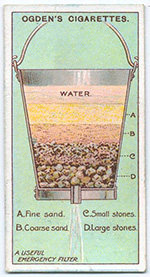
2. How to Make an Emergency Water Filter

18

A handy and efficient water filter can be made out of an ordinary bucket.

First make a hole at the bottom of the bucket.

Instructions: “The water percolates through the layers of fine and coarse sand, and clean picked gravel and stones, with which the pail is filled, filtering through to the bottom in a clear state.”

One of the best layers you should add to this bucket is one made of charcoal.

Here are 23 survival uses for honey that you didn’t knowabout.

3. How to Engrave on a Knife

2

This method was widely used during the Middle Ages and all the engravings in swords or armors. Here are some armors engraved using this traditional way.

Instructions: “The steel to be worked upon should be covered completely with a coating of beeswax. The lettering or design to be engraved can then be drawn with the point of a clean quill pen. This lays bare the metal. A strong solution of sulphate of iron should then be repeatedly poured over the exposed surface for about ten minutes. The more prolonged the action of the sulphate the deeper will the steel be engraved.”

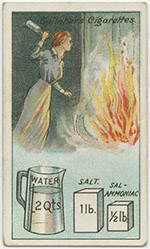
4. How to Make a Fire Extinguisher

4

Although is good to know, probably none of us will make these old fashion extinguishers since is much easier to buy one. And because the new ones are more effective (I guess) and definitely safer.

Dissolve one pound of salt and half a pound of salt-ammoniac into two quarts of water. Then bottle the liquid in thin glass bottles holding about a quart each.

Should a fire break out, dash one or more bottles into the flames, and any serious outbreak will probably be averted.

New Survival Energy Product Makes Every Window A Powerful Solar Charger

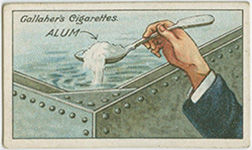
5. How to Purify Water in a Cistern

1

Easy! Stir in a tablespoon of powdered alum.

After 30 minutes the alum cause the particles and the bacteria to bound together and cause them to drop to the bottom leaving a clear purified water.

A tablespoon or half an ounce of alum will purify from sixteen to twenty gallons of water.

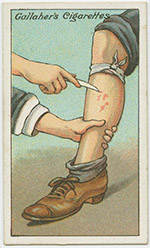
6. How to Treat an Animal Bite

8

First tight a ligature round the limb above the wound. This will stop a little bit the bleeding and it will give you a better visibility to evaluate the wound.

The next advice given back then was: “Thoroughly cleanse the wound and if there is any suspicion of madness in the attacking animal the place should be well sucked and cauterized with luna caustic, or a white hot iron, after cutting away the surrounding flesh with a sharp clean knife.”

The advice was really good for that time, when there were no vaccines. And even today doctors recommend thoroughly washing the wound as soon as possible with soap and water for approximately five minutes (to reduce the number of rabies particles). Povidone iodine or alcohol is then recommended to reduce the virus further. When SHTF and we’ll no longer be able to access vaccines this is your only option available.

During a SHTF situation, pain could become an annoyance for some, but unbearable for others.

If doctors are scarce and medicine becomes even scarcer, this one little weed, found all over North America and similar to morphine, could be a saving grace.

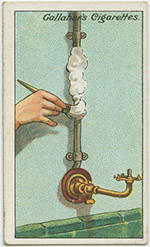
7. How to Detect Escaping Gas

9

Gas leaks can be caused by faulty appliances, or by those that have been incorrectly installed or poorly maintained.

Some of us don’t even use gas anymore (like me) or some may have gas detectors, but either way, after an earthquake, or a hurricane or a tornado there will always be gas leaks.

This 100 years old method is risk free and quite reliable.

“Paint strong soap solution on the suspected length of pipe and the gas will then cause bubbles at the escaping point, which can be dealt with at once.”

8. How to Light a Match in the Wind

10

Instructions: “The familiar difficulty of lighting a match in the wind can be to a great extent overcome if thin shavings are first cut on the match towards its striking end, as shown in the picture.

On lighting the match, the curled strips catch fire at once; the flame is stronger and has a better chance.”

9. How to Find a Lost Trail

21

If a trail is lost, there isn’t much to do but to search for it.

A very good way to do that is to mark the last foot-print or sign you notice as the center of the circle and go round it at a distance of anything from 30 to 100 yards.

The trail should be discovered somewhere crossing the circular track you are following.

10. How to Cure Chilblains

11

“A simple and homely remedy, which immediately relieves the irritation and pain caused by chilblains, is salt and fresh apple juice.

The affected parts are rubbed gently with a slice of apple dipped in common salt. A good juicy apple should be used.”

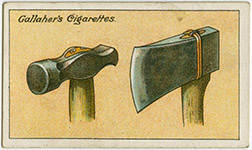
11. How to Secure Loose Hammers and Axe Heads

12

After wedging the handle of hammer as tight as possible, drill two holes at the end of wood and drive in two large screws.

An axe-head can be secured by boring a hole through the haft just bellow head and wiring through the hole and over top.

The wire should be twisted and staple driven into a hold position.

Experts predict that an EMP strike that wipes out electricity across the nation would ultimately lead to the demise of up to 90% of the population. However, this figure begs an important question: if we were able to live thousands of years without even the concept of electricity, why would we suddenly all die without it?

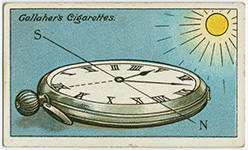
12. How to Tell the Points of the Compass with a Watch

compass

Take the watch of your hand. Point the hour hand at the sun and then lay a piece of wire or a blade of grass crosswise between the hour hand and the figure twelve.

The end of the wire between the twelve and the hour hand points south.

13. A Simple Cure for Catarrh

13

Treatment for catarrh may not be necessary because it often disappears within a few days, after your body has fought off the infection. But in some cases it doesn’t go away and it can be a health problem, especially for the underfed. In food crisis when people are poorly fed, these low-risk diseases kill more people than starvation itself.

Instructions: “Take a pinch of ordinary table salt up the nostrils, just as you would a pinch of snuff.

Then gargle the mouth and throat with warm water, being careful not to swallow it.

Do this each morning before breakfast.”

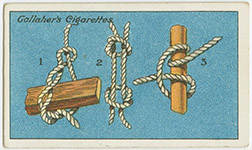
14. Three Useful Knots

15

No. 1 is the Timber Hitch, which is especially useful in lifting all kinds of heavy work, such as huge beams.

No. 2, the Fisherman’s Knot, shows a good method of joining two ropes tightly together.

No. 3 is the famous Clove Hitch, which becomes tighter the harder it is pulled.

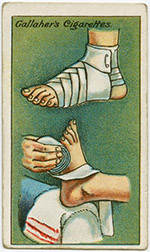
15. How to Bandage a Foot

16

A traditional method used to make the inflammation heal faster (especially for sprain ankles) was to place a leaf of cabbage between the bandage and the ankle.

In the picture: “Rest injured foot on operator’s knee on a clear towel.

Commence bandaging in manner shown by the lower diagram, the bandage being bound over and round the back of foot in spiral fashion, and eventually fixed by means of a safety pin, just beneath ankle, as shown in upper illustration.”

16. How to Make Roller Bandages

17

Instructions: “A roller bandage must be rolled evenly and tightly, so in the absence of a machine a chair will serve this purpose.

The picture illustrates procedure. Whilst one person carefully rolls another pulls tight opposite end of the bandage, and at the same time sees that no folds or creases are allowed to form.”

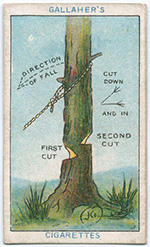
17. How to Fell a Tree

19

Having decided which side you wish the tree to fall, cut alternatively a downward and inward cut as you can see in the picture – in this order.

When about half through, proceed to cut the other side a few inches higher, and finally pull tree down with the help of a rope.

In a survival situation (and not only) you can use trees for their nutritious sap.

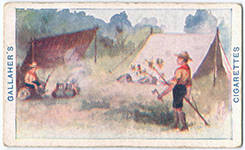
18. How to Build a Simple Shelter

22

Instructions: “A simple shelter can be made by driving two forked sticks into the ground and connecting these by a pole resting on them.

Branches are then laid resting on the pole. The right angle should be around 45 degrees, and the screen fitted up with smaller branches, ferns, etc.”

(Here are 23 survival uses for honey that you didn’t know about.)

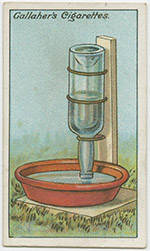
19. How to Make a Water Fountain for Chickens

5

Instructions: “A simple water fountain, ensuring a supply of fresh water for the chickens, can be made from a pint wine bottle, supported by wire loops to a wooden upright as shown.

The bottle is inverted over an earthenware pan, with the mouth of the bottle about half an inch above the bottom of pan.”

I see that now there are even some “rodent resistant chicken feeders” which can be used together with the water fountain if you leave for 2-3 days.

20. How to Remove Foreign Particles from the Eye

7

Few things are more irritating than having something in the eye.

“Drop sweet or castor oil into the corner of the eye. Picture shows a ready method of allowing drop of oil to fall into eye from the poim of a paint brush.”

If the particle is of mortar or lime, bathe eye with weak vinegar and water.

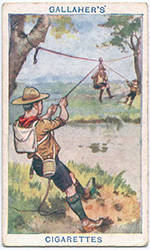
21. How to Make a Chair to Cross a Stream

20

If your group has one or more people who cannot (maybe there are wounded) or don’t know how to swim, you might want to find a simple solution to help him cross a river. If there are nearby trees – and usually near rivers there are – all you need is a rope.

Fasten a strong rope to a tree and let somebody (who can swim) go across the stream and fasten the other end to a tree on an opposite bank.

Use another rope to improvise a chair fastening it into a running loop. “By means of a light rope fastened to the middle of (the) chair and held by someone at each end, those unable to swim are safely passed over.”

22. Keeping Plants Watered While Away on Holiday

23

There are many simple and cheap DIY tricks to keep your green friends properly hydrated so that you don’t return home to a house full of wilting and yellowing plants.

A traditional method is to fill a large bucket with water, and place it a little above the level of the plants.

You can group round or near as many plants as you want. Place one end of a strand of wool in the bucket and the other one to the plant.

You can place as many yarns as you want.

23. Rescue from Fire

24

If it is necessary to enter a burning house in a search of unconscious persons, or to save a family member, first place a wet bandage over your nose and mouth and crawl in on all fours. You do this because the only Oxigen you may find is on close to the floor. (and the visibility is better)

Place a rope around his ankles. The other end of the rope around your chest or shoulders.

Then turn your back on him and drag him out. (you’re going on all fours with rope underneath)

24. How to Preserve Eggs

14

Preserve only eggs that are newly laid. Bury them in a box of salt.

This traditional way of keeping eggs has been almost forgotten. The eggs last about an year when they are totally buried in the salt. No air whatever must be allowed to get at the shells.

This way you’ll have eggs and salt for survival.

25. How to Treat Sprains

3

Elevate the injured joint and wrap in cloths wrung out in cold water. The picture shows how to keep the cloths constantly wet without having to change them.

Place a jug of water higher than the injured limb and a strip of linen with one end in the jug and the other end resting upon the wrapping of sprained joint.

The water will pass from the jug to compress keeping it constantly wet and cold.

The SHTF we all prep for is what folks 150 years ago called daily life. A hundred years ago people knew how to do a lot of things – that we now take for granted. Learning how to do stuff on your own is one of the most important things that one can do to prepare… And in time of crisis you need to be able to support and sustain your family without much outside aid.

In this video, i will unearth a long-forgotten secret that helped our ancestors survive famines, wars, economic crisis, diseases, droughts and anything else life trew at them.
So pay chose attention because this video will change your life forever for the good!

The Coronavirus Could Spark A Nuclear Meltdown In North Korea

Now is the time to offer sanctions relief to safeguard against instability, and perhaps make an opening for peace.

North Korea doesn’t get a lot of press these days. Yet as with all pandemics, our current coronavirus crisis will end, and Washington and its allies will once again be forced to consider policy options when it comes to the hermit kingdom and its growing nuclear weapons program. 

And while a return to the 2017 days of fire and fury always seem like a worst case scenario, a much darker future is possible—especially if the coronavirus creates a situation where the Kim regime were to become unstable. As of Thursday, the government there was insisting it was coronavirus free, the result of a strict tightening of its borders with China and South Korea. The rest of the world looks on skeptically, however, as global infections rise to nearly one million. 

In fact, the coronavirus presents a golden opportunity for both Washington and Seoul to try a radically different approach when it comes to North Korea: the full lifting of all economic sanctions on Pyongyang until the World Health Organization deems the pandemic over.

Now, there will be many who will say this is an absolutely crazy idea, allowing Pyongyang to regain some of the economic strength it had before maximum pressure-style sanctions were put into place back in 2017. However, we should stop and consider for a moment what would happen if the North Korean regime were to become destabilized even partially. This would create an even worse coronavirus nightmare: a loss of control of the country’s vast quantities of weapons of mass destruction and the materials that make them deadly.

Consider the following scenario. What if, thanks to a poorly supplied health care system, there were tens of thousands if not hundreds of thousands of North Korean deaths thanks to the coronavirus? With millions more infected and unable to work, would Pyongyang’s normal safeguards for securing its nuclear, chemical, and biological weapons start to become lax or even nonexistent? And even if proper security measures were taken to secure weaponized systems, what if lower-priority facilities—think of labs that might have spores of anthrax or production facilities for chemical weapons such as VX—were to suddenly go unmanned? While we fear North Korea’s weapons of mass destruction being used in a deliberate fashion, the theft or sale of such weapons out of desperation seems like an even more likely threat these days. 

The good news is that the Trump and Moon administrations can act now and ensure that none of that happens. As a first step, both should approach the UN Security Council and ask for a waiver on all UNSC sanctions passed from 2016 that pertain to North Korea until the WHO proclaims the current pandemic passed. Both administrations could then reach out to the Kim regime with concrete offers of food aid led by NGOs, as well as medical aid, teams of first responders and respirators. All of this would ensure that the North Korean people—through no fault of their own—do not die en masse and do not create such a strain on the North Korean health care system that it results in societal and governmental breakdown. 

Once the immediate dangers of the crisis are over and coronavirus case increases are slowed, Washington and Seoul should seek to restart negotiations with North Korea. But our joint goals must be recalibrated to something approaching realistic. We should first try to lay the foundation of success by coming to agreement on things that all sides can easily agree to: a simple declaration and ceremony declaring the Korean War over would be the easiest start point. That would create the goodwill and momentum needed to begin to tackle the harder issues that are to come. It would give Donald Trump the ability to claim a major foreign policy victory during this year’s presidential campaign. It would also give Kim Jong-un a key victory as well, ceding him the political capital to make future concessions. 

But then harder choices would need to be made. What to tackle first won’t be an easy decision. Starting with nuclear weapons and missiles would scuttle any talks almost immediately, so why not start with more low hanging fruit? For example, why not begin arms control talks with a focus on pulling back all soldiers and military equipment from the Demilitarized Zone by five miles? Both sides would get a chance to catalogue, inspect, and watch all equipment leave a defined space that is clearly the world’s most dangerous. This would build trust between all sides and allow tougher negotiations to build to an endpoint where nuclear weapons could be discussed but in a way that could leverage the relationships and trust already built up.

Of course, history tells us none of this will be easy. Crafting a new relationship with North Korea will take years—if not longer. However, we must ensure that the coronavirus is not the spark for a weapons of mass destruction crisis that would only make matters worse for the entire world. By lifting sanctions in the short term and trying to offer North Korea a practical path towards becoming something close to a normal nation, we can finally answer the age old question of whether Pyongyang is serious about shedding its rogue regime image. I think these small concessions are certainly worth a try.

This Is How Much Food You’ll Need for the Next 6 Months

How long will the pandemic last?

This question has caused more panic than any other, since the beginning of the outbreak. We have heard everything from 3 months to 2 years.

Our president spat out ’18 months’ at a press conference. Of course, we have no idea what any of that means.

The question people really want to be answered is, ‘how long will it be till things go back to normal.’

No one knows. So, we must prepare and plan to have food for months whether the supermarket has some food or no food. We are preppers.

This is what we do. However, when you start making big plans like adding 6 months of food storage to your plan there are some things to consider.

Preference

I am going to tell you about caloric intake equations, nutritional balance, and foods that store well. Remember, your food storage plan is YOURS and it should be built around preference. One of the things I lean on heavily in my own preparedness plan is oatmeal.

It’s a multipurpose food and a highly nutritious complex carbohydrate breakfast that is great for feeding the body. It can be made delicious with a sprinkle of sugar and cinnamon. If you hate oatmeal than don’t store it!

You and your family should be storing the food you like to eat above all else. This is food storage lesson #1.

When I first started prepping, in 2011, I found tons of blogs telling me about the importance of hard red wheat. Everyone needed buckets of hard red wheat! If you didn’t have it, you were unprepared for the coming collapse.

I had never used hard red wheat before, nor did I have a grinder at the time. I bought a Super pail anyway because I was influenced by fear and by others who proclaimed its necessity.

Mind your preference when it comes to food storage.

My Top Food Storage Picks

These food storage items are my preference and I chose most of them because they are multipurpose and provide my family with a variety of nutrients. These are also supplemented by gardening though we calculate for needed calories without the garden.

The garden is caloric and nutritional bonus.

  • Rice
  • Beans
  • Eggs
  • Oatmeal
  • Cornmeal
  • Flour
  • Sugar
  • Salt
  • Oil

Calculating 6 Months of Food Storage

Let’s start with the basics. We should first calculate how many calories we are going to need, in total, to feed our families for 6 months. That is the most important step in this process. If we are unsure about the total calories needed, we will vastly underprepare because 6 months of food is A LOT!

The RDA is 2000 calories per person per day. Preppers could argue for 2500 to 3000 because of a greater workload in SHTF. Then again, you might want to take a rationing mindset and prepare for 1500 calories per person per day.

Preference

We are going to look at these equations based on a 2000 calorie diet just to keep it easy.

2000 calories per day X the number of people in your home. This will give you your daily caloric needs.

8000 calories per day for a family of 4 X 31 days in a month gives you 248,000 calories per month

For 6 months you are looking at 1,488,000 calories for 6 months if you are feeding a family of four with 2000 calories per day.

Nutritional Balance

Of course, things are a little more complicated than just stacking up calories to the roof. Have you ever heard of rabbit starvation? It can happen to people who don’t get enough fat in their diet from eating very lean rabbits only.

Rabbits are a great protein source, but you need other things to eat alongside them.

Your food storage will need to include things like fats and proteins in the right amounts to assure you have the proper nutritional balance. So, what does that look like? I am going to give you some figures for this nutritional balance. These numbers are for an active person. A sedentary lifestyle will require less.

Protein – A good average for protein intake is going to be around 80 grams. You will need less if you are a small person and as much as 100 grams or more if you are a big active person.

Carbs – The best balance for healthy carb intake is right around 100-150 grams per day. However, in a survival situation you might up that to deal with the rigors or simply to cope with the serious stress of it all. You might also be eating more carbs because that is what you have stored up.

Fats – I often wonder how many people put their bodies through utter hell by cutting all the fat out of their diet in the 90s. Fat is incredibly beneficial to your diet. You want about 400 calories per day from fat. Based on a 2000 calorie per day diet you are going to want around 55 to 80 grams of fat.

A great ration to remember is 30:30:40 and that is 30% fat/30% protein/ 40% carbs. Of course, this will be adjusted if you are dealing with some sort of carb excluding diet. However, for planning and prepping purposes keep this in your back pocket.

Learning to Cook

One of the core skills that all preppers should practice is cooking from scratch. When you look at the list of ingredients above you should be looking at a world of possibilities. You can make all sorts of bread, pastries, tortillas, tostadas and full meals with just those ingredients above.

I see that list as unlimited potential because I spent years making foods with those ingredients. Now is the time for you to become proficient with the mixing bowl and in front of the oven.

We all have at least one complaint about isolation. If you are feeling bored spend some time baking something new. Cook a big pot of beans and see how they turn out. We store a lot of rice and beans but most of America eats beans out of a can.

Tactical training is cool, bushcraft skills get respect but food production and cooking have been the driving force behind all-conquering armies and civilizations throughout all of history.

6 months of long-term food storage is a pretty decent goal for any prepper. It’s very rare that we face a catastrophe that cuts us off the food supply for more than 3 months let alone 6 months. Of course, there is always the threat of that one event that changes the world forever.

Still, in a situation like that, you are eating off food storage while you set up your own inputs for food production. If the whole world goes offline you won’t be sitting around waiting for Walmart to open back up. You will either be hunting, farming, homesteading or some amalgamation.

Since I started prepping there are a handful of preps that truly help me rest at night. Food storage is one of those preps. Having extra food on hand for hard times is one of those things that I would have done even earlier if I knew how good it would feel to have that prong of my preparedness plan sharpened up.

The Best Long-Lasting Protein Sources for a Crisis

Planning a survival stockpile can be a financial and logistical nightmare. It doesn’t take long before we realize that building that stockpile is going to be an expensive proposition. Regardless of how carefully we try to budget, it is challenging to make it work.

For many, the financial burden of building a stockpile forces them to seek out ways of reducing their financial outlay at any cost. Unfortunately, that cost might just end up being their health, especially if they don’t stockpile the right things.

More than anything, what I see people trying to do, in order to save money, is stock up on carbohydrates, while cutting back on proteins. But both are equally important to a survival diet.

When nutritionists talk about “proper diet”, we usually hear them talking about micronutrients, things like Omega-3 fatty acids and antioxidants. Basically, things the rest of us don’t really understand. Listening to them, you might think that those micronutrients are all we need, that there is no need for macronutrients. But a survival diet has to focus on the macronutrients, even if we ignore the micronutrients.

In this video, i will unearth a long-forgotten secret that helped our ancestors survive famines, wars, economic crisis, diseases, droughts and anything else life trew at them.
So pay chose attention because this video will change your life forever for the good!

There are three macronutrients. We need to understand what they are and what they do, in order to put a realistic survival diet together. These three nutrients are:

#1. Carbohydrates (carbs)

The Best Long-Lasting Protein Sources for a Crisis

Simple sugars are the fuel that our bodies run on, providing the necessary energy for our body’s muscles to move.

We get those simple sugars from the carbs and complex sugars that we eat (white sugar is a complex sugar).

Digestion starts in the mouth, with our teeth breaking food up and our saliva attacking those carbs and breaking them down to simple sugars. A survival diet should be 50% to 60% carbohydrates.

Here are 23 survival uses for honey that you didn’t knowabout.

#2. Fats

The Best Long-Lasting Protein Sources for a Crisis

The problem with carbohydrates is that they break down into those simple sugars quickly. Therefore are consumed quickly.

Once that happens, the individual “hits the wall” and is suddenly without energy. That’s where fats come in. They too are broken down into simple sugars, but it takes much longer than it does for carbs.

So, when the sugars from the carbs run out, the sugars from the fats take over. This gives us a one-two punch of energy. A survival diet should contain somewhere between 25% to 35% fats, mostly unsaturated fats (vegetable fats).

#3. Proteins

The Best Long-Lasting Protein Sources for a Crisis

Of the three macronutrients, proteins are the only one we eat for a purpose other than providing energy.

While it is possible for proteins to be broken down into simple sugars, the process is much more complex, so the body only does it in emergencies.

Rather, proteins are the basic building-blocks of life, as all cells are made up out of proteins. Even DNA, the genetic code, is made up of proteins. Since the body is constantly making new cells, it needs a constant source of proteins. If it doesn’t have it, it will cannibalize itself to get those proteins. A survival diet should contain from 10% to 20% proteins.

New Survival Energy Product Makes Every Window A Powerful Solar Charger

Selecting Your Proteins

There are two problems with proteins, from the viewpoint of building a survival stockpile. The first is that they are generally the most expensive food we buy and the second is that they are the hardest foods to preserve.

Meat, where most of our proteins come from, naturally has a higher bacterial count than any other food source. That bacteria must be killed, for the meat to successfully be preserved.

Nevertheless, these are problems that we must overcome, in order to have a healthy survival diet. Fortunately, there are many methods which have been successfully used for preserving meat for centuries, all of which are available for us today.

There are also sources of protein available to us, other than animal proteins. By mixing our stockpile so that we have both animal proteins and other food sources which contain protein, we can build a stockpile that we can afford, while providing us with the nutrition that our bodies need.

Homemade Jerky

The Best Long-Lasting Protein Sources for a Crisis

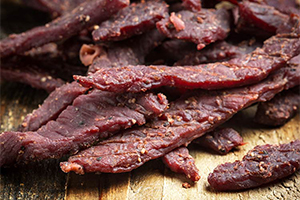
Jerky is nothing more than spiced, dried meat. But the most important part of that jerky, besides the meat itself, is salt.

Salt is a natural preservative, and absolutely essential to making jerky safe for storage.

Making your own saves you money and gives you the opportunity to make sure that it has ample salt, so as to protect the meat. Excess salt can always be rinsed off, before use.

You also want to store homemade jerky in airtight containers, with oxygen and moisture absorbers added. The containers need to be strong enough to make it impossible for rats to chew through them and get to the meat stored inside.

Experts predict that an EMP strike that wipes out electricity across the nation would ultimately lead to the demise of up to 90% of the population. However, this figure begs an important question: if we were able to live thousands of years without even the concept of electricity, why would we suddenly all die without it?

Salt Fish

Salt fish is kind of the fish equivalent of jerky, made in much the same way and with a large amount of salt. If anything, salt fish has more salt used in making it, than jerky does. This preserves it well. As with jerky, you’ll probably need to make your own.

Canned Meats

The Best Long-Lasting Protein Sources for a Crisis

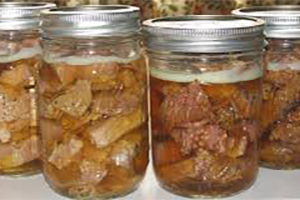
Canned meat is generally cheaper than fresh cuts of meat.

One of the reasons for this, is that canned meat is usually made from muscles of the animal which are tough and are therefore not usable for steaks and roasts.

The canning process provides ample opportunity to tenderize this meat and make it edible.

As with any other canned product, canned meats will last virtually forever. While they may not look very attractive when they come out of the can, they are nutritious and healthy to eat. Having your meat in cans also acts as portion control, helping you to ration out your food and make it last longer.

TVP (Textured Vegetable Protein)

Textured vegetable protein is a meat substitute, made purely out of plant products, mostly soy. It is made to take on the texture and flavor of different types of meat.

While it is not exactly the same texture or flavor, most people won’t recognize the difference in a casserole or other dish, if they are not told.

Beans

The Best Long-Lasting Protein Sources for a Crisis

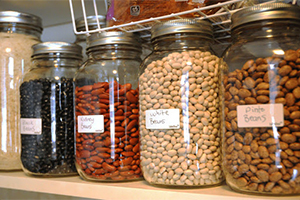
Beans have long been used as a source of protein. All sorts of legumes can be eaten, supplementing the protein received from animals. In many poorer cultures today, beans are the main source of protein, due to cost, rather than meat.

The nice thing about beans is that they are sold already dried, making it extremely easy to package them for long-term storage.

As with any other dry food, the major problem is packing them in airtight packaging, with oxygen absorbers and in a container which is strong enough to keep rodents out. That can be done by putting them in aluminized Mylar bags, inside of five-gallon buckets. Stored this way, they will keep for at least 20 years.

Nuts

Nuts have also been used as a survival protein source for centuries. In the early days of the American colonies, it was not uncommon to bury barrels and casks of nuts to preserve them for winter or other hard times. Most nuts keep well, in the shell, as long as rodents can be kept away from them.

All types of nuts can be turned into butters, not just peanut butter. They all provide a considerable amount of protein, in addition to being a comfort food.

Cheese

While cheese is harder to store for prolonged periods of time, it is possible. Actually, the making of cheese came from a desire to convert milk into storable products. Properly stored, cheese can actually last a considerable amount of time. Even when mold grows on it, the moldy edge of the cheese can be cut off, leaving perfectly good cheese for you to eat.

To preserve cheese for a prolonged period of time, triple dip it in wax (paraffin), allowing it to harden between each dipping. Check each dipping carefully, seeking for any pinholes in it, which might flow through. These must be sealed to help ensure that the cheese will keep.

Amaranth

Grains aren’t normally thought of as a good source of protein, but amaranth defies that definition. This amazing grain has 26 grams of protein per cup, the highest of any grain. It is the only grain which is considered a complete protein source, because it contains all of the essential amino acids.

Meat Products to Avoid

Sometimes, it’s not just what you do that matters, but what you don’t do. Some protein sources, especially animal proteins, may not keep for prolonged periods of time, even though they are supposedly “preserved”. You have to watch out for them.

The Best Long-Lasting Protein Sources for a Crisis

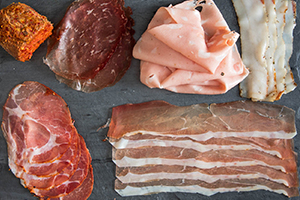
Most of what we know as deli meats or cold cuts originated as “cured meats”. They were a way of taking meat from the animal, which may not otherwise be used, and turning it into usable meat, through the process of curing.

In addition to being preserved by curing, the process also serves to tenderize these meats.

The problem today though, is that what are sold as cured meats or cold cuts, aren’t cured in the same way as olden times. So they are not properly preserved and will not last for a prolonged period of time, unless you can them, in addition to being cured.

The other meat preserving process which is not done like in the olden days, is smoking. What is sold as “smoked meat” today is cold smoked to give it the smoke flavor. But it is not preserved. That requires hot smoking. So, unless you are going to hot smoke your own meats, don’t stockpile smoked meats. Even then, your hot smoked meats will not last as long as meats which are canned or made into jerky.

A Final Note About Fish

Of all the sources of food in the wild, the most abundant is fish. I don’t care where you go, you’re going to need water, and if you find water, there’s a really good chance that there will be fish swimming in it. You should always be ready to harvest those fish, providing yourself with not only food, but specifically with animal protein.

I was surprised to find out that of all the types of animal protein eaten in the world today, fish is the most common. I was expecting it to be chicken. But fish beats chicken by far. Part of that is the ready abundance of fish in the world’s oceans, providing food to us, virtually for free.

Your survival plan should include some means of harvesting whatever fish are available, wherever you are, and making them part of your diet. This means more than just having two little hooks, a bit of line and two lone weights. You need enough fishing gear to keep you fed for the long run, even considering the amount of fishing gear that often goes over the side and is lost forever.

Preparedness Hacks: Once a nuke is heading your way, you might think that there isn’t much left to do, but you would be wrong!

Because we will show you America’s natural nuclear bunkers that are also EMP proof. When the sirens start wailing, all you need to do is pick the closest one to your home, where you can take cover before it hits.

The Best Long-Lasting Protein Sources for a Crisis

Planning a survival stockpile can be a financial and logistical nightmare. It doesn’t take long before we realize that building that stockpile is going to be an expensive proposition. Regardless of how carefully we try to budget, it is challenging to make it work.

For many, the financial burden of building a stockpile forces them to seek out ways of reducing their financial outlay at any cost. Unfortunately, that cost might just end up being their health, especially if they don’t stockpile the right things.

More than anything, what I see people trying to do, in order to save money, is stock up on carbohydrates, while cutting back on proteins. But both are equally important to a survival diet.

When nutritionists talk about “proper diet”, we usually hear them talking about micronutrients, things like Omega-3 fatty acids and antioxidants. Basically, things the rest of us don’t really understand. Listening to them, you might think that those micronutrients are all we need, that there is no need for macronutrients. But a survival diet has to focus on the macronutrients, even if we ignore the micronutrients.

There are three macronutrients. We need to understand what they are and what they do, in order to put a realistic survival diet together. These three nutrients are:

#1. Carbohydrates (carbs)

The Best Long-Lasting Protein Sources for a Crisis

Simple sugars are the fuel that our bodies run on, providing the necessary energy for our body’s muscles to move.

We get those simple sugars from the carbs and complex sugars that we eat (white sugar is a complex sugar).

Digestion starts in the mouth, with our teeth breaking food up and our saliva attacking those carbs and breaking them down to simple sugars. A survival diet should be 50% to 60% carbohydrates.

#2. Fats

The Best Long-Lasting Protein Sources for a Crisis

The problem with carbohydrates is that they break down into those simple sugars quickly. Therefore are consumed quickly.

Once that happens, the individual “hits the wall” and is suddenly without energy. That’s where fats come in. They too are broken down into simple sugars, but it takes much longer than it does for carbs.

So, when the sugars from the carbs run out, the sugars from the fats take over. This gives us a one-two punch of energy. A survival diet should contain somewhere between 25% to 35% fats, mostly unsaturated fats (vegetable fats).

#3. Proteins

The Best Long-Lasting Protein Sources for a Crisis

Of the three macronutrients, proteins are the only one we eat for a purpose other than providing energy.

While it is possible for proteins to be broken down into simple sugars, the process is much more complex, so the body only does it in emergencies.

Rather, proteins are the basic building-blocks of life, as all cells are made up out of proteins. Even DNA, the genetic code, is made up of proteins. Since the body is constantly making new cells, it needs a constant source of proteins. If it doesn’t have it, it will cannibalize itself to get those proteins. A survival diet should contain from 10% to 20% proteins.

Selecting Your Proteins

There are two problems with proteins, from the viewpoint of building a survival stockpile. The first is that they are generally the most expensive food we buy and the second is that they are the hardest foods to preserve.

Meat, where most of our proteins come from, naturally has a higher bacterial count than any other food source. That bacteria must be killed, for the meat to successfully be preserved.

Nevertheless, these are problems that we must overcome, in order to have a healthy survival diet. Fortunately, there are many methods which have been successfully used for preserving meat for centuries, all of which are available for us today.

There are also sources of protein available to us, other than animal proteins. By mixing our stockpile so that we have both animal proteins and other food sources which contain protein, we can build a stockpile that we can afford, while providing us with the nutrition that our bodies need.

Homemade Jerky

The Best Long-Lasting Protein Sources for a Crisis

Jerky is nothing more than spiced, dried meat. But the most important part of that jerky, besides the meat itself, is salt.

Salt is a natural preservative, and absolutely essential to making jerky safe for storage.

Making your own saves you money and gives you the opportunity to make sure that it has ample salt, so as to protect the meat. Excess salt can always be rinsed off, before use.

You also want to store homemade jerky in airtight containers, with oxygen and moisture absorbers added. The containers need to be strong enough to make it impossible for rats to chew through them and get to the meat stored inside.

Salt Fish

Salt fish is kind of the fish equivalent of jerky, made in much the same way and with a large amount of salt. If anything, salt fish has more salt used in making it, than jerky does. This preserves it well. As with jerky, you’ll probably need to make your own.

Canned Meats

The Best Long-Lasting Protein Sources for a Crisis

Canned meat is generally cheaper than fresh cuts of meat.

One of the reasons for this, is that canned meat is usually made from muscles of the animal which are tough and are therefore not usable for steaks and roasts.

The canning process provides ample opportunity to tenderize this meat and make it edible.

As with any other canned product, canned meats will last virtually forever. While they may not look very attractive when they come out of the can, they are nutritious and healthy to eat. Having your meat in cans also acts as portion control, helping you to ration out your food and make it last longer.

TVP (Textured Vegetable Protein)

Textured vegetable protein is a meat substitute, made purely out of plant products, mostly soy. It is made to take on the texture and flavor of different types of meat.

While it is not exactly the same texture or flavor, most people won’t recognize the difference in a casserole or other dish, if they are not told.

Beans

The Best Long-Lasting Protein Sources for a Crisis

Beans have long been used as a source of protein. All sorts of legumes can be eaten, supplementing the protein received from animals. In many poorer cultures today, beans are the main source of protein, due to cost, rather than meat.

The nice thing about beans is that they are sold already dried, making it extremely easy to package them for long-term storage.

As with any other dry food, the major problem is packing them in airtight packaging, with oxygen absorbers and in a container which is strong enough to keep rodents out. That can be done by putting them in aluminized Mylar bags, inside of five-gallon buckets. Stored this way, they will keep for at least 20 years.

Nuts

Nuts have also been used as a survival protein source for centuries. In the early days of the American colonies, it was not uncommon to bury barrels and casks of nuts to preserve them for winter or other hard times. Most nuts keep well, in the shell, as long as rodents can be kept away from them.

All types of nuts can be turned into butters, not just peanut butter. They all provide a considerable amount of protein, in addition to being a comfort food.

Cheese

While cheese is harder to store for prolonged periods of time, it is possible. Actually, the making of cheese came from a desire to convert milk into storable products. Properly stored, cheese can actually last a considerable amount of time. Even when mold grows on it, the moldy edge of the cheese can be cut off, leaving perfectly good cheese for you to eat.

To preserve cheese for a prolonged period of time, triple dip it in wax (paraffin), allowing it to harden between each dipping. Check each dipping carefully, seeking for any pinholes in it, which might flow through. These must be sealed to help ensure that the cheese will keep.

Amaranth

Grains aren’t normally thought of as a good source of protein, but amaranth defies that definition. This amazing grain has 26 grams of protein per cup, the highest of any grain. It is the only grain which is considered a complete protein source, because it contains all of the essential amino acids.

Meat Products to Avoid

Sometimes, it’s not just what you do that matters, but what you don’t do. Some protein sources, especially animal proteins, may not keep for prolonged periods of time, even though they are supposedly “preserved”. You have to watch out for them.

The Best Long-Lasting Protein Sources for a Crisis

Most of what we know as deli meats or cold cuts originated as “cured meats”. They were a way of taking meat from the animal, which may not otherwise be used, and turning it into usable meat, through the process of curing.

In addition to being preserved by curing, the process also serves to tenderize these meats.

The problem today though, is that what are sold as cured meats or cold cuts, aren’t cured in the same way as olden times. So they are not properly preserved and will not last for a prolonged period of time, unless you can them, in addition to being cured.

The other meat preserving process which is not done like in the olden days, is smoking. What is sold as “smoked meat” today is cold smoked to give it the smoke flavor. But it is not preserved. That requires hot smoking. So, unless you are going to hot smoke your own meats, don’t stockpile smoked meats. Even then, your hot smoked meats will not last as long as meats which are canned or made into jerky.

A Final Note About Fish

Of all the sources of food in the wild, the most abundant is fish. I don’t care where you go, you’re going to need water, and if you find water, there’s a really good chance that there will be fish swimming in it. You should always be ready to harvest those fish, providing yourself with not only food, but specifically with animal protein.

I was surprised to find out that of all the types of animal protein eaten in the world today, fish is the most common. I was expecting it to be chicken. But fish beats chicken by far. Part of that is the ready abundance of fish in the world’s oceans, providing food to us, virtually for free.

Your survival plan should include some means of harvesting whatever fish are available, wherever you are, and making them part of your diet. This means more than just having two little hooks, a bit of line and two lone weights. You need enough fishing gear to keep you fed for the long run, even considering the amount of fishing gear that often goes over the side and is lost forever.

Are Store Shelves Empty in Your Area Too?

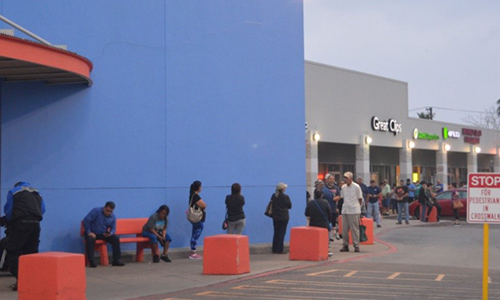
If there’s anything that’s going to identify the COVID-19 pandemic, in most people’s minds, it’s the empty store shelves. As a nation, we are accustomed to being able to go into the store and get anything we need. If our local store doesn’t have it, no problem. There will be another store down the road where we can pick it up.

That’s not the case right now. At least, not from everything I’m seeing. I’ve been taking daily trips to my supermarket, ever since things have started, just so I could watch the shelves empty out. I know that sounds a bit strange, but writing about survival is my work. We’re living through a real-life test of everything I’ve taught for the last 20 years.

To a large part, many of the things which have been selling out make sense, when you take into consideration the current situation. I wouldn’t normally expect meat to sell out, but then, there is no threat to our electrical supply. People can freeze that meat, something we don’t normally expect them to be able to do in an emergency.

But the one that has surprised everyone is the run on toilet paper. Apparently someone decided that they needed to stock up on toilet paper to survive the pandemic. Others saw them doing it and the idea spread. Pure panic buying.

During a SHTF situation, pain could become an annoyance for some, but unbearable for others.

If doctors are scarce and medicine becomes even scarcer, this one little weed, found all over North America and similar to morphine, could be a saving grace.

But now it’s gotten to the point that people are buying toilet paper whenever they can, just because the stores are out of it. They want to make sure that they don’t run out of TP.

Are Store Shelves Empty in Your Area Too?

This phenomenon has led to a large collection of memes and jokes on the internet, including the 2020 Commemorative Bling Earrings:

Is there any rationale behind what’s going on, or is it just panic? That seems to be the question.

Since I live in a hurricane zone, I’m used to seeing things fly off the shelves, whenever a hurricane is reported to be heading in our general direction. While that never gets as bad as what I’m seeing now, water, flashlights and a few other items empty out quickly, as people get ready to ride it out. But it’s never as bad as what I’m seeing now.

Experts predict that an EMP strike that wipes out electricity across the nation would ultimately lead to the demise of up to 90% of the population. However, this figure begs an important question: if we were able to live thousands of years without even the concept of electricity, why would we suddenly all die without it?

A Visit to My Local Supermarket

I tried to go to my local grocery store this morning, with the intent of taking pictures of the shelves, before the shoppers arrived. I was then going to return this evening, to show the difference, taking the same shots, from the same locations. The idea was to show that the stores have been restocking overnight, but people are buying things out, as fast as they can stock the shelves.

Here are some pictures I managed to take with my phone of the meat department, the bread area and the frozen foods area:

Are Store Shelves Empty in Your Area Too?

Unfortunately, it is apparently against the store’s policy to allow people to take pictures, so I was asked to leave. The pictures above were taken last week, with my phone, before I knew that I couldn’t do it.

As I waited in line to get in the store, a member of management came out, making announcements. One of those was that the store had only received 23 packages of toilet paper in their overnight delivery. He followed that by saying that another store a few miles away had received a whole trailer load of it. While the line didn’t empty out to go to that other store, a number of people did leave.

Here are 23 survival uses for honey that you didn’t knowabout.

Limitations Are Severe

Are Store Shelves Empty in Your Area Too?

The store was only allowing 20 people in at a time, which gave me an opportunity to see the first people coming out of the store. Since stores are running decreased hours, this also means that at the end of the day, when they close their doors at 8:00 tonight, that line will still be just as long, if not longer.

With the amounts of goods being shipped in, the stores are not succeeding in fully restocking overnight. The trucking industry is literally working overtime, trying to move product to the stores, but there just aren’t enough trucks and truckers to meet the demands of everything that everyone is buying. According to one store official I spoke to, they don’t expect to have normal stocking levels back in place until mid-summer, at the rate things are going.

Even if you get in the store, there are category limitations on buying just about everything, from ground beef to canned goods, via the paper goods aisle, of course. So if you’re trying to stock up, this is the wrong time to do so. That would literally require getting in line to get into the store early, an hour before opening time, every single day.

Are Store Shelves Empty in Your Area Too?

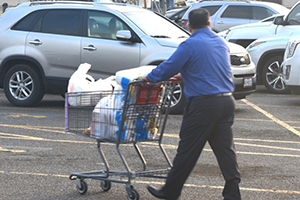
This shopper was amongst the first people to get into the store. As you can see, he managed to get toilet paper and water, amongst other items.

I couldn’t see what else they bought, without stopping them and asking. That would require breaking social distancing, so I didn’t bother to do so given the current situation.

New Survival Energy Product Makes Every Window A Powerful Solar Charger

A Few Takeaways

Between my conversation with the store’s management, shoppers waiting in line and those in the trucking industry, I’ve got a few final points I’d like to make:

  1. There is no shortage of goods. The problem is getting those goods to the stores fast enough to meet demand.
  2. If you need something, you’d better plan on getting to the store early and waiting in line. I got to the store ½ hour before the store opened and I didn’t get inside the door until 20 minutes after the door opened. By then, some things were already gone.
  3. Many people are panic buying and hoarding because of it. While the levels they are buying are nothing compared to the average prepper, there are a number of them and they’re building their stockpile all at once. That’s increasing the problem.
  4. The current problems with the grocery stores will be lasting until mid-summer.
  5. Any of us who have a stockpile should be using it now, leaving what’s in the stores to those who aren’t prepared.
  6. We (the prepping community) can do the community a lot of good right now, instructing people on how to deal with the problem, without having to panic.

So, how are things in your area? Are the store shelves empty? Are your supermarkets doing any better at restocking than mine are? Are you ready for the next few months?

Preparedness Hacks: Once a nuke is heading your way, you might think that there isn’t much left to do, but you would be wrong!

Because we will show you America’s natural nuclear bunkers that are also EMP proof. When the sirens start wailing, all you need to do is pick the closest one to your home, where you can take cover before it hits.

9 Forgotten Survival Lessons From The Great Depression

Of the many tragedies which have struck our nation through the years, the Great Depression of was the longest lasting and in many ways the most severe.

Few people made it through those trying years without feeling its impact. Millions of families lost jobs and homes, and even those who lost neither one often felt the pinch of hard financial times.

But even in the midst of those trying times, there were those who emerged victorious. Mostly, those were people who did not let the circumstances get them down, but instead sought ways of overcoming it. A large number of today’s well-known corporations were founded in those years, attesting to the indomitable spirits of their founders.

There are many who are saying that we are standing on the brink of the next great depression, and that our national economy is being held up by a flimsy house of cards.

In this video, i will unearth a long-forgotten secret that helped our ancestors survive famines, wars, economic crisis, diseases, droughts and anything else life trew at them.
So pay chose attention because this video will change your life forever for the good!

Perhaps there is wisdom from that last Great Depression we all should learn:

1. Make things last

We live in a largely consumer society, always buying the latest and greatest of everything – cars, clothes, toys. But when you don’t have money to replace it, you need to make do with what you have.

Not only that, but you need to make sure that what you have will last as long as possible. That means properly taking care of everything. If the cost of a pair of pants is going to put a strain in the budget, then you’d better make sure you can wear those pants for as long as possible. For example, don’t put your keys in your pockets, because they might wear a hole in them. Don’t put your change there either, for the same reason. Instead, use a leather change purse that won’t wear through the fabric.

Here are 23 survival uses for honey that you didn’t knowabout.

The same can be said for anything. Preventative maintenance will make any car last longer, yet thousands of cars per year end up in the junkyard, simply for ignoring the need to change the oil.

2. Fix it, don’t replace it

great depression 2

Not only are we consumers, but we’re consumers that are accustomed to throwing things away. Long gone are the days of the local “fix-it shop,” where you could get just about anything repaired. Today, we throw it away and buy another one. That’s one thing if it’s a $5 item, but people do it with smartphones that cost hundreds of dollars, too.

Many things that break can be fixed, at times simply by scavenging parts from another one. Yet few people do this anymore. But when money becomes tight, this is a great way of making the dollars you have stretch a little bit farther.

3. Don’t pay someone to do what you can do yourself

A generation ago, most young men grew up learning some basic auto mechanics, carpentry and plumbing from their dads. By the time they moved out of their parents’ home, they’d have their own tool kit, filled with a combination of their father’s pass-me-downs and a few new ones that they’d bought on their own. They were proud of their ability to do things on their own.

Today, not enough young men graduating high school or college have any tools, let alone the knowledge to use them properly. They pay someone else to do it, rather than learning how to do it. While this might be good for the economy overall, it’s not good for their personal economy.

Buying tools and learning how to use them is an investment. If you hire a plumber to replace a faucet, it will cost an average of $242. But you can buy the tools to do it yourself for less than $40. So you save over $200 on that faucet replacement. Not only that, but every faucet you replace after that doesn’t cost you a penny for tools or labor.

New Survival Energy Product Makes Every Window A Powerful Solar Charger

4. Raise your own food

Other than the wealthy, the people who were impacted the least during the Great Depression were those who grew their own food. Millions of people had a vegetable garden and a henhouse behind their home. At a minimum, they would be growing some vegetables and have a steady source of eggs to feed their families. While that may not be much of a diet, when you don’t have a job, it can seem like food fit for a king.

5. Learn how to cook

Speaking about food fit for a king, we’re losing the art of knowing how to cook. We are used to using instant meals, frozen foods and “just add meat” packaged mixes. That’s great and it’s convenient, but when you don’t have the meat to add or the right ingredients to add to the packaged meal, it comes out rather flat.

Truly knowing how to cook means knowing how to make something well worth eating out of the ingredients you have available. How many people today know what to do if they don’t have butter or margarine to use in a recipe? What can you use if you don’t have enough flour? How can you turn that milk into yogurt or cheese, instead of letting it go to waste?

True cooks can turn simple ingredients into that meal fit for a king. They know how to get the most out of their spice cabinet and what they can do to make a disastrous recipe turn out anyway. Those skills can do a lot for the family’s morale and nutrition in hard times.

6. Avoid buying on credit

great depression 3

Credit kills during a financial downturn. Those who lost fortunes in the Great Depression were those who had bought everything on credit. When they couldn’t pay, their creditors came to repossess what they had bought. Many went from rich to poor in the blink of an eye.

The same can happen at any moment. The banks and creditors of today are not more hesitant to demand payment than those of the past. When you can’t pay, you lose.

Experts predict that an EMP strike that wipes out electricity across the nation would ultimately lead to the demise of up to 90% of the population. However, this figure begs an important question: if we were able to live thousands of years without even the concept of electricity, why would we suddenly all die without it?

7. Avoid self-indulgence

In the last 20 or 30 years we’ve been faced with a new phenomenon here in the United States — that of buying indulgent foods. We think nothing of spending $7 for a cup of coffee or an ice cream. Yet, it wasn’t all that long ago that we wouldn’t think of doing such a thing, except for the most special of occasions.

Our self-indulgence isn’t limited to our food, either. Designer clothing, fancy cars, elaborate cell phones and a host of other products are a normal part of everyday life. Many of the things we think of as “normal” today would have been luxuries to our parents, if they even existed.

Each of those indulgences is a liability. When tough times come, they become a burden on your budget. Countless people who qualify as poor pay $100 cell phone bills. They have put a luxury in front of their necessities. That’s a recipe for financial disaster, especially when times get hard.

8. Save, save, save

The Great Depression was marked by the Stock Market Crash of 1929. That crash was caused mostly by people who bought stocks on “margin,” putting up only a small percentage of the value in hard assets. When they lost on the market, they didn’t have the money to pay their losses. This happened countless times, as people who didn’t really know the market became rich on it. But they didn’t cash in when they should have, and went from rich to poor in one afternoon of bear markets.

Had those same people put the money they had invested in savings, they would have survived the crash. Not only that, but they would have had money to feed their families and pay their mortgages, when others did not.

9. Keep your chin up

No matter how bad the situation is, you can always do something to make it better. I mentioned earlier that there were many great businesses which were founded during the Great Depression. That wasn’t an accident. These were men and women who spat in the eyes of destiny. They decided that they weren’t going to become part of the depression and made some bold moves. But they had the guts and the drive to make it happen.

I don’t care what survival situation you might face. The thing that will do the most to see you through is to stare the problem in the eye and laugh. You can overcome if you are convinced that you can. But if you are convinced that you can’t, you’ve already lost the battle.

Preparedness Hacks: Once a nuke is heading your way, you might think that there isn’t much left to do, but you would be wrong!

Because we will show you America’s natural nuclear bunkers that are also EMP proof. When the sirens start wailing, all you need to do is pick the closest one to your home, where you can take cover before it hits.

Freedom Tactics: How to Stop Tyranny From Taking Over the Country

We try to be prepared to survive any situation we find ourselves in, and for most of us one of the scenarios we plan for is life under a tyrannical government. That speaks to a strong American tradition of resisting tyranny – but we need to be realistic here. When our nation’s founders wrote the Second Amendment it wasn’t actually all that hard for an armed populace to defeat the government. Most fighting was done with swords, muskets and cannon, and an organized citizens’ militia could bring a lot more of those to the battlefield than the government could.

Here are 23 survival uses for honey that you didn’t knowabout.

Now the game has changed. The government has an array of incredibly powerful weapons at its disposal that an armed citizenry can’t hope to match. Tanks, attack helicopters and combat aircraft can’t be defeated with the sort of weapons available to the public. We often hear people say “Well, the Taliban are doing pretty well with old rifles,” but this isn’t really true. First, the Taliban have much heavier weapons than that – they’re well supplied with machineguns, RPGs, rockets and even light artillery. Secondly, they’re still not doing all that well. They can murder American soldiers, but the US-backed government still rules Afghanistan and our soldiers dominate the country.
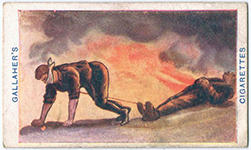
That’s with the incredibly restrictive rules of engagement imposed by a democratic US government, too. Do you really think a tyrant will share our president’s concern with avoiding needless civilian deaths? I don’t. The truth is, if America descends into tyranny we can – we must – resist the tyrant, but we’ll struggle to defeat him.

In this video, i will unearth a long-forgotten secret that helped our ancestors survive famines, wars, economic crisis, diseases, droughts and anything else life trew at them.
So pay chose attention because this video will change your life forever for the good!

Winning before the war

Don’t give up just yet, though. There’s an even better way to fight a dictatorship in the USA, and that’s to start fighting before that dictatorship even exists – in fact, start right now.

If a tyrant takes power in this country it’s going to be a tyrant we elected. No foreign nation is powerful enough to invade us and impose a dictator. No coup launched from within our military or government is going to succeed in the face of our loyal soldiers and Marines. The idea that the UN has a secret military force powerful enough to overthrow us is a laughable fantasy. The only way a tyrant can sit in the White House is to be voted into it.

Of course, we’re not going to deliberately elect one, and the chances are we won’t elect one who’s pretending to be a normal politician either. What’s most likely is that we elect a president who genuinely means well, then drifts into tyranny when their ideas don’t work out. Because here’s the really scary thing about tyrants – most of them really believe what they’re doing is in their country’s best interests. Yes, even socialists think they’re helping the people, or would be if the stupid people would sit still and let themselves be helped.

So the way to fight tyranny is to look for the sort of political ideas that can lead to it, then use our votes and our powers as citizens to keep them out of power.

What sort of political ideas do you need to look out for? In a word, collectivism. The US political tradition is individualist and capitalist. The founders’ vision was of a federal government that could protect the people from threats they couldn’t counter themselves, like foreign invasion. Welfare and most other government functions were to be left to states or lower levels.

The USA was never meant to be an anarchistic, every man for himself nation, but it wasn’t supposed to be collectivist either. Welfare should be a safety net for people who need some temporary help. Instead we now have politicians whose main goal is to take money from the people who earn it and give it to people who don’t. The same people also keep trying to restrict our freedoms, “for our own good.”

New Survival Energy Product Makes Every Window A Powerful Solar Charger

Spotting potential tyrants

Potential tyrants aren’t going to say openly authoritarian things; people who do that are cranks and they’re never going to get elected. Remember, future tyrants don’t see themselves that way. They have a bunch of ideas they believe will help people, but once in office they’ll get frustrated we don’t seem to want to be helped, and they’ll try to force us to go along with them.

So watch out for politicians with big plans. The “Green New Deal”? That’s exactly the sort of thing that can lead to despotism when its architects give in to frustration. If a politician wants to do something radical there’s always a risk of it morphing into tyranny. Look for politicians that make sensible, moderate proposals. Someone who want to fix things that used to work but don’t now, or make gradual changes, is probably going to be fine. Someone who wants radical chance could be fine, but the more radical ideas the more vulnerable they are to becoming a tyrant.

Experts predict that an EMP strike that wipes out electricity across the nation would ultimately lead to the demise of up to 90% of the population. However, this figure begs an important question: if we were able to live thousands of years without even the concept of electricity, why would we suddenly all die without it?

Be ready to cross party lines. Our two main political parties are big tents and there’s a surprising amount of overlap between them. In recent years things have become more partisan and that overlap is smaller than it used to be, but it’s still significant. When elections at any level come round, read what the candidates say they want to do (and compare it with their past voting records, if they have one). Then vote for the candidate who values freedom over the one who wants more bans, laws and restrictions – even if they’re from the party you don’t usually vote for.

Make libertarianism your political baseline. What other people do is none of our business, unless it harms us. If we stand by while the government bans things other people like, who’s going to help when they ban things that matter to us? Whenever politicians at any level suggest a new restriction or ban, do some research. Is there a good reason for the ban? If not, oppose it. Write to your town council, state politicians or congressman to oppose it.

Do this even if it’s not something that matters to you personally. For example, right now many states and cities are banning or restricting vaping. That makes no difference to you if you don’t vape – but if you support the vapers now, they’ll remember that. When politicians try to ban ham radio, or keeping chickens in a residential area, or “high capacity” magazines, some of those vapers will support you. Even if you personally disapprove of something, unless it’s actually causing you harm you should fight to keep it legal. By doing this you’re maintaining the habit of freedom.

Writing letters, joining protests and even voting aren’t the most exciting ways to fight oppression, but they’re definitely the most effective. If it gets to the point where the only way to defend your freedom is to pick up a rifle, your freedom has already gone – and the government has the firepower to stop you getting it back. Let’s win the fight now, when we can do it bloodlessly.

Preparedness Hacks: Once a nuke is heading your way, you might think that there isn’t much left to do, but you would be wrong!

Because we will show you America’s natural nuclear bunkers that are also EMP proof. When the sirens start wailing, all you need to do is pick the closest one to your home, where you can take cover before it hits.