A Food Invented By The Native Americans It Stored For 50 Years. Here’s Their Recipe.

It was a food invented by the Native Americans, who depended on it when traveling on long and adventurous journeys when food was scarce, or when there simply wasn’t time to hunt and gather enough to eat. That was a lesson well-learned by many early European settlers, explorers and fur traders in North America.

It was pemmican, which was the ultimate survival food for centuries and quickly became a staple food for fur traders, voyageurs and Arctic and Antarctic explorers. The reason was simple. It was high in protein and calories, and high in fat. Fat offers the best calories for cold weather and the most calories for people who were subject to brutally physical work, temperatures and conditions.

The word “pemmican” is a derivative of a Cree Indian word “pimihkan.” Curiously, the word “pimi” is the Cree word for “greasy fat.” On a fundamental level, pemmican is a mixture of dried and powdered meat, animal fat, wild berries and salt. The fat to meat ratio was typically 1:1, or 50 percent powdered meat and 50 percent fat. Some recipes vary that ratio, and typically less fat was used in warmer climates.

Prepared properly, pemmican can last for years and years, although adding anything to it besides meat and fat will reduce the shelf life. There are reports of some pemmican lasting 50 or more years. According to a popular social studies book used in Canadian schools, “Pemmican was high in calories and protein, and could be stored in leather bags for years at a time. It was also portable, much like protein bars available today.”

A curious side note on animal fat is that it has food preservative properties. Pioneer women would pack a crock with cooked meats and pour a layer of fat over the top, allowing it to cool and congeal to preserve the meat.

The recipe by the old Hudson Bay Company – which was founded in 1670 and was key to the fur trade — used buffalo meat and buffalo fat in addition to the marrow from the buffalo bones. We’ll get into the specifics of that type of recipe in a bit. I’ve experimented with various pemmican recipes and ways to prepare and enjoy this very rustic and primitive food.

At the outset, the recipe used game animals from moose to elk and venison as the primary ingredients. Eventually, beef emerged as the primary meat ingredient and it was most commonly used by Arctic and Antarctic explorers including Admiral Peary, Roald Amundsen, Robert Falcon Scott, Fridtjof Nansen, and Sir Ernest Shackleton. In many cases both the men and their sled dogs subsisted on pemmican.

An important consideration for any recipe in the last century up to today is the type of fat used in pemmican recipes. Beef tallow and beef marrow are the fats of choice, in addition to suet. Suet is the hard, beef fat found around the kidneys and loins of cattle. Avoid lard in your pemmican recipes. Lard is pork fat and I have found few recipes that recommend it going back 200 years.

The meat is just as important and should be trimmed of all fat and sliced into thin strips. Reserve the fat for rendering, but you don’t want any fat on the meat because of a critical step in the recipe process. That step involves drying the meat.

There are varying drying approaches that we’ll cover, but the critical success factor is that the strips of meat are hard and brittle. The goal is to dry the strips of meat to a hardness that will allow you to break it and crush it into something approaching a dust.

As time went on, varying dried fruits were added to the recipe. Native Americans used dried choke cherries and cranberries. Later recipes used by adventurers and explorers added dried cherries, blueberries and currants, all of which were also pounded into bits.

The dried berries add a vitamin component, including vitamin C. The amounts vary by recipe, but you always can adjust to your taste.

Classic Pemmican Recipe

The following recipe was used during the 1700s.

Hudson Bay pemmican was made from buffalo meat. The lean meat was cut into strips and dried in the sun for two to three days or over a fire until it was hard and brittle. The strips of hardened meat were then pounded into a powder, either with a wooden mallet on a stump or between two stones.

The fat and marrow of the buffalo was then melted and mixed into the powdered meat to make a paste (using a 50/50 mixture). This was then allowed to harden and was wrapped and rolled into a rectangular piece of buffalo hide. The cold temperatures of the Arctic and far north kept it from spoiling, although pemmican stores very well.

Admiral Peary’s expedition to the North Pole subsisted on a pemmican made from dried beef ground into a powder, beef tallow or beef fat and dried fruit.

Meat-Pulverizing Tips

You don’t have to crush the meat between two stones; you can use more contemporary approaches. These include:

  • A hand-turned meat grinder. This gets the dried meat into small bits and you can continue to run it through in a series of batches to get it as fine as you want.
  • A blender. Just make sure to do it in batches until you get the consistency you want.
  • A food processor. But if there is any moisture at all, the speed of the processor will turn the meat into a paste, so grind the dried meat in bursts.

The size and consistency of your pulverized, dried beef can range from small bits to the dusty powder used by pioneers. That’s up to you. I prefer the small bits, but make sure they’re very small or you’ll spend the rest of the day trying to get bits of dried beef out of your teeth.

Beef-Trying Tips

Explorers Ate It. It Stored For 50 Years. Here’s Their Recipe.

I use a food dehydrator. It’s the same one I use to make jerky; I just extend the drying time. To test a piece, take it out of the dehydrator and tape it on the counter. It should make a hard sound rather than the dull thud you’d get from a piece of jerky. Next, snap a piece. If it breaks like peanut brittle, you’re done. If it bends, it needs more time.

You also could hang the strips over a fire for two or three days. I tend to prefer the dehydrator but in the field, I’d use the fire method in a heartbeat.

Fat-Rendering Tips

This is a slow process. You should start by cutting the tallow and/or suet into chunks. If you’re also adding marrow, slice that up into one-inch pieces. Add all to a cast-iron frying pan over low to medium heat and toss often. Eventually, the fat will pool into the bottom of the pan, leaving some brown chunks behind. Filter the fat to remove the chunks. If there are smaller bits and pieces of brown bits left in the pan, I’ll even run it through some cheese cloth to clarify the fat. Don’t let it smoke or burn. That will give the fat and the resulting pemmican an off taste.

Dried Fruit Tips

Whether I’m using fresh fruit or dried fruit bought at the store, I’ll put the fruits into a dehydrator. Even dried, packaged fruit has some residual moisture. Once the fruit is dried, I’ll pulverize it in the food processor or the blender to break it into bits.

Putting it All Together

I like a 1:1 mix of beef and fat. It’s easier to measure that way. For every cup of dried, pulverized beef, add a cup of fat. The fat should be warm, not hot and not congealed. Mix the fat and meat together with your hands or two spoons. I put it into a tabletop mix-master and use the dough hook to blend everything. If you’re off the grid you may have to use your hands.

Add the dried berries to your taste. I usually add a half-cup and mix it all together again. If you want, you can add some salt to suit your taste. For a cup of meat and a cup of fat plus a half-cup of fruit, I’ll add a half teaspoon of salt when I add the fruit so the salt gets blended into the mixture, as well.

If you want to make more, just double or triple the amounts. That’s the other thing I like about a 50/50 ratio of meat to fat. It makes the multiplication easier.

When done, I’ll spoon the pemmican into a cupcake pan and flatten the tops with the back of a knife. I then refrigerate it for about three hours and turn the tray over onto the counter. Each pemmican cake will be greasy to the touch, so place each one in a plastic sandwich bag unless you want to wrap it in a piece of rawhide. I tend to favor the plastic bags. You can store them in a cool, dark place, but mine usually ends up in the fridge.

Tips on Eating Pemmican

Three recipes for eating pemmican have emerged over the years. The first is my favorite.

  1. Fried pemmican rechaud. This recipe involves frying the pemmican in its own fat. Wild onions like ramps and potatoes were often added until browned, followed by two or three tablespoons of flour and salt to taste. This can be spread on bread or crackers and eaten like a sandwich. I offered some to my wife at the counter once and she walked away shaking her head with disgust. I guess pemmican is kind of a guy thing.
  2. Rubaboo. This recipe was a favorite of fur traders. A chunk of pemmican about the size of your fist was dropped into a quart of boiling water. Flour is supposed to be added next, and I usually mix the flour with a little pemmican first so I don’t get lumps. Onions, potatoes and carrots can be added and some salt for seasoning. Fur traders also would add a little sugar and chopped salt pork. It will have a soup-like consistency and was eaten that way. I like it with sourdough bread.
  3. Raw. This was the eating method of choice for Arctic and Antarctic explorers and Canadian voyageurs. A chunk of pemmican was held in one hand and sliced with a knife and chewed. I’ve tried it and it’s not bad. In France, there is a delicacy known as “lardo.” It’s sliced lard and is eaten like a slice of cheese. Suffice it to say, I tried it once and that was enough. Maybe I’ll appreciate it more if I ever go to the Arctic.

Give it a Try

This is a good survival food as a last resort and it has been shown to have a good shelf-life if prepared properly. You can use any game animal, but I would start with beef and make a small batch to start. Five pounds of raw beef will give you one pound of dried beef, and that should be enough for a trial run. Grab some suet while you’re at it so you have enough fat for a 50/50 mix. Enjoy!

Anonymous: All Signs Point To World War 3:Hacktivist group Anonymous has released a chilling new video – urging people around the world to prepare for World War 3 – warning that the US is maneuvering its military for battle.

Hacktivist group Anonymous has released a chilling new video – urging people around the world to prepare for World War 3 – warning that the US is maneuvering its military for battle.

All the signs of a looming war on the Korean peninsula are surfacing,” the group claimed in a six-minute clip, posted on YouTube over the weekend.

Unlike previous world wars, although there will be ground troops the battle is likely to be fierce, brutal and quick. It will also be globally devastating on environmental and economical levels,” Anonymous warn.

Thefreethoughtproject.com reports: For more than a decade, North Korea has been unsuccessfully attempting to prove its military might to the world through a series of failed missile launches, nuclear proliferation, and threats to anyone who attempts to come near their border. And for more than half a century, the US has enabled it. In spite of threatening nuclear war on the world, most countries have never acted. However, the Trump administration appears to want to change that.

As the Free Thought Project has faithfully reported, tensions between the US and North Korea continue to rise — almost intentionally — as the US rattles the saber at the crazy Kim Jong-Un.

Just last week, North Korea, feeling pressure of encroaching American and allied vessels, threatened to make a ghost ship of a U.S. nuclear submarine.

“The moment the USS Michigan tries to budge even a little, it will be doomed to face the miserable fate of becoming an underwater ghost without being able to come to the surface,” railed propagandic North Korean outlet, Uriminzokkiri, quoted by the Independent.

“Watching as each country moves strategic pieces into place,” Anonymous notes, in their signature distorted robotic voice behind the Guy Fawkes mask. “But unlike past world wars, although there will be ground troops, the battle is likely to be fierce, brutal and quick. It will also be globally devastating, both on environmental and economical levels.”

The very real threat of nuclear war would most assuredly be devastating on all levels.

Instead of attempting to achieve peace, the US is responding in kind with intercontinental ballistic missile tests of their own.

To show Kim Jong Un that launching test missiles won’t be tolerated, the United States, last week, launched an unarmed intercontinental ballistic missile (ICBM) from a US Air Force base in California — just seven days after a previous launch.

“This is a real war with real global consequences,” Anonymous explains. “With three superpowers drawn into the mix, other nations will be coerced into choosing sides, so what do the chess pieces look like so far?”

How The State Will Strip You Of Your Rights When SHTF

If society collapses, you can bet that the foods the pioneers ate will become dietary staples

So pay chose attention because this video will change your life forever for the good!

“The citizen will be the last to know, so it is important to understand what the other nations are doing,” the group stated.

“The pragmatic Chinese, it seems, are starting to lose their patience.”

The Chinese do appear to be making moves for a potential conflict.

Last month, China’s Foreign Minister warned that an armed conflict with North Korea may break out “at any moment,” urging Washington and Pyongyang to tone down their hawkish rhetoric and realize the price to pay for both sides if a new Korean War were to start.

Shortly after the warning, China issued a notice to its citizens telling them to leave North Korea at once.

Anonymous also points out that war is likely imminent due to President Donald Trump meeting with the murderous president of the Philippines, Rodrigo Duterte.

Duterte, who compares himself to Hitler and publicly calls for the extrajudicial murder of his own citizens for using drugs, was invited to the White House by Trump.

“When President Trump starts reaching out to those like President Rodrigo Duterte of the Philippines to assure they are on the same page, one must start to wonder,” Anonymous says in the video. “However, even Duterte has advised the US to back away from Kim Jong Un.”

“Prepare for what comes next,” warns Anonymous.

“We are Anonymous.
We are Legion.
We do not forgive.
We do not forget.”

Shotgun for Prepper: Be Ready for Home Defense, Riots, and Looters- If your area was hit by a hurricane before, then you already know how differently people act during these times.

Anyone who wants to prepare themselves for home defense, riots and looting will want to own a shotgun. There are many reasons why someone should have a shotgun available in their possession for preparation of such events. Even if you are not interested in hunting or recreational shooting, a shotgun is always good to have for home defense purposes no matter who you are. No one likes to think that their family or property will ever be in danger, but there is always the possibility of someone trying to break into your home for whatever reason.

As a prepper, you need to be ready for anything. Someone could break into your home no matter where in America you live. There is an even greater chance of this happening if there is a natural disaster or riot taking place in your area. We’ve already seen a dramatic increase in the number of hurricanes that strike the North American states and territories each year. This trend is likely going to continue as the years go on.

If your area was hit by a hurricane before, then you already know how differently people act during these times. One real problem that emerges in the middle of this chaos is looting. These looters see a time of natural disaster as the perfect opportunity to break into people’s homes and steal their belongings. They figure the property owners will have already vacated their premises and the police will be too busy or unresponsive to deal with a break-in situation at someone’s home.

Of course, if you are like many people, you will not leave your home during a time of chaos. You will hold down the fort and protect your home at all costs. Looters won’t typically target homes with people inside, but sometimes they will if they think the police won’t show up because the power’s out and the cell phone signals aren’t working. There is also the chance that looters will think no one is home when there really is someone home.

When there are riots, the main targets are typically businesses and commercial property. But there is always the chance that residential property could become impacted by looters too. Regardless of which type of property you own, a shotgun can still be useful to keep angry rioters and looters out of your property. Just make sure you don’t go shooting them on the outside of your property if they haven’t threatened you. Depending on the laws of your jurisdiction, you need to be careful when shooting an unarmed intruder or trespasser and understand the legal consequences of what could happen if you do.

In most cases, if someone actually breaks into the structure of your property, the owner is allowed to defend their property with whatever it takes. You can’t rely on alarm systems and smart security technology to save you, especially if there is a natural disaster. The only thing that can save you and protect your property is a good old-fashioned shotgun. For over a hundred years, property owners have used shotguns to protect their property and they are still just as useful today as they were back then for doing so.

If you were to surprise a looter by pointing a shotgun at them, they will likely run away as fast as they can without putting up a fight. Looters are usually cowards who are not looking to engage in a gun battle with a property owner. They’re just looking to loot a property quickly without any resistance. If they see you with a shotgun, they will give up on looting your property right away. The same goes for anyone looking to break into your property, even when there is not a disaster.

It helps for you to practice shooting your shotgun in preparation for such events. You certainly don’t want to end up in a situation where you must protect your home and are not sure how to fire your weapon when you need to. That is why it is recommended that you go practice shooting at the nearest firing range or open field so you can feel confident in your shooting abilities. Then, if the time comes when you must use the shotgun to defend your home, you will be able to do so without hesitation.

You should choose a shotgun that you are most comfortable with using. I have always liked pump shotguns for two reasons. First, there are few sounds that are as bone chilling as the sound of a round being chambered in a pump shotgun. Day or night, this is one of those sounds that snaps everyone to attention. Just the sound could be enough to make the intruder turn and run and, in most cases, leaving a trail of DNA in their retreat.

Second, even a 12 gauge Magnum Express Slug fired from a shotgun is going to fall safely to the ground in less than a few hundred meter meaning, unlike your Glock 21, the round is not going to go through the intruder, your wall, your neighbors teenage sons car parked across the street and on into your neighbors house possibly doing great harm there as well.

Most people will choose the Remington 870 Express pump-action shotgun because it is affordable and reliable. If you practice enough with the weapon and get good with it, you could always upgrade it to a Remington 870 Police version. But don’t think you have to do this to protect your home. Any working and reliable shotgun will do a good enough job of deterring looters and thieves. Again, it is very rare that you’ll ever need to shoot your weapon at them.

There Are Some Hot Buttons That Can Spark Tempers And Erupt Into Serious Outrage – Evacuating A City During Social Unrest

Society can be fragile. There are some hot buttons that can spark tempers and erupt into serious outrage. The outrage among the people spreads like wildfire and before you know it, you have angry mobs tearing things up and making life dangerous. The government will send in police and military forces to try and control the uprising, but this typically makes things more dangerous for a short while. The rage blinds the people and they can no longer tell the difference between friendly, peaceful people and those who wish to take them down.

Just recently, I posted a video in our Facebook group about an episode where violence broke out in central Athens, as tens of thousands marched to the Greek Parliament during a general strike. Locally we’ve also seen how easy events like these, can erupt and throw a whole city into chaos.


If you happen to get caught in a city where social unrest is quickly escalating and it is no longer safe to be in the area, you have to bug out. The danger comes from all sides. The unruly mobs are a risk as are the military and police who are trying to control the situation. Your life is in danger and you have to get out. Evacuating the city without being noticed is going to be tricky. Getting noticed could be deadly.

Picture

The following are some key tips that will help you quietly get out of the city relatively unscathed.

Be Inconspicuous

You need to get out of the city without anybody realizing what you are doing—on either side. It will be important you stay out of sight as much as possible. If you are with a large group of people, it is best to travel in a single file line. Always travel in the wee hours of the morning, between about 2 and 5. This is when it is likely to be the quietest. It also gives you the cover of night.

Stay in the shadows and up against buildings. The buildings will provide you with some cover and help conceal you. Wear dark clothing that blends in with the night. Obviously, being as quiet as possible will be a must. If you have young children, make sure they are well aware of the need to be quiet. Make it a game if that works better.

Never travel during the bewitching hours, which would be anywhere from dark until about 2 in the morning. Looters and rioters are going to take advantage of the cover of darkness.


Go with the Flow

If you are caught up in a mob or there are large crowds brewing, you can use them as cover. Stay along the fringes of the crowd. Don’t get caught up in the chanting or any other violent actions that may be happening. Keep your head down and avoid making eye contact with the participants if possible. When it is safe to do so, casually step away from the group.

If you are with a group of people, you don’t want to all leave the mob at the same time. A few at a time who casually slink away will be less likely to be noticed. Move to the edge and pretend to tie a shoe or simply hide behind a car or building.

Avoid getting caught between a fence and the mob or a wall of any kind and the mob. You could easily become trapped and even smashed.

Avoid Commercial Areas

When you are planning your route out of the city, do what you can to stick to residential neighborhoods. Looters and rioters are going to be more concentrated in commercial areas where they can loot goods. Grocery stores are not going to be a top priority in the beginning, but eventually the looting will get there. Electronics stores, the mall, department stores and convenience stores are going to be the most at risk. Avoid those areas and you will likely avoid the majority of the crowds.

Hide

Know what buildings are empty and prepare to hide in them if a mob happens to form or make their way down your evacuation route. If you can avoid detection, you will be better off. Keep in mind; police are not going to be a lot of help if they happen to see you skulking about. They don’t know who is a part of the angry mob and who isn’t. They are more likely to attack first and ask questions later.

Avoid Crowded Areas

It only take a few people to start a riot. They will encourage others to stand with them and before you know it, a crowded shopping center or a busy street in the city has become a very dangerous place. Riots are more likely to break out in areas where there are a lot of people. If you have an idea things are tense, avoid those areas at all costs.


Be Prepared

Because you never know when civil unrest may erupt, you should always be prepared. Have an evacuation plan in place. You don’t want to take the most obvious routes out of the city. You want to stay off the beaten path as much as possible. Running into others who are fleeing the city could be dangerous. You never know if they share your same moral values and will not harm you or your group.

Part of being prepared means having bug out bags packed and ready to go at a moment’s notice. A bug out bag should contain the supplies and gear you need to get out of the city and into a safe place that will not be effected by the unrest. Have a place in mind where you plan on seeking refuge. This can be a relative’s home, a retreat or under the open stars in a safe place. Have at least two routes planned out of the city, just in case the first is blocked. You will also want to communicate plans to every member of your family. Have a place to meet up so you can all evacuate together.

When civil unrest begins to brew, that is the time to evacuate the city. Pay attention to what is happening in the city as well as across the country. Often times, riots can be predicted. If you hear or sense something isn’t right, it is time to react. Don’t wait until the city is literally going up in flames before you get out.

3 Things That Happened Just Before The Crisis Of 2008 That Are Happening Again Right Now

Real estate, oil and the employment numbers are all telling us the same thing, and that is really bad news for the U.S. economy.  It really does appear that economic activity is starting to slow down significantly, but just like in 2008 those that are running things don’t want to admit the reality of what we are facing.  Back then, Fed Chair Ben Bernanke insisted that the U.S. economy was not heading into a recession, and we later learned that a recession had already begun when he made that statement.  And as you will see at the end of this article, current Fed Chair Jerome Powell says that he is “very happy” with how the U.S. economy is performing, but he shouldn’t be so thrilled.  Signs of trouble are everywhere, and we just got several more pieces of troubling news.

Thanks to aggressive rate hikes by the Federal Reserve, the average rate on a 30 year mortgage is now up to about 4.8 percent.  Just like in 2008, that is killing the housing market and has us on the precipice of another real estate meltdown.

And some of the markets that were once the hottest in the entire country are leading the way down.  For example, just check out what is happening in Manhattan;

In the third quarter, the median price for a one-bedroom Manhattan home was $815,000, down 4% from the same period in 2017. The volume of sales fell 12.7%.

Of course things are even worse at the high end of the market.  Some Manhattan townhouses are selling for millions of dollars less than what they were originally listed for.

Sadly, Manhattan is far from alone.  Pending home sales are down all over the nation.  In October, U.S. pending home sales were down 4.6 percent on a year over year basis, and that was the tenth month in a row that we have seen a decline;

Hope was high for a rebound (after new-home-sales slumped), but that was dashed as pending home sales plunged 2.6% MoM in October (well below the expected 0.5% MoM bounce).

Additionally, Pending Home Sales fell 4.6% YoY – the 10th consecutive month of annual declines…

When something happens for 10 months in a row, I think that you can safely say that a trend has started.

Sales of new homes continue to plummet as well.  In fact, we just witnessed a 12 percent year over year decline for sales of new single family houses last month…

Sales of new single-family houses plunged 12% in October, compared to a year ago, to a seasonally adjusted annual rate of 544,000 houses, according to estimates by the Census Bureau and the Department of Housing and Urban Development.

With an inventory of new houses for sale at 336,000 (seasonally adjusted), the supply at the current rate of sales spiked to 7.4 months, from 6.5 months’ supply in September, and from 5.6 months’ supply a year ago.

If all of this sounds eerily similar to 2008, that is because it is eerily similar to what happened just before and during the last financial crisis.

Up until now, at least the economic optimists could point to the employment numbers as a reason for hope, but not anymore.

In fact, initial claims for unemployment benefits have now risen for three weeks in a row;

The number of Americans filing applications for jobless benefits increased to a six-month high last week, which could raise concerns that the labor market could be slowing.

Initial claims for state unemployment benefits rose 10,000 to a seasonally adjusted 234,000 for the week ended Nov. 24, the highest level since the mid-May, the Labor Department said on Thursday. Claims have now risen for three straight weeks.

This is also similar to what we witnessed back in 2008.  Jobless claims started to creep up, and then when the crisis fully erupted there was an avalanche of job losses.

And, just like 10 years ago, we are starting to see a lot of big corporations announce major layoffs.

General Motors greatly upset President Trump when they announced that they were cutting 14,000 jobs just before the holidays, but GM is far from alone.  For a list of some of the large firms that have just announced layoffs, please see my previous article entitled “U.S. Job Losses Accelerate: Here Are 10 Big Companies That Are Cutting Jobs Or Laying Off Workers”.

A third parallel to 2008 is what is happening to the price of oil.

In 2008, the price of oil shot up to a record high before falling precipitously.

Well, now a similar thing has happened.  Earlier this year the price of oil shot up to $76 a barrel, but this week it slid beneath the all-important $50 barrier;

Oil’s recent slide has shaved more than a third off its price. Crude fell more than 1% Thursday to as low as $49.41 a barrel. The last time oil closed below $50 was in October 4, 2017. By mid morning the price had climbed back to above $51.

Concerns about oversupply have sent oil prices into a virtual freefall: Crude hit a four-year high above $76 a barrel less than two months ago.

When economists are asked why the price of oil is falling, the primary answer they give is because global economic activity is softening.

And that is definitely the case.  In fact, we just learned that economic confidence in the eurozone has declined for the 11th month in a row;

Euro-area economic confidence slipped for an 11th straight month, further damping expectations that the currency bloc will rebound from a sharp growth slowdown and complicating the European Central Bank’s plans to pare back stimulus.

In addition, we just got news that the Swiss and Swedish economies had negative growth in the third quarter.

The economic news is bad across the board, and it appears undeniable that a global economic downturn has begun.

But current Fed Chair Jerome Powell insists that he is “very happy about the state of the economy”;

Jerome H. Powell, the Federal Reserve’s chairman, has also taken an optimistic line, declaring in Texas recently that he was “very happy about the state of the economy.”

That is just great.  He can be as happy as he wants, and he can continue raising interest rates as he sticks his head in the sand, but nothing is going to change economic reality.

Every single Fed rate hiking cycle in history has ended in a market crash and/or a recession, and this time won’t be any different.

The Federal Reserve created the “boom” that we witnessed in recent years, but we must also hold them responsible for the “bust” that is about to happen.

The Second Rush of Groceries Hoarding (And What You Can Do About It)

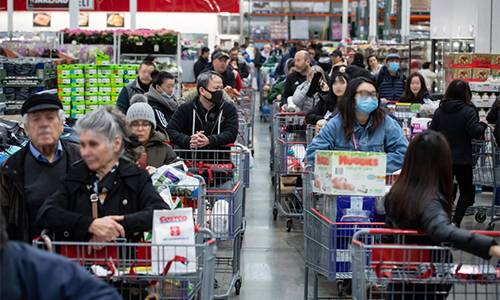
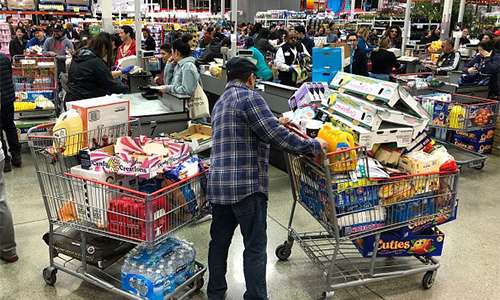
Everyone agrees that 2020 has been a strange year, with disaster after disaster that we’ve had to deal with. More than anything, it has been known as the year of COVID-19. But if I were to pick out a second thing for this year to be known for, I would call it the year of shortages. Never in my life have I seen shortages in the grocery stores, like what I’ve seen this year. They’re still happening now, after all these months.

While some of the shortages made sense, like those for disinfectants, gloves and masks, others have been clearly panic buying. People who weren’t prepared started buying up food when the threat of lockdowns was first mentioned.

This isn’t surprising either, as we’ve always expected those people to panic buy and clear out the grocery stores when a serious disaster happened. But then there’s toilet paper, the craziest shortage of all, which just proves that the herd still follows whoever is up front, even if what they do doesn’t make sense.

In this video, i will unearth a long-forgotten secret that helped our ancestors survive famines, wars, economic crisis, diseases, droughts and anything else life trew at them.
So pay chose attention because this video will change your life forever for the good!

But when is enough going to be enough? When are those people who weren’t prepared going to feel like they’ve got enough? When are our stores going to get back to normal? Do they need a full year stockpile to feel comfortable? That would be a real switch.

But now, just about as soon as the first rush on the grocery stores seems to be ending, the second rush is beginning. Of course, calling it a “second rush” depends on how you define the first rush. I think we had 1A, 1B, 1C, and 1D, with the only common theme being the aforementioned toilet paper, which is finally back in stock, at least for now.

So why is there a second wave starting? For much the same reason as the first. With a new surge in Coronavirus cases, people are concerned about going back into lockdown mode. Should that happen, they want to make sure they’ve got enough to eat. The question is, just where does that leave you and I?

Hopefully, you’ve been rebuilding your stockpile as we’ve gone through the last few months. I’ve been working on doing that with every trip to the store. Not only have I been trying to replace those things which we’ve used; but I’ve also been building up areas where I didn’t have enough in stock, like rubber gloves (which are still hard to find).

But that hasn’t been possible in all cases. Some things, like Clorox wipes, just haven’t been available. Either the factory isn’t making enough, they’re not getting to my area, or people are just buying them up as fast as they can put them on the shelves. Regardless of the reason, we’re heading into a new wave of shortages and we need to be ready for it.

Beat the Rush

The Second Rush of Groceries Hoarding (And What You Can Do About It)

In a way, prepping or at least the part about building a stockpile, is about buying before everyone else does. We build a stockpile, so that when a disaster strikes and people empty out the grocery store, we don’t have to be standing in line or fighting for that last pound of ground beef.

I’ve been in the stores plenty as we’ve been going through the pandemic, seeing bare shelves and people grabbing up what they can. While this hasn’t been all that bad the last few weeks, it’s starting to get bad again.

Even with all the shortages, I never ran out of toilet paper; I didn’t even get into my emergency supply. But what I did is to get to the stores first thing in the morning, standing in line and waiting for them to open. If there’s any time when the stores are likely to have what you’re looking for, it’s before everyone else gets there to buy it out. Better to be one of those buying them out, than one who missed their chance at getting something you need.

You can even do this with curbside pickup, although timing can be trickier on it. All it takes is to arrange your pickup time so that you will be on the first batch of orders pulled that day. That way, there’s a greater chance that the items will be on the shelf, when the “personal shopper” goes to fill your order.

So try to schedule a pickup time that’s about an hour after opening. But don’t schedule it for pickup the first thing in the morning, because that will be pulled at the end of the previous day, when stocks are at their lowest.

Make it Yourself

The Second Rush of Groceries Hoarding (And What You Can Do About It)

We all talk about being self-sufficient in the wake of a TEOTWAWKI event; but why wait until then? With all the shortages we’ve been having, I’ve been making things for myself. Like many others, I’ve been making my own masks, but I’ve also been making my own disinfectants, Clorox wipes and hand sanitizer.

With all the shortages, making it myself has made sure that I always had what I needed. But there’s another reason for it too. I’m sure of the quality of what I have. With all these new companies making hand sanitizer, who never made it before, how can any of us be sure that their products are strong enough to do the job?

Many of them are not bothering to get listed on the EPA list N. By making it myself, I am assured that it is at least 60% alcohol, once the alcohol is mixed with other ingredients.

While we can’t necessarily make everything ourselves, each thing that we can make is one less that we have to worry about the stores having. Since most of the other people out there don’t have any idea of how to make their own disinfectants or hand sanitizer, our chances of finding the necessary materials to make those for ourselves, are much better than finding the finished product. 

For the rest, we’ve got our stockpiles. That should be enough to see us through.

Shop in Unusual Places

The Second Rush of Groceries Hoarding (And What You Can Do About It)

The other useful strategy is to shop in places where others don’t shop. Even at the worst of the spring shortages, there were still stores out there which had many of the things we needed. They just weren’t the stores we’re used to shopping in and they may not have had things packaged in the way we’re used to finding them packaged.

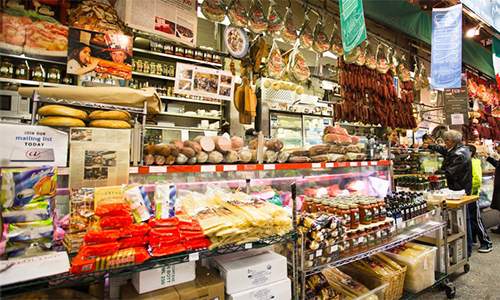
One such place is ethnic grocery stores. My son lives in an area of Houston where there are many different ethnic areas nearby. He loves it for the variety of food that it offers him. But during the worst of the last round of shortages, he found something else. That is that even though Houston is the fourth largest city in the country, the ethnic grocery stores didn’t run out of many items that the big chains were out of.

Another option is to go to commercial suppliers, like restaurant supply houses. While items from those sources are not packaged for sale to consumers, there’s no rule that says you have to tell them that you’re a consumer. You’ll have to buy those items in case quantities to purchase there; but at least you’ll be able to get them. Besides, those case quantities are usually cheaper.

Have you ever thought about living without electricity, internet or mobiles? We can guarantee that the majority of our readers can never imagine this kind of scenarios.

However, there are chances that this type of conditions arises in your life due to flooding, tornadoes, draught or even war.

How could you survive in this type of dangerous condition? We believe you should stay prepared by learning the essential skills needed to deal with these disasters, watching this video

Untitled-2.png

What Are You Prepared to Do When Your Family Is Hungry? (due to potential shortages and weather related events in the future, there could be a spike in food prices of 395%. If that happens, would you be able to feed your family?)

Food is one thing that virtually everyone can agree you need to have because we have all, to some extent in our lives, known the feeling of being hungry. Yes, the seriousness of the actual hunger is probably very relative and for the overwhelming majority, this hunger, however severe it felt to us at the time, was probably nowhere near as drastic as we envisioned. Most of us have never been without food for more than a single day much less a week or more, but the gut tightening response is strong enough to elicit some realization that we never would want to go without for very long anyway.

After the pain of hunger, we can easily grasp the body’s need for food. Simply put, without food, we die. Sure, the time it would take varies by situation but it is generally accepted that if you don’t eat food for three weeks you aren’t going to be contributing to society any more. Nobody wants that to happen.

But for many preppers, and I would presume most of the unprepared out there, the question comes up relative to how much food you have stored; what would you do if the food ran out? What if something happened and you were unable to acquire any more food through traditional means and your family was hungry? What would you be forced to do in order to live? Have you thought about what you are prepared to do to feed your family when their lives are on the line?

Recently, a FEMA contractor predicted that due to potential shortages and weather related events in the future, there could be a spike in food prices of 395%. If that happens, would you be able to feed your family?

Where does your food come from?

I started thinking about this topic the other day during a very routine act that happens every day in the world and has been happening since the dawn of time. This Spring, we purchased about a dozen chickens as our older flock had really decreased their egg production and we had given them away to friends who own a farm. Some of the new chickens we purchased were sexed, meaning their color determined what sex they were so you were pretty much assured to be getting hens. Hens are all we wanted because they lay eggs.

But I also got about 8 Rhode Island Red chicks and with those you really don’t know what you are getting until they mature. As ours matured, it became pretty obvious that we had a few roosters in the bunch. Roosters, as I told my daughter sarcastically, don’t lay eggs. On top of that, roosters are not allowed in our city and ours had started practicing their crowing in the mid-morning. Each day I would cringe when I heard their call knowing that any day one of my neighbors could (but probably never would) call the authorities and they would be well within their rights. I know I wouldn’t want Roosters crowing that weren’t mine beside my home. It was time to get rid of the roosters in my flock.

To be perfectly honest, I had not in my life ever harvested any of our chickens. We have had chickens for over three years, but missed my first opportunity when some friends harvested theirs but I wasn’t able to go. I did put it off because we were still getting eggs even though the output was more sporadic. I had harvested deer several times so this wasn’t anything I was really upset about or dreading. It was just another chore but taking a live animal out and going through the necessary processes to obtain a meal are a little different.

Can you kill your dinner?

After a little research just to make sure I had all the bases covered, I set up a table, prepared hot water and got bowls, knives and trashcans situated. I then went in to get the roosters. As it turns out, we lost the chicken lottery this time around and out of 8 chicks, 5 of them were roosters. I had hoped for a lot more egg production, but instead I was getting meat.

ChickenPost

I caught the first rooster and hung it upside down by the feet while my dog watched with curiosity. Once the chicken settled down, I brought it over to the stump I had in my yard. I had pounded two nails into the stump to loosely hold the chicken’s head so I could stretch it out slightly for a clean shot at the neck. I have heard some people just wring the chicken’s neck but I wanted to be a little quicker and cleaner so I got out my trusty hatchet. After hesitating a good long 3 seconds, which seemed longer in my mind, I brought the hatchet down.

Unfortunately, I misjudged where the chicken’s neck was due to the feathers so the first shot was not as clean as I hoped, but I quickly made another chop that finished him off. (Note to self: on the next one, feel where the neck is first).

You have probably heard if you haven’t experienced this for yourself that chickens will run around the yard with their heads off and this I can affirm is true. The saying, “running around like a chicken with their head cut off” is based in fact and my first rooster didn’t really run so much as flop and flap and cover a good bit of ground even though its head still remained on my makeshift chopping block. After he was dead, I dunked him into a hot pot of water until the feathers started pulling out easily, plucked him clean (which isn’t as easy or as quick as I thought it would be) and harvested him for the meat. I did that to 3 roosters that day.

ChickensMissingHead
Three roosters ready for plucking.

My family got into the act the next day and harvested the other two. My children participated by catching the roosters, cleaning and harvesting. My wife was the hatchet woman for the other two and I was very proud of them for stepping up and felt a little more confident in their abilities should something bad happen and our nice refrigerated, clean plastic packages of food were no longer available.

What could you face in SHTF when it comes to food?

Now many of you might be saying that of course you would kill a chicken if you were starving, but I do know that there are so many other people who would not have the stomach to do this. They would rather starve than do what is necessary to feed their family. Others would say that they would simply eat vegetables because killing another living thing is mean. I disagree on the latter part. We raised our chickens in our yard; they were treated very well and fed daily. When it was time for them to go, we killed them quickly and humanely. They were serving their purpose in the grand scheme of things.

ChickenPlucked
Phase 1 Plucking Completed – No, they aren’t pretty yet and hand plucking requires a bit more time than I expected. Looking to purchase a plucker for my drill.

Still others will find themselves forced out of desperation to steal or kill to feed their family and that is not what I think any of us should be planning for. It is one thing to kill an animal (that I raised) to feed my family, it is an entirely different thing to plan to kill other humans to feed your children.

But for those who would hesitate at doing something similar, what could you be faced with? I assume that a majority do not have any livestock of their own so that leaves you with less options. Many will say they will just go hunting and I think for most people that is simply not going to be an option. First, you would need to be near animals, second, you would need to be lucky enough to shoot or trap one and third you would be competing with everyone else who had the same idea. You may not even be able to hunt because all the game has been harvested already. What then?

What you should be doing now?

I maintain that if you want to be sure your family has food on the table you should not be looking at what you will do when you are desperate. You shouldn’t be contemplating killing your neighbor or anyone for that matter for the last can of beans or joining up with a gang to break into the local distribution center. You should be preparing now by stocking up on food yourself and investing the time it takes to produce your own food.

You can take steps now to build up your own food storage so that you won’t need to worry about going hungry for a very long time. You can begin a garden to supplement what you have stored with fresh vegetables. You can and should start preserving food and learning methods to keep foods fresh if you don’t have the benefit of refrigeration.

You should also look closely at your own abilities and motivations now. If you know you might not be able to swing that hatchet down, that is even more reason to stock up ahead of time in anticipation of future troubles.  Don’t plan on doing “what it takes” later because you didn’t do what it takes now to feed your family. Act now so that you don’t have to get desperate.

If the grid goes down, the ability to defend oneself will be invaluable. In fact, the importance of self-defense will be right up there with food and water- 9 Weapons (Besides Guns) That Could Save Your Life

If the grid goes down, the ability to defend oneself will be invaluable. In fact, the importance of self-defense will be right up there with food and water. Of course, a firearm is the most effective way to defend yourself from an attacker, but that might not always be possible. For example, if you find yourself in a place where firearms aren’t allowed.

The purpose of this article is to teach you about the many other types of weapons you can use to defend yourself. You can carry most of these anywhere without drawing any unwanted attention, yet they’re effective enough to take down almost anyone.

Here are 9 weapons that could save your life:

1. Knife

We’ll start with the most obvious weapon: the knife. Knives are everywhere, and almost everyone has at least a couple of them, whether they’re Swiss Army knives or big fixed bladed K-bars. Granted, while a K-bar or similar type knife is likely to draw attention to you, a simple folding tactical knife can be kept nicely concealed in your pocket and can be equally as effective.

A knife can be even more deadly than a gun in close quarters. For self defense, opt for a durable folding knife that can be opened quickly and has a serrated blade with an ergonomic grip.

2. Pepper Spray

Since this stuff is strong enough to be used as a defense against bears, you can bet it will be effective against any human. The inflammatory effect of pepper spray causes eyes to swell and close, making it impossible for the attacker to see anything.

It’s also very cost efficient at only $10 to $15 per canister. That’s a small price to pay for a device that causes extreme irritation to the assailant’s eyes, skin, and respiratory system.

Nonetheless, pepper spray does have some serious cons. When you spray a blast onto the face of an attacker, it’s possible that some of it could get on you as well. This is bad for people with respiratory problems. Furthermore, the chemicals in pepper spray typically can’t stand extreme hot or cold temperatures, weakening its effectiveness.

It also doesn’t work as well in the wind or rain, and could backfire if there’s a strong gust of wind in your face. While you should have pepper spray in your self defense arsenal, you’d be wise to carry an additional defensive item as well.

3. Stun Gun

Many stun guns don’t look like traditional guns so they shouldn’t draw too much attention. Still, you’d be wise to keep your stun gun adequately concealed. A stun gun is not only a non-lethal self defense weapon, it’s a great alternative to pepper spray since it will even work in the wind or rain.

The mere jolting sound that stun guns produce may be enough to scare away attackers. But even if it isn’t, the thousands of volts of electricity certainly will.

4. Cane

A cane is one of the most efficient defensive items on this list. It gives you plenty of reach, hits hard, and it’s far less intimidating (at first) than a baseball bat. Select a cane that won’t break easily and has a heavy handle; hardwood canes with rubber-type handles are usually your best bet.

Just remember that if you plan on using a cane for self-defense, you better look like you have a limp since you’ll look very suspicious if you don’t.

5. Umbrella

An umbrella is a great alternative to the cane and can be just as deadly, but only if you use an umbrella that isn’t fragile. Many umbrellas can break easily if used in a fight, so stick to umbrellas that were build for self-defense purposes like the one in the link. It’s lightweight and made out of fiberglass that hits as hard as a steel pipe.

Of course, you can only use an umbrella when it’s raining or wet outside since you’d look pretty suspicious carrying one around on a sunny day.

6. Belt

A belt is another ubiquitous item that can be converted into a powerful self-defense weapon. For this, you’ll want a wide leather belt with a heavy metal buckle. A belt will give you plenty of reach and the buckle can inflict a lot of damage if you swing hard enough. A belt could also be used to strangle an assailant or tie them up after you’ve apprehended them, tripling its practicality.

7. Tactical Pen

A tactical pen is an item that’s equally at home in your EDC as it is in your survival kit. Any pen can be used as a weapon (look no further than the Bourne films), but a tactical pen is even better. There should be at least an inch of the pen sticking out from your fist in order for it to be effective as you punch holes in your assailant.

8. Scarf

Wait a minute, a scarf? Yes, that’s right. While the scarf is one of the most unlikely self-defense weapons, it can also be one of the most fatal if you know what you’re doing. You can use a scarf as a makeshift garrote or a strangling weapon.

If you’re still skeptical, keep in mind that the French Foreign Legion carry scarves as part of their equipment and have been known to use them as garrotes on tactical missions. The only downside to a scar is that they’re meant for cold weather, so you might look silly wearing one in warm weather.

9. Car Keys

Last but certainly not least, you can also use your car keys as a self-defense weapon. Assuming your keys are non-folding (and most are), then you can use them as a push dagger. While they’re not as sharp as an actual dagger, they can still inflict some serious damage if you use them hard enough, especially if you’re pumped up with adrenaline.

Better yet, you can get a keychain self-defense tool like the one in the link. these are sharp enough to really hurt someone, even through their clothes.

How to Build a Bunker- Serious survivalists are becoming more prominent in modern society, especially as nuclear treaties change and the threat of war is omnipresent in everyone’s minds.

Serious survivalists are becoming more prominent in modern society, especially as nuclear treaties change and the threat of war is omnipresent in everyone’s minds. Having a household bunker became popular during the Cold War, and while they have fallen out of favor in recent years, with the present state of the world, it might be a good idea to consider building one. Assembling one of these safety refuges is easier than you might think, even if you’re not an engineer. Here are some simple ways to build a backyard bunker to protect yourself and your family.

Why Do You Need a Bunker?

First, consider why you need a bunker. Do you live in a tornado-prone area, or do you want to make sure you’re prepared in the event of a catastrophe? A backyard bunker can protect you from a variety of threats, from nuclear attacks to the next world war.

The question you should be asking yourself isn’t why you need a bunker. It’s what you will do without one.

Choosing a Location

Once you’ve decided to build a bunker, your first step is to select a location. Ideally, you’ll want something close to your home where you can retreat in the event of a catastrophe. Take a close look — or conduct a geological survey — of your potential build locations to determine if they are conducive to house a bunker. Some areas — such as Florida, where the water table is close to the surface — require additional care and may even need surface bunkers. It is possible: Explorers found an old World War II bunker in Florida in 2017 that is still intact after all these years.

You will have to be aware of any underground pipes or wires in your digging location. If any utilities run through your yard, you’ll have to choose a new location or pay the city to relocate the services.

Don’t Forget Building Permits

Speaking of the city you call home, you will need to obtain building permits before you’re allowed to begin construction. Speak to the local city council or permitting office and ensure you are allowed to build a bunker on your property, and find out what it will cost to obtain those permits.

Don’t start building before you’ve obtained a permit, though. Violating local building code could cost you a lot of money in the long run.

Pre-built or Custom Bunkers

Once you have a location chosen and have obtained the proper building permits, you have another decision to make. You have to decide whether you’re going to build a custom bunker or install a pre-built option.

You can design a pre-built bunker with a steel cargo container or a large piece of underground piping. Both will have to be customized to be comfortable for extended stays, but they can serve as a foundation for a bunker to reduce construction time.

The other option is to build your bunker in place, using cement or concrete. The two terms are often used interchangeably, but they’re two separate materials. Concrete is one of the primary ingredients in cement. It is mixed with water and other elements to create cement.

Of the two materials, cement is the better option. However, you will need to build frames to hold the vertical portions of the shelter, as well as the ceiling once you’re ready to pour it in place.

Time to Dig

By this point, you should already have a building permit and all the supplies you need for construction. Your next step, once you’ve chosen the bunker materials, will be to dig a hole. This isn’t something you’ll be able to tackle with a shovel and a couple of buddies, though. Be prepared to rent a backhoe or pay a company to dig the hole to your preferred dimensions.

Make sure you’ll have at least 2 feet of soil above you once you’ve finished — this serves as a buffer to protect you from gamma radiation in the event of a nuclear strike. If your bunker is 10 feet high, you’ll need to dig down at least 12 feet.

The exact details of the construction will depend on the materials and size of your bunker, so we can’t offer detailed instructions for this step. Stick to the plan you’ve created — whether you’re building it from scratch or relying on pre-built options — and take your time during construction.

A Method of Entry

One thing you can’t afford to forget when you’re building a bunker is a way to get in and out. Ideally, you want to have at least two entrances or exits. If one is blocked, you don’t want to be trapped in the bunker, especially if supplies or oxygen are running low.

Secure steel doors or bulkheads are ideal for this application, especially if they can be lined with lead to protect you from nuclear radiation and other contaminants.

Power and Supplies

Once you’ve completed the construction, it’s time to start considering supplies and electricity. You won’t be able to rely on local power and utility grids for energy or water. You also won’t be able to drive to the grocery store for food or head to the hospital for medical supplies. A bunker needs to be self-sustaining, which means you’ll need power, food, water, medicine and other supplies inside the shelter.

For power, you have a few options. You can utilize generators — in which case you will need a supply of fuel to last you until the infrastructure is restored — or you can rely on solar power. While it is true that the electronic components of the solar system may be susceptible to the electromagnetic pulse released by a nuclear strike, with some necessary repairs, it may be able to provide power through an emergency.

Once the bunker is ready for an emergency, make sure you stock it with enough food and water to last throughout any crisis. Depending on the situation, this could be as short as days, or as long as months.

One other supply that you need to consider is oxygen. A bunker is a contained system, which means that eventually, the air inside will run out. You will need to install a ventilation system as well as air scrubbers to remove carbon dioxide and other contaminants to ensure your air is safe.

It Never Hurts to Be Prepared

You may think you’ll never need a bunker of your own, but it doesn’t hurt to be prepared. In cases like these, it’s better to have a shelter and never need it, than to need one and not have it. Building a bunker is not a small endeavor, nor one that should be taken lightly. Make sure you have all your plans in place before you break ground.

When To Speak To The Police, And When To Shut Up- In all the funk and the whirlwind of this cultural revolution you will likely have an interaction with police.

There have been over 300 victims of shootings in NYC in a month’s time. This is up 3-fold from the stats from the same period in 2019. People know that policing has changed drastically, and the worst elements of society are taking full advantage of this.

In our brave new America, it is hard to know where you stand. The ground underfoot is unsure, and the culture is changing rapidly. If you find yourself standing before law enforcement do you know the best course of action? Do you know when to speak and when to dummy up to protect yourself?

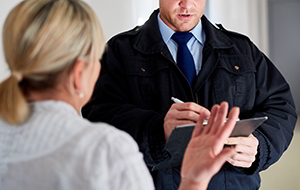
Cops are people. Never forget that. They show up to assess and enforce the law. There are many people who have wound up in custody when they shouldn’t have. Much of it has to do with simply saying too much or communicating the wrong information.

Fifth Amendment Protections

Now we have a world movement that is attempting usurp the constitution and its vast protections. We could stand to lose everything if we go the route of a one world government or a coalition of nations woven together by big tech and socialist ideologies.

We do not have to talk to the police at all. We can simply comply in silence. In most cases it’s just easier to go along and get along. If you were speeding than be cordial, give them what they ask for and pay your fine. You broke the law.

However, things can get more complicated in matters of false accusation or self-defense. In those moments you might choose to evoke the powers of the 5th Amendment. Which states:

“No person shall be held to answer for a capital, or otherwise infamous crime, unless on a presentment or indictment of a Grand Jury, except in cases arising in the land or naval forces, or in the Militia, when in actual service in time of War or public danger; nor shall any person be subject for the same offence to be twice put in jeopardy of life or limb; nor shall be compelled in any criminal case to be a witness against himself, nor be deprived of life, liberty, or property, without due process of law; nor shall private property be taken for public use, without just compensation.”

To further drive this home let’s look at few situations where you can effectively communicate with police and some circumstances where you are better off just shutting up and letting the law work or lawyer up to protect yourself.

DON’T SPEAK: When You Are Nervous

When To Speak To The Police, And When To Shut Up

Police must gauge people in high stress situations, and they are trained to recognized strange behavior.

Some people get incredibly nervous when they interact with police. People who are sneaking things and doing bad things can get nervous and act strange when confronted by the police, too.

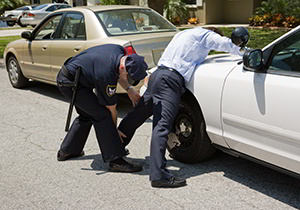
They cannot know which type of person you are in the seconds after they pull you over. If you are nervous and you are fumbling over your words, limit way you say and do your best to comply with reasonable requests.

DON’T SPEAK: If You Don’t Know Where You Stand

When To Speak To The Police, And When To Shut Up

In a simple traffic violation, you know where you stand. Your light is out, you were speeding, or you got caught searching on your phone instead of paying attention to the road. It’s pretty cut and dry even though many people still argue with police in these moments.

What is much more alarming is when you find yourself standing before a police officer without knowing why they have shown up or what you have done.

This could happen for lots of reasons. A malicious neighbor might have called the cops to your home for a loud party you are having, you might fit the description of someone who they are looking for or you might have just strolled into a crime scene at the wrong time.

The best thing to do is dummy up and keep quiet. Don’t spend your time explaining yourself. Don’t spend time explaining your innocence. You are protected by the constitution and your calm; compliance will do you much better than arguing and resisting.

DON’T SPEAK: If You Are Called in After the Fact

When To Speak To The Police, And When To Shut Up

If you find yourself in a police station answering questions as more than just a witness to a crime, you need a lawyer. You are on the verge of becoming a statistic.

Remember, police are interested in enforcing the law and putting cases to bed.

If you start talking and suddenly fit the bill you might already be a suspect and your words could incriminate you even further.

DON’T SPEAK: In a Self Defense Scenario

When To Speak To The Police, And When To Shut Up

If you have just experienced a violent scenario where you were forced to protect yourself with your fists, a knife, a gun or some other kind of weapon, you need to focus on calming down, above all.

You are in no condition to start explaining why you used your firearm or how the attacker approached you.

While we like to believe that simply defending ourselves is a protection awarded to us by the law, most states have some hoops to jump through before you can physically harm another person in self-defense. Particularly if firearms and death are involved. Wait for your attorney on this one.

SPEAK: If You Are a Witness

When To Speak To The Police, And When To Shut Up

As a witness your words hold weight with police. This one can be a little tricky depending on the situation but in many cases eyewitness reports are valuable. This can be especially true if there are limited witnesses.

In my opinion this is part of your civic duty.

SPEAK: To Announce your CCW

When To Speak To The Police, And When To Shut Up

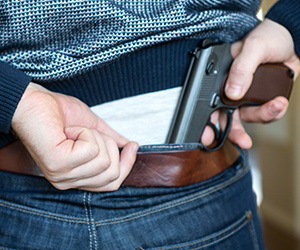
Always announce you CCW. Be truly clear and assure the officer understands what you are saying. In most cases the police officer will ask you to put the gun someplace safe or, if its in a bag, will move the bag to the trunk of your car.

This is for both of your safety.

SPEAK: To Be Cordial and Respectful

This was lost on people even before this current cultural revolution against law enforcement. People don’t like to be told they are wrong, even when they are wrong!

I always try to be cordial and respectful to police. I am not a big fan of authority figures and never have been. Still, I understand the struggle. I understand the risk in what they do. Most importantly, I understand that they are people just like you and me and if I pulled someone over for running a red light I would want a society that is mature enough to admit they were wrong and move on while simply being decent.

It is hard to know what the future of policing might look like. In many places where the police are needed most, they have been massively defunded. No one has really been clear about what this kind of defunding will do to police capabilities.

In all the funk and the whirlwind of this cultural revolution you will likely have an interaction with police. We are preppers. You should not be surprised by how you act in almost any situation. Interactions with police should be mostly cordial.

No matter where you fall on the police debate there will be times that you should hush up and go with the flow of the officer. There will be times when your freedom might depend on you being quiet and waiting for an attorney. For the most part, though, speaking with cops on average is just about being polite and respectful.