How To Deal With Neighbors And Friends That Come Begging For Food At Your Door In A Crisis

The late afternoon light is shining through your window and the scene outside is quiet, just the way you like it. You are about a month into a serious collapse and thus far your preps have held up. Power has been out for 2 weeks; you don’t plan on ever having power again. You prepared for that.

As the sun sinks closer to the horizon you hear one of the most terrifying sounds of all: A knock on the door!

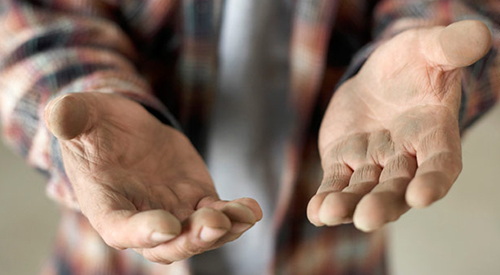
Your family finds their places and weapons, you leave from the backdoor and flank whoever might be on your porch. To your surprise it is your cousin! You haven’t seen him in years, but he is here. He looks rough and he has his disheveled family of three along with him.  He also doesn’t seem to have any food or supplies with him.

This is one of the prepper scenarios we all have thought about. However, it might not be as bad as you think!

People Are Power

So, what do you do when someone unexpected comes knocking? Now, that is an interesting word to use in conjunction with preppers. UNEXPECTED. The whole point of prepping is to consider the unexpected.

In a true SHTF situation people bring you power. Your community should be like a hive. Hardly worth the trouble of any small group that might wish to steal or worse. You must be able to sustain them or have them sustain themselves but there will be tremendous power in numbers. Big jobs become easier, you can make an area more secure with more people, and you have more brains to put towards a problem.

Of course, its not heaven. With people come people issues like fights, jealousy, and the like. However, good leadership and preparedness can give you the upper hand on things like that.

You must first make an honest list of “survival dependents” or people who will come to depend on you when everything goes to hell!
How to Deal with Neighbors and Friends Who Come Begging for Food at Your Door in a Crisis

Trust me, your list is bigger than you think.

Survival Dependents

While it is nice to imagine that the calamity will never cross your threshold, the reality is that many more people depend on you than you think. Chances are, even if people don’t know you’re a prepper, you are the type of person who has it together. You are likely the person people go to for answers.

No matter how strong your OPSEC protocols are if you are a good and solid person, than people will look to you in times of crisis. These might be people you love or just people you know.

Now is the time to sit down and create a real list. You must take off the blinders and truly consider all the people who will depend on you in an SHTF situation. It would be perfect if your list consisted of 4 people but when you break it down you have groups of people to consider.

  • Immediate Family
  • Extended Family
  • Friends
  • Co Workers
How to Deal with Neighbors and Friends Who Come Begging for Food at Your Door in a Crisis

Your group of survival dependents could include people from each of these categories. How they depend on you may vary but this list will help you understand that there are more people than just your immediate family who will turn to you in times of calamity.

Can You Support People?

Of course, the question that comes to mind after you create a list like this is: Do I have enough?

For most people, the answer is no. It can be over burdensome to assume that you can prep for all the people who might be on your list of survival dependents. When these people show up asking for food, though, you need to have something!

Unless you subscribe to the idea that you are going to turn everyone away who comes to your door. If that is your game plan than you better also prepare for some serious backlash. How many fathers with kids can you turn away before one of them says, “No, we are coming in.”

What happens next cannot be good, with lots of harmful outcomes.

This doesn’t mean you should be a pushover and let any old person into your home and feed them.
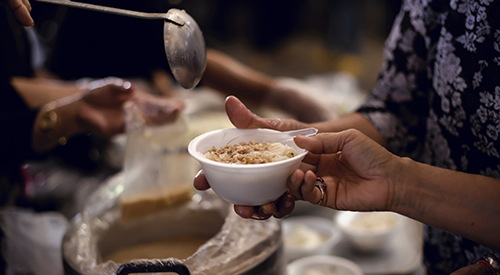
How to Deal with Neighbors and Friends Who Come Begging for Food at Your Door in a Crisis

Tip: When people approach you to ask for something, if they come to your door or see you outside, simply ask them for something first! Open the door and ask for food and medicine: “Oh, I hope you brought some food, we haven’t eaten in a week!”

Put Them to Work Immediately

From that list of survival dependents, you will likely choose people who you will bring into the fold. However, don’t let them in free of charge. The best way to handle someone who comes asking for help is to immediately give them some form of work to be done.

This is also a great gauge of the depth of that person. Those who are outraged by the work that needs to be done at “their new home” are people that you can easily weed out. Just make it truly clear up front that there is plenty to do and if they cannot do what is asked, they cannot stay.

By the way, there will be plenty to do! If you manage a household of four and all the sudden it jumps to ten you will have lots of extra work. It is not so much about room but about dishes, laundry, food production, security detail in the neighborhood, general cleaning.

In an off-grid situation, it might be about things like water procurement and sanitizing, renewable energy system maintenance, gardening, canning and everything in between.

There will be a serious list of chores to be done and the last thing you want is a house full of freeloaders laying around all day while you are red in the face.
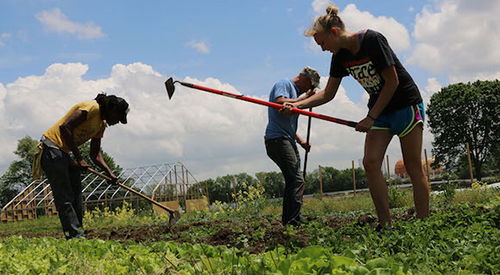
How to Deal with Neighbors and Friends Who Come Begging for Food at Your Door in a Crisis

Using a basic Excel spreadsheet, you will be able to create chore lists TODAY for issues that might come tomorrow. Print a stack of them and save them. They can be filled out by hand when the time comes or if you know the system you could print them with the duties listed.

It’s high time we stop looking at neighbors and friends as threats in the downfall. Many people can see something resembling collapse just on the horizon. Its hard not to look around and wonder how the unprepared will react to a future of scarcity, uncertainty, with up close and personal violence.

If America is facing balkanization or civil war it will be particularly important that you have a secure neighborhood with plenty of able-bodied individuals. Many neighbors will leave for a safer environment and you must be aware of that. However, that might free up homes and living areas for more of your survival dependents.

Your survival dependents are not the burden you once thought. Believe me. While you know the flaws of the people around you, they have two ears, two eyes and a heart that wants to survive. If you can find it in you to lead these people they will provide you with a true survival group that will keep you and yours from being acted upon by anyone with a group larger and better trained than you and your spouse!

Urbanites Moving To Rural Paradise Ruining It For The Locals- There are lots of profound ideological differences between people today. It seems to be an increasing challenge to ‘get along’. Maybe there’s just too many people. It really is about that, isn’t it?

People from the city regions with their urban ideas can make it difficult or disrupt the way of life for those who live rural. What do I mean by that?

In my view there are two primary contributing factors:

Cities Control Political Direction

1. The cities constitute the political direction of a region. Even a state. This widely affects laws and regulations for everyone.

City Ideas Upon The Rural Natives

2. Urbanites who move to the hinterlands (or have a second home there) often bring their city ideas with them. And usually those ideas are diametrically opposed to that of the natives.

It’s evident that people living in most large cities maintain a very politically liberal outlook. I asked that question a few years ago in an article titled why are so many big cities in the united states – liberal?

CULTURE

Mostly, it’s a ‘culture thing’. People in the city are brought up a bit differently versus the upbringing in rural regions. Some out of necessity.

DEPENDENCY

Cities are 100% dependent. Everything needs to be brought in. People in large cities have more of a mindset to depend on others. Many of those who live rural are also dependent these days, although to a lesser extent. They have options to be more self reliant if they choose to (e.g. more land, more ‘know how’ in the region).

POPULATION DENSITY

High population density demands greater control, laws, enforcement, and regulations. Low population density regions comparatively require very little (though unfortunately affected by many of the same controls enacted by the cities).

GOVERNMENT

It seems the bigger the city the more government dependency for many things such as public transportation, law and order, and many other services (including handouts). Cities require more ‘group think’. Rural living requires little government involvement. There’s much less crime, fewer services (which demands more self reliance), and not much need for ‘group think’.

ATTITUDES

City regions breed dependency and the attitudes thereof. Rural regions demand some extent of self reliance, which breeds personal responsibility. It is ingrained in the character of the population.

There are lot of differences and some of them quite major. City people are more about control. Again, some of that is out of necessity. For that matter, in my estimation ‘the left’ is more about control. Power. It breeds from the cities.

Congressional District Maps

Rural America is not really being effectively represented.

The district maps are supposedly drawn up to balance population versus congressional representation. If you live in a region like where I live, the geographical rural area is very large compared to the small region which contains the ‘big city’.

The problem is, much of the money comes from the city. And people won’t get elected if there’s not enough money. Politicians will cater to the city regions where the money is. The city regions are notoriously left/liberal. Therefore rural representation (typically conservative) continues to diminish in my view.

Campaign finance reform? Right. I’m not holding my breath on that one. It’s always about the money. It will continue to be about the money. The big money comes from the cities. The cities breed leftist ideas.

Rural Paradise Being Overrun

Suburbs & Rural Paradise Being Overrun By Exodus Out Of Blue Cities

This is happening a lot. People who either move away from their leftist city, suburbs, or regions, they are bringing their attitudes with them.

City dwellers and the regions thereof tend to have more money. Some of them buy vacation homes or 2nd homes in ‘rural paradise’.

PERSONAL EXAMPLE

I happen to live in one of those ‘rural paradise’ regions (at least in my own viewpoint) and have witnessed this happening here. In fact there’s one particular recent encounter that actually inspired me to write this article…

I live in the mountains. We have one of the best regions and trail systems for snowmobiling in the nation. It’s part of the motorized sports winter culture here, similar to our ATV trails during the summer.

Without giving too much away, I am integrally involved with maintaining a portion of snowmobile trail system near the Presidential Range in New Hampshire. A beautiful scenic area.

Anyway, one little slice of our trail system shares a private roadway on one of these scenic roads with crazy views of the mountains. The road has been slowly developed with some beautiful homes/cabins along that view. Well, one of those places was bought by a leftist couple from Connecticut. They apparently bought it for the view, NOT for the culture of the region.

They have taken it upon themselves to harass us and complain about snowmobiles going up the road (shared by all the homeowners there), even though our club has also shared that road’s right-of-way for many years. I have interacted with them and they are in a word, ‘nasty’.

SO TYPICAL…
It’s so typical of those who bring their politics with them from the city. They will not conform. They will not integrate or assimilate. No. Instead they try to change the way the natives live. It’s unbelievable.

They often have very loud voices in that they will complain to the entire hierarchy trying to get their way. Some of them enter the system of government and start making changes. It’s like a cancer.

Where Is It All Headed?

You tell me. I don’t know…

There are lots of profound ideological differences between people today. It seems to be an increasing challenge to ‘get along’. Maybe there’s just too many people. It really is about that, isn’t it? When it comes down to it, it’s population density and the sheer number of people living in proximity. Life can be quite different between the city dwellers and the country folk…

The Safest Zones In The US. Do You Live Near One?

You might be looking at your nation a little differently lately.

There have always been dangerous neighborhoods and boroughs. Places like Compton, Kensington, and Camden might come to mind when you think of places that have a reputation for crime. Some of these areas have actually improved from when I was child. However, there are lots of places all around this nation that have been dangerous and many that are getting worse.

The move towards lawlessness in many of our biggest cities has been brought on by the current attitude towards police and police funding. As states bandy about the issues and people worry about things like natural disasters and economic decline, many have moved or considered moving.

What are the safest zones in the US?

Safest Cities

There are safe havens all around this nation. There are places that have historically had low crime and great community cohesion. The key in most of these cities and towns is ownership and loyalty. Most often transient places are dangerous, and people are more likely to commit crimes in these places.

Let’s look at some of the safest cities and towns in America:

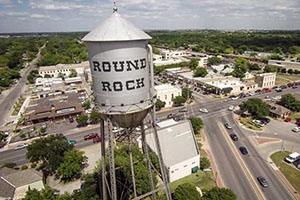
  • Round Rock, Texas
The Safest Zones in the US

With a population just over 100,000 this smaller town in Texas is a very appealing place for preppers to live. It is also a very safe place with a median income of $70,000.

The low poverty rate in Round Rock has much to do with the safety and security of this Texas town.

Round Rock has been dubbed a “super suburb” as a place just outside of Austin

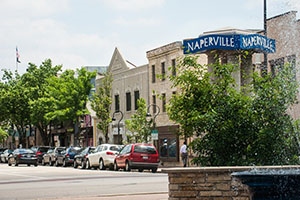
  • Naperville, Illinois
The Safest Zones in the US

This Chicago suburb is a gem in an area that most people would not expect. The River Walk is an important part of Naperville, but it is hardly the only thing that this suburb offers. A population 144,000 people are a successful and well paid lot. The median household income is over $100,000.

The minimal crime rate, per 100,000 people, has much to do with the low poverty rate which is just over 4%. 77.6 violent crimes per 100,000 people is something to be proud of.

The safety of Naperville could also have to do with the tremendous outdoor opportunities. With over 130 parks and 2 public golf courses, there is nearly a park for every person!

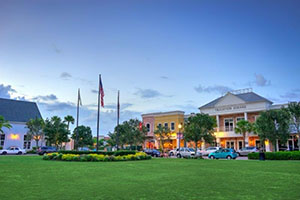
  • Port St. Lucie, Florida
The Safest Zones in the US

If you are going to pick a new safe place to live, why not consider a place where the weather is wonderful! Along the southern coast of Florida Port St. Lucie is a beautiful tropical zone with $169,000 a year median income.

You will have to be prepared for hurricanes. An evacuation plan is needed as the southern coast of Florida is at risk during hurricane season, but we are preppers!

You will not have as much to worry about when it comes to violent crime as there are just 115 violent crimes per 100,000 people. You will love near breweries, botanical gardens, preserves and marinas. Great fishing on the coast, too!

Best Regions to Survive Disasters

Along with safe cities and towns America also features some great regions to setup a life that are far away from some of the biggest threats. Remember, people are only one threat. Mother nature can have a devastating affect on the North American continent and has done so in the past. From massive super volcanoes to devastating earthquakes

What are the safest regions to survive massive cataclysmic disasters?

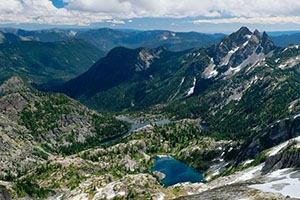
  • The Cascades
The Safest Zones in the US

Deep enough inland and high enough up to counter things like flooding and tropical cyclones that affect the West Coast. The cascades are loaded with resources for survival like water, food, and wood. They are a beautiful backdrop to deal with the post-apocalyptic world and far enough away from southern California to inherit any of that mess.

The northernmost portions of the Cascades are even located in the American Redoubt, which we will discuss later in this article.

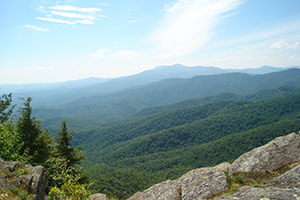
  • The Blue Ridge Mountains
The Safest Zones in the US

Another range of mountains that offer similar benefits as the Cascades. This east coast mountain range covers several states, has plenty of food, water, shelter, and game animals. Covering the land by food would not be easy but the seclusion from the chaos would be well worth it.

Because of elevation and distance from the coast there are almost no threats of flood, tsunami, or hurricane in this region. There is little seismic activity in the area.

During a SHTF situation, pain could become an annoyance for some, but unbearable for others.

If doctors are scarce and medicine becomes even scarcer, this one little weed, found all over North America and similar to morphine, could be a saving grace.

West of some particularly important and sizeable cities, the Blue Ridge mountains could become a safe haven for millions of people in the very worst case scenario. That is the only weakness of this location.

  • Appalachia
The Safest Zones in the US

Further west still, on the other side of the blue ridge mountains in the region of Appalachia which runs from New York to Mississippi. This is another great region to consider because of its sparse population compared to the coasts. Its quick access to the Blue Ridge Mountains and safety from most major disasters.

Prepper Strongholds

Are you looking for even more benefits? Maybe you want the people and the safe places. There is nothing wrong with that. Around the nation there are several places that have not only been deemed safe and pleasant but are also filled with preppers!

Yup! The self-reliant and independent have taken up refuge in a few spots across the nation. They are often looking for more friends like them to build their prepper community. These areas are not just filled with preppers but are in rural areas where other people are as self sufficient as the prepper community.

  • Redoubt
The Safest Zones in the US

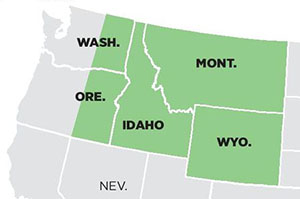
In 2011 James Wesley Rawles proposed Idaho, Montana, and Wyoming as the American Redoubt. The Redoubt also encompasses the eastern parts of Washington and Oregon. It is unclear how many people have moved to the American Redoubt with the intent of stockpiling, prepping, or homesteading for the long haul.

However, there is a small community of voices from Rawles, to John Jacob Schmitt, to the American Christian Network, that will align with much of what you believe. It has been estimated that thousands of people have moved to these areas as a safe haven from the growing turmoil of our world.

Because of its low population density and impressive access to resources, as well as low threat profile, as long as you can stay warm in the winter, the Redoubt has some tremendous benefits. You will also have plenty of wide open space so if you don’t align with everything Rawles proposed you can do your own thing and be just fine!

  • Ozarks
The Safest Zones in the US

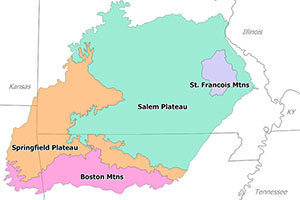
The Ozarks are more of a plateau than a mountain range with some of its tallest peaks between 1-2000 feet tall. Because of its location in the nation and its elevation, it has a tremendous amount of benefits to the average prepper looking for a safe zone.

The Ozarks are not affected by things like floods because of the elevation, it has this elevation without snow because it is in the south. It does not face any kind of earthquake threat, hurricane, or forest fire. There is a long growing season that features lots of rain.

Pastor Joe Fox of Viking Preparedness has been expanding his Shofar mountain and influencing preppers for many years to make their way to the Ozarks. COOHMP or Come Out of Her, My People as taken from the book of Revelation. A growing prepper stronghold has taken root in the Ozarks making it a wonderful place to move and a very safe region.

Also, those who are not preppers in the Ozarks are looking to do their own things and basically be left alone. So, it is a sentiment we can all understand!

We live in a MASSIVE nation full of all kinds of opportunity. There are areas that are incredibly dangerous, but the reality is we have a lot of wide open spaces that can be whatever you want them to be!

Did you know there are even some places that will give you free land or pay you to live there! If you aren’t tethered to a location than you can take advantage of the areas, we mentioned. However, you should arrive there and become a part of the community. This is particularly important. You can never know the full potential of any area unless you integrate and become a member of the community.

Go forth and choose your destiny!

Guns have been referred to as “the great equalizer,” and there’s no weapon which can come close to them in that regard.

A lot of the popularity of firearms is due to the fact that anyone can use them effectively, not only the strong and agile. The young, the old, men, women and child can take up firearms in defense of home and family and do so effectively.

But what do you do if you can’t use a gun – or if you don’t have a gun — to protect yourself?

Fight Like Jason Bourne: 7 Key Points to Surviving a Serious Fight- Your ability to get out of a hairy situation rests with you. Learning these kick ass Jason Bourne moves will give you the advantage when faced with close combat fighting and will give you a great probability of getting out alive.

I think we can all agree that Jason Bourne is one of the greatest action characters of all time. Anyone who has taken a self-defense class has channeled his awesomeness when practicing. So, how do you fight like Jason Bourne?

One of the reasons we love watching this character fight is the close combat defense sequences he does in the films. His lightning-fast moves are efficient, powerful and (as we all know) deliver a well-deserved ass-whoopin’ to his opponent. To prepare for the part of Jason Bourne, actor, Matt Damon studied Krav Maga, an Israeli Defense System. This martial art form is extremely efficient and quickly neutralizes the opponent making it an ideal line of defense in a SHTF scenario.

Many believe that Krav Maga is the easiest martial art form to learn because it is based on instinctive natural reactions to events. Moreover, it utilizes a lot of lock and counter moves that are used at the same time. In other words, you aren’t waiting for the guy to throw the next punch, you are blocking and counter striking at the time same time as he is throwing a swing. This “all-in-one-move” fighting gives you a key advantage in a fight and will make your opponent second guess messing with you.

Learning these close combat defensive techniques take time to master, but will serve you well if you find yourself being attacked. Krav Maga classes are offered in many communities; as well, you can become a Krav Maga beast from the convenience of your own home. SHTF situations occur in different situations. It’s not just an end of the world scenario you should be prepared for, but those everyday emergencies too like when you are walking down the street or going to your parked car.

Effective preemptive striking can save your life when a violent confrontation is imminent. This is the premise of Krav Maga – be preemptive! Be the first of hit, the first to lead the fight, the first to choke. Because Krav Maga is based on instinctual movements, regularly practicing these movements will create muscle memory and you can react faster when attacks.

Man choking other man, isolated on white, series of selfdefense

In this Krav Maga tutorial video, key points of instinctive fighting techniques are discussed.

As well, check out these Krav Maga videos:

Your ability to get out of a hairy situation rests with you. Learning these kick-ass Jason Bourne moves will give you the advantage when faced with close combat fighting and will give you a great probability of getting out alive.

After the basic survival necessities of shelter, water, fire, and food have been satisfied, acquiring a firearm should be one of your highest priorities after the SHTF: 9 Best Firearms To Have After SHTF

After the basic survival necessities of shelter, water, fire, and food have been satisfied, acquiring a firearm should be one of your highest priorities after the SHTF. In the event of a post-apocalyptic scenario, however, you may not be able to find one. For this reason, a good firearm is one of the most important things to acquire ahead of time.

Firearms can add an incredible amount of power to your inventory. With them, you have the ability to hunt, to defend yourself, and the leverage you might need in social scenarios to tip the balance of power in your favor.

In this article, we’ll cover the 9 best firearms to have after the SHTF: 3 rifles, 3 handguns, and 3 shotguns.

Rifles

There are many dissenting opinions out there about which firearm is the most important, but taking into account weapon maintenance, ammo weight, and availability, and overall weapon functionality, the rifle is probably the most useful.

It can be used readily in any hunting or defensive scenario you may come across. These three rugged options will serve you well almost anywhere.

1. Ruger 10/22 Takedown

One of the best, most versatile firearms you can have in a survival scenario is the Ruger 10/22 Takedown. This long rifle is excellent for hunting small game. Its .22 ammunition is readily available and extremely lightweight, making it the obvious choice when you want to carry hundreds of rounds of ammunition at a time.

Generally speaking, the ammunition is also fairly cheap, making it easy to stockpile ahead of time. The Ruger 10/22 Takedown is semiautomatic with a 10-round magazine, meaning it’s ideal for situations where you need to fire more quickly than you could with a bolt-action rifle.

2. ArmaLite AR-15

The classic, ever-popular AR-15 makes this list due to its durability, ease of use, and availability. The AR-15 is common enough that you could easily find parts for it, and its design makes it one of the easiest to clean and take apart. There are dozens of variants out there, and most of these are good options as well.

Make sure you have your AR-15 chambered in 5.56, which allows it to shoot both 5.56 rounds and .223 rounds. This gives you added versatility if you need to forage for ammunition at some point.

3. Mosin-Nagant

Your third rifle option should be something of a larger caliber–think in terms of being able to take down the biggest game in your area. The Russian-made Mosin-Nagant fires a 7.62×54 round, packing a punch that most big game won’t be likely to shrug off.

Another benefit to the Mosin-Nagant is that millions of them were made in the earlier years of the 20th century, making them easy to find and their ammunition fairly common. This firearm can even fill the role of sniper rifle should the need arise.

Handguns

Handguns give you the element of surprise and convenient protection. While you can hunt with handguns, you probably wouldn’t choose to unless it was your only option. With that in mind, here are some of the best pistol options you should try.

4. Glock 17

Perhaps the most useful handgun to have in preparation for the SHTF is the Glock 17. With a magazine capacity of 17 rounds, you also carry almost twice the amount of ammunition as some other handguns, which is useful since its 9mm round doesn’t have the highest stopping power out there.

This weapon is the most widely used handgun by law enforcement all around the world. Not only does this mean the weapon is extremely reliable, it also means it is readily available should you ever need replacement parts or extra ammunition.

5. Colt M1911

The 1911 is an all-around winner when it comes to pistols. With a slim profile that still has all the stopping power of a .45 round, this handgun is a good choice because of its durability and availability. A tried and true weapon since World War I, this will serve you well as your personal sidearm in any survival situation.

6. Smith and Wesson 586

No good handgun list would be complete without a tried and true revolver. The Smith and Wesson 586 is one of the most reliable revolvers available. Extremely easy to load and to clean, the Smith and Wesson 586 is the perfect survivalist pistol. Its only disadvantage is its ammunition capacity (6 or 7 rounds).

However, the revolver more than makes up for this by being versatile. The Smith and Wesson 586 can fire both .357 and .38 special rounds, making finding ammunition for the weapon easier.

Shotguns

Last but certainly not least, the shotgun is an important part of the survival arsenal. Most game can be hunted with one, and nothing says “don’t mess with me” like a shotgun.

The only reason this list didn’t rank its value above that of the rifle’s is for the weight of its ammunition and its limited range. Still, for versatility, you can’t beat a good scattergun. Here are three great options when the SHTF.

7. Mossberg 500 12 Gauge

Easy to use and easy to maintain, the Mossberg 500 easily makes the top of the list for survival shotguns. While it is made in 12 gauge, 20 gauge, and .410 bore variants, the 12 gauge is the most popular and allows the most customization.

Its pump action allows you to deliver firepower quickly and effectively–sometimes defending yourself takes more than one shot.

8. H&R Single Shot 12 Gauge

While many people dislike single shot shotguns for their slowness both in hunting and self-defense, the H&R single shot 12 gauge is perfect because it is a platform of possibilities. You can use a wide variety of chamber adapters, which allows you to effectively scavenge and use almost any kind of ammunition that comes your way.

Whether you find shotgun shells, birdshot, slugs, or a multitude of rifle ammunition, the H&R single shot 12 gauge with chamber adapters can have you covered.

9. Chiappa X-Caliber

The Chiappa X-Caliber is the ultimate survival option, sporting the ability to shoot both 12 gauge shotgun shells and .22 rounds with its double trigger, over-under style. It includes eight adapters that allow it to shoot eight separate pistol calibers. This truly is the one-tool option of the firearms world, if such a thing exists.

What To Do When Stores Run Out Of Guns And Ammo

I always grew up in a house with a gun in it. As I ventured into adulthood, there were times I joined the boys at the desert shooting range; but only to get the basics. I am a bit of an amateur here but guessing some others might be as well. Join my journey to my online shopping and local Big R to find other weapons to add to my one and only 22.

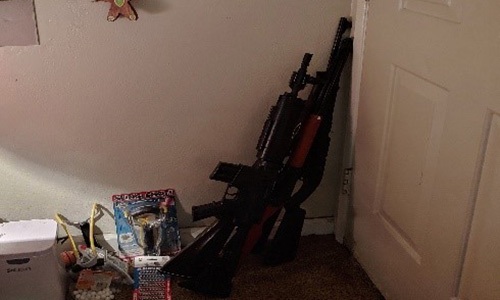
Here’s my thoughts, some will agree and disagree; If rioters end up on my street and start breaking in houses, hurting people, and stealing things… I want to defend my home and children. One 22 might not be enough. To me, even if we have enough ‘look a likes’ that each older son is carrying around our yard from different angles, it might look fierce enough to discourage any vandals from my home.

We do need something efficient that will do some damage if an enemy runs up on us with a knife, bat, or fist… even a gun. All the gun stores are on back order in our state. We do have open carry and limited laws in owning guns, so that is a plus.

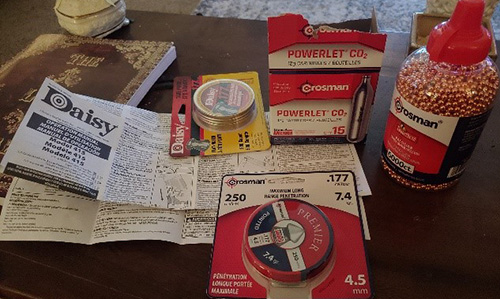
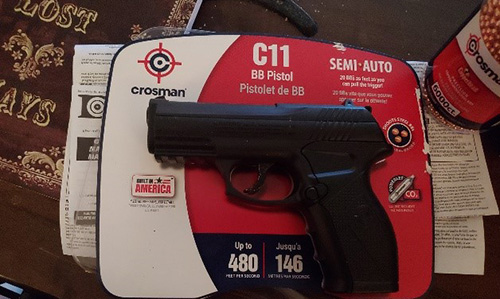
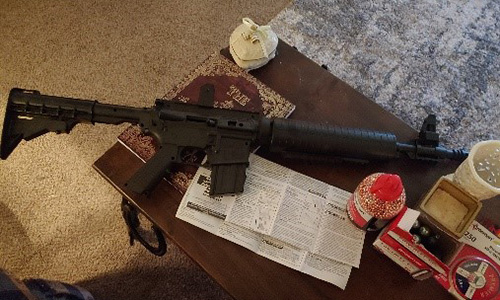
I began searching online. At first, I purchased another cheap Crossman with Co2 cartridge and a frightening looking Crossman Co2 Air Rifle.

What To Do When Stores Run Out Of Guns And Ammo

I am not bashing on Crossman, but these were failures for me.

The little pistol worked as badly as the ones before I got my boys in the past. The air of the Co2 leaks out while installing, leaving the copper pellets to fall right out the front after loading.

What To Do When Stores Run Out Of Guns And Ammo

And while the Crossman Rifle Air Gun at 60$ looks frightening… you got to pump that baby up 10 times to get one shot.

If you aim right it will do damage… but in a suddenly violent situation, it just will not work fast enough. Too boot, any dangerous character will see you pumping and know it is a harmless BB gun.

What To Do When Stores Run Out Of Guns And Ammo

Not recommended, unless they are just for show.

I upped my game. I went to Youtube and Amazon and found many Air Rifles that actually kill bore! That would equal a gun in self defense. Sadly, after all my other prepping I couldn’t afford these high powered air rifles and had to pass. If you have the money for a gun, but can’t find one, I highly suggest you look these up… starting about 300$ you can find some decent ones.

Then I remembered Big R down the street. I tend to find things much cheaper there. The Ammo and Guns are all sold out. I waited for help and headed to the Air Rifle department. I wanted a pistol for me. I’m smaller and it’s easier for me to handle. I love shooting them, less complicated.

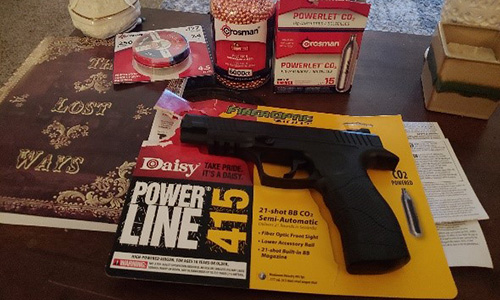
I saw the Crossman and knew it wasn’t for us, but next to that was a Daisy 21 Shot Powerline 415 Semi-Auto Air pistol. Hesitant it would be like the little Crossman, the clerk said they were very effective.

What To Do When Stores Run Out Of Guns And Ammo

Boy, was he right. I got that little puppy home and it not only sounded like the real thing, but was sharp like a razor. The Co2 went into the pistol without a sound, I loaded the 21 copper BB’s and headed out to my backyard.

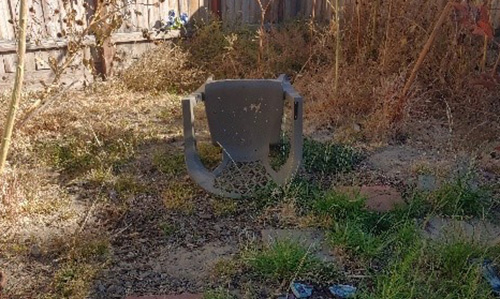
I have a very thick plastic lawn chair that most bb’s won’t penetrate. And if anything does go through it, I know it will go through skin, perhaps lodge in a bone. Not that I really want it to kill anyone, but if SHTF, you have to do what you have to do.

It was amazing, the 415 Auto-air pistol was spot on, sounded like the real thing so much I thought someone might call the police (they never did).

I shot all my 21 rounds very quickly with decent aim. I tore that ½ of an inch hard plastic like no ones business. I had such a good time, I used up another cartridge and several hundreds of pellets before retiring.

What To Do When Stores Run Out Of Guns And Ammo

If anyone were running at myself or my boys who had this air pistol, it wouldn’t just slow them down, it would cause damage. The closer the better.

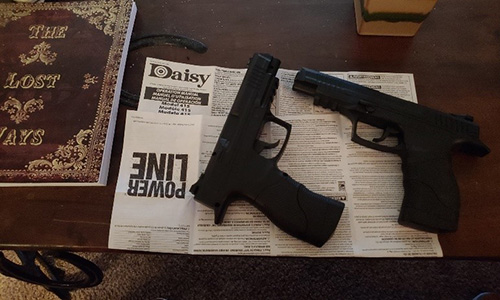
I immediately went back to Big R and bought one more.

What To Do When Stores Run Out Of Guns And Ammo

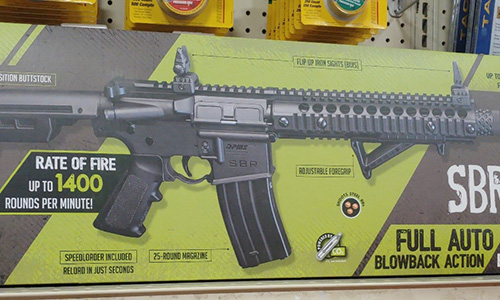
Then I saw THIS:

What To Do When Stores Run Out Of Guns And Ammo

This would be the most affordable next best thing to a bore killing Air Rifle. Please click the link below for the gun over-view and interview with the Big R associate.

In addition to powerful Air Pistols and Rifles that use Co2 for power instead of pump, there are some other things that are helpful. When my daughter worked at a gun store in another town she gave us high powered sling shots for Christmas. Just a few practice shots and the accuracy is above par.

There are steel pellets, white marbles, regular marbles, and you can even use jagged rocks. This doesn’t have the speed coming against on oncoming predator, but used with a real gun, powerful air rifles, Sumari swords (one of my son’s owns)… you’re family could be a force to be reckonned with.

What To Do When Stores Run Out Of Guns And Ammo

Other articles here will best address where to put your guns when the time comes. Or whether you make a show of force or not. I believe it depends on the situation. If 5 members of my family all have a rifle sling on their back and even if the bb rifles in the sling look real from a distance, while holding air pistols that effectively shoot and cause damage… it may be intimidating enough to hold off a small un-gunned mob. There are times weapons shouldn’t be shown as well.

Some may be critical of this article, and there are those with more experience, however this was my journey. And after all the point is to use what you can get and what you have to protect your family if S does HTF.

The Great Depression Was One Of The Most Traumatic Events In American History: 50 Tips From The Great Depression

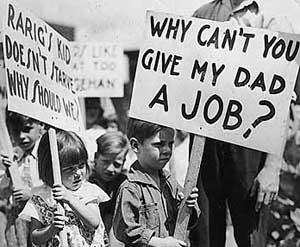
The Great Depression was one of the most traumatic events in American history. Following the stock market crash of October 1929, industrial production crashed, construction shrank to a fraction of what it had been and millions of people found themselves on short hours or without work. Until the economy picked up again in 1935 life was a real struggle for the average American.

To get through the economic collapse and the grinding poverty that followed it, people had to adapt and learn new skills – or re-learn old ones. For that reason, many people who lived through it looked back with a sense of, maybe not exactly nostalgia, but pride in how they managed to cope.

A lot of the things people did during the Great Depression still make a lot of sense today. With our own economy looking vulnerable, and the risk of a new collapse always lurking just around the corner, would we cope as well as our grandparents and great-grandparents did? Here are some of the ways they took care of themselves and those around them through some of the hardest times the USA has ever seen.

Work

  1. Entire families moved in search of work. By staying together, they could support each other while not missing employment opportunities.
  2. Migrant farm work was a life-saver for many. Different crops needed harvesting at different times, so it was – and still is – possible to find several months’ work.
  3. People were willing to try any job. They didn’t ask “Do you have any work for a…?” But, “Do you have any work?” They were flexible because they had to be.
  4. Everyone in a family was prepared to earn money. Kids could make a valuable contribution too. Families worked for a common goal – earning enough to survive.
  5. great depression1Almost anything had some value. Driftwood collected from the beach could be split and sold as firewood. Most any kind of metal can be collected and sold as scrap.
  6. Government “New Deal” employment programs provided jobs and taught skills. They also created a lot of new infrastructure, including many roads – and the Hoover Dam.
  7. There was no such thing as retirement age. Anyone who could work did When money is tight, everyone needs to contribute whatever they can earn.
  8. A lot of jobs became part-time as employers tried to save money. Many people worked several part-time jobs, often putting in very long days.
  9. Many of the jobless spent all day going round employers, looking for any work they could find. Even an hour or two’s labor would make a difference.
  10. People created jobs for themselves. Some women would wake early to cook dozens of meals, then sell them outside factories and construction sites.
  11. Flexibility helped. Someone who knew a little about several trades had a better chance of finding work than someone who was an expert at one.
  12. Farmers would take on workers they didn’t have the money to hire, and pay them in produce instead.

Housing

  1. Many people lost their homes. Often, extended families – grandparents, aunts, uncles – ended up living in one house.
  2. Others were forced to live in their car or truck, buying cheap meals and washing at public gyms or swimming pools.
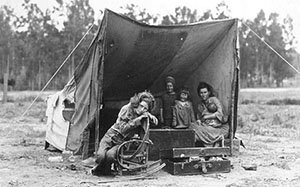
  3. homseThe homeless often lived in tents – or shack or lean-tos they’d built themselves. Having a place to live, even a basic one, was better than sleeping rough.
  4. To save energy, walls were insulated with anything that would help keep heat in through the winter – mud, newspapers or tar paper. It all helped cut fuel costs.
  5. Homes were kept cooler than normal. Wearing more clothes indoors reduced the need to burn fuel, and that left more money for food.
  6. In summer people hung wet sheets over doorways and windows. As the water evaporated it drew in heat from the air, cooling the home slightly.
  7. Refinancing a home was one way to keep up the payments – and it could also free up cash for living expenses.

Money

  1. moneyLife insurance policies were a safety net for those who had them. If money ran out the policy could be cashed in, helping keep the family afloat for a few more months.
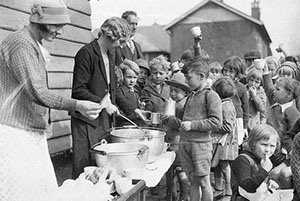
  2. Many people rarely saw cash; barter economies quickly grew up. Small jobs might be paid with milk, fresh vegetables or fruit, especially in rural areas.
  3. With millions out of work, begging was common – and seen as desperation, not antisocial behavior. Outside restaurant was a favorite spot; only the rich could afford to eat there.
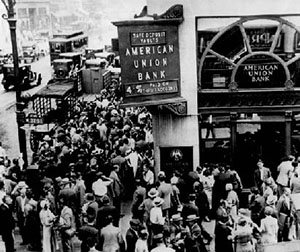
  4. People respected banks back then, but when banks started closing the trust soon faded. Nobody knew when their own might shut, so the wise kept cash at home.
  5. Many stores gave credit and let regular payments slide. They just kept track of what was owed and hoped it would be paid someday. Many stores went bankrupt because of this.

Experts predict that an EMP strike that wipes out electricity across the nation would ultimately lead to the demise of up to 90% of the population. However, this figure begs an important question: if we were able to live thousands of years without even the concept of electricity, why would we suddenly all die without it?

Food

  1. Having a vegetable plot made a huge difference. In 1929, 20% of Americans still lived on farms; most of the rest had big gardens, and the skills to grow their own food.
  2. Hunting and fishing were major sources of protein. Meat was expensive, but if you could harvest your own you had a better diet. Surplus was great for barter, too.
  3. Foraging was also popular. Nuts, berries, and wild greens helped put meals on the table, and kids and older people could forage as well as anyone.
  4. In the country, canning was an essential skill. A well-stocked pantry was both a source of pride and a life-saving reserve for the winter.
  5. foodPeople learned that you can eat almost anything if you’re hungry enough. Tumbleweed was used as fodder for cattle; then people found it could be eaten. Young plants are best.
  6. No part of an animal was wasted. Offal was fried, boiled or turned into ground meat. Even chicken feet could be boiled to add some taste to a broth.
  7. A little bit of bacon would add flavor to almost anything. The hard rinds or dry ends of a piece of bacon could be boiled – and butchers sold them for pennies.
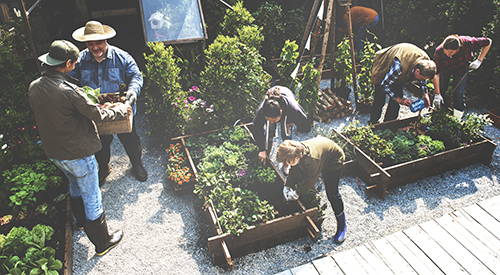
  8. Communities divided vacant lots and parks into family vegetable plots. Housewives and kids spent much of their time growing extra food.
  9. To keep some variety in their diets, people traded the produce they grew with friends and neighbors.
  10. Meals were cooked from scratch – there were hardly any prepared foods in the shops. Recipes were usually simpler than today’s. That mean they were cheaper to make.
  11. Stores closed on Sundays, so fresh produce that would go bad by Monday would be sold off cheap late on Saturday. Shopping at that time was great for bargains.
  12. Livestock was a great asset. If you had a cow or even a few chickens, you were sitting on a wealth creator. Milk and eggs helped your own diet, and could be bartered.
  13. Meat and dairy products were expensive; bread, potatoes, and noodles were cheap and filling. People bulked out meals with carbohydrates. Lard or bacon fat added flavor.
  14. Soup was a popular meal. It filled you up, and the main ingredient was water. Almost anything could be made into soup – beans, potatoes, even stale bread.

Clothes

  1. Shoes were mended over and over. Holes in the sole were patched with leather from scrap belts or purses. Complete soles were cut from old tires.
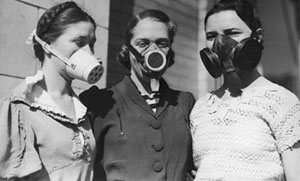
  2. Dustbowl MasksPeople learned to make and repair clothes. Any fabric could be used. Rural families made clothes from feed sacks. One woman turned a casket’s fabric lining into kids’ dresses.
  3. Fashion was canceled. People preferred to get more use out their old clothes and spend their money on food.
  4. When kids outgrew their clothes they were handed down to younger siblings or given to people who could use them.
  5. Really old clothes were cut up for rags to get some more use out of them. Why spend money on dusters and cleaning cloths when rags worked just as well?

Society and Attitudes

  1. Nobody felt entitled to be supported. People knew that they had to work as hard as they could to survive; if they didn’t, they could expect nothing.
  2. On the other hand, people were willing to help those who were trying but struggling. They knew they could be the ones needing help next, so most gave all they could spare.
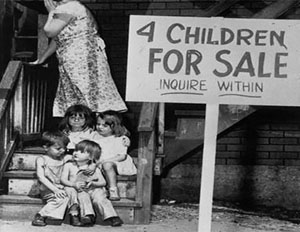
  3. kids for sellCommunities became closer, giving mutual support and organizing donations of food or cash to those who needed them the most.
  4. Many towns set up welfare loan schemes. Money could be loaned to people who needed it, but it was expected to be paid back. Detailed records were kept of what was owed.
  5. Willingness to work hard, and to do what you could to support the community, was more highly valued than individualism and independence.
  6. People learned to keep a positive outlook on life. They learned that they could lose a surprising amount – almost everything – and keep going.
  7. Positivity was essential. There was no point complaining how bad things were – they were just as bad for almost everyone. What mattered was trying to make them better.

The Final Straw: What Is America’s Tipping Point and What are You Prepared to Do When it comes?

Have you ever wondered what makes a person snap? What causes a normal, quiet, everyday citizen, loving mother, or doting father to lose it all and fight like a caged animal? What can cause a small village to rise up and rebel against an oppressive police force and start killing them? What is the switch that gets flipped that causes a city to pour two million people into the streets, chanting and demanding to be heard by their government?

Lately it feels more and more as though we are on standing on the edge of some yawning precipice peering over the crest into darkness. What is more troubling to me is that we have been down this path before. The sense of unease is almost palpable to me sometimes; it is more evident if you are paying attention. If you are able to eliminate the white noise of the world for a minute; hit the pause button on the playlist of daily life for a while and look around, listen, you may start to recognize that you too are caught up in events that will soon change all our lives.

During a SHTF situation, pain could become an annoyance for some, but unbearable for others.

If doctors are scarce and medicine becomes even scarcer, this one little weed, found all over North America and similar to morphine, could be a saving grace.

For several years I have felt an unsettling sense that we need to be prepared, that life is going to throw us a big, fat, greasy curve ball soon and we better not be caught napping. To try and proactively address that warning voice I started planning and taking steps to prepare my family to be able to weather events in the future. I am certainly not alone in this concern as you can easily see by the tremendous growth of the prepper movement. In the spectrum of probable events, there are a lot of potential scenarios. Natural disasters and emergencies occur every day all over the world, but you have to broaden your gaze and look to current events and history as well. One of the things that I think is a valid potential event to consider is a collapse of our way of life which leads to an authoritarian oppressive government.

Are we reaching a tipping point?

 SS soldiers guarding the column of captive Jews in the Warsaw ghetto.
SS soldiers guarding the column of captive Jews in the Warsaw ghetto.

We have seen in recent events, by now almost too numerous to mention, the effects of a rising frustration with the way things are. It isn’t necessary to go into all of the individual reasons, but as a society there are more and more outpourings of frustration on a global scale. There are increasingly tightening restrictions against people. There is a manipulation of markets and the economy. There is a great increase in the loss of freedom and there is a more open antagonism and almost outright animosity by Government towards their people.

Governments exist either because they have come to power through force and violence or they have been elected and given power by the people. The force and violence crowd usually have their roots in the military and we like to call them Dictators. There have been a ton of them throughout history; Hitler, Stalin, Mao, Kim Jong iL and now his son, Saddam, Gaddafi, the list goes on and on. Dictators don’t care about the people and usually kill anyone who gets in their way. It is a fact that government has killed more people than any other cause, disease or reason.

The other side of the coin is what is usually called Democracies. I am lumping a lot of governments in here I know, but the democracies are usually elected and formed with the consent of the people with the noble goal of securing rights or protecting the people over whom they govern. Almost without fail however, Democratic Governments eventually do not want to answer to the people and at some point they most certainly will not be told what to do by the people to the point of ignoring the will of the people (for the people’s own good of course). Now these governments that are supposed to secure the liberties of their people are becoming more openly hostile to the same people they have sworn to defend. Funnily enough the democratically elected governments now seem to want to hang on to power with the same methods of force and violence as dictators. How else can you explain arming themselves with ammo, ignoring the constitution, purchasing assault vehicles and preparing to confiscate firearms?

When governments will steal money outright from the citizens in order to pay bills that were not incurred by the people we have a problem. When government spies on its people and uses that information against them punitively we have a problem. When Government uses the force of the military that was supposed to defend the people that was paid for by the people, for the purposes of killing the people, we have a big problem. When someone brings to light crimes by the government and is labeled as the one who is a danger, we have a problem.

The problem is that governments around the world are viewing their people as the problem and there really seems to be only one way throughout history that this is ever rectified. My fear is that we are already set on a course that won’t be changed with laws, great political leaders, or a return to the values of a golden age in time long past.

Experts predict that an EMP strike that wipes out electricity across the nation would ultimately lead to the demise of up to 90% of the population. However, this figure begs an important question: if we were able to live thousands of years without even the concept of electricity, why would we suddenly all die without it?

The Fine Line – The Straw that breaks the camel’s back

The fine line between someone who is a law-abiding citizen and a murderer is one that exists purely in our souls. There is nothing physical that is different from a person who follows the rules and someone who breaks them. The urge to pull the trigger isn’t something you can see and it isn’t a trait to test for, so it must be our own individual sense of right and wrong. Of good and evil.

I know that some will argue that a psychopath is definitely recognizable by character traits and maybe even brainwaves or chemistry. That may be true, but you can be a psychopath (clinically) without ever hurting anyone. By the same token, you can take a life while being perfectly “sane”.

If you hold a knife in your hand, you are just as capable of using that to stab or cut someone as the murderer in the next town, but that thought never enters the mind of an overwhelming majority of people. A baseball bat in your hands can easily be swung with great force connecting it to the back of a skull, but this thought never appears in our heads; that is unless we are forced into a corner. When a person is in desperate fear for their lives, the unspoken rules of right and wrong are broken. The processes that we follow every day are overridden in the cause of rage or self-preservation. What was unthinkable before is now very real, necessary and even righteous with the right circumstances.

When the right buttons are pushed, anyone can lose it. When the fear of dying or of losing someone you love is so overpowering, the “fine line” that has been keeping us sane, law-abiding and good is easily shattered. When this happens, all bets are off.

We as a people, a country are still rather firmly attached on the good side of this line. We have not yet completely been driven to abandon all hope and lash out. We have not yet been so harmed, have not gotten to the point that we have nothing to lose and are ready to lose it, but this may be coming in the future.

The force and violence that is being used now to quell the dissatisfaction of people globally is increasing. The methods to cease the complaining of the rabble has been relatively minor with some exceptions. Tear gas, rubber bullets, mace and batons only work up to a point though. When the time comes that people can no longer abide, there won’t be enough police to stop them using riot control techniques. The military doesn’t have enough people to stop the entire population unless those people peacefully agree to surrender, so what will they do? Do you believe any government will quietly step down and admit that they are obviously not speaking for the people anymore? No. They will resort to more force and violence and people will die. Either that or you have a coup like they had in Egypt and guess who took over to “restore order”? Yep, the Military.

What will be the inevitable response by the authorities?

The Chinese people who started to revolt against the police in their town did so because the authorities were “placing restrictions on their culture, language and religion”. China is no picnic compared to America and we clearly know they have lived through far worse oppression than we have, but this was the straw that broke the camel’s back for them?

The protests which turned into an estimated two million citizens of Brazil had started simply enough with a protest over a rise in the rates of public transportation.

In America, what will be the trigger that causes people to rise up and say we aren’t going to take this anymore and more importantly what will happen when/if we do?

What will happen if we don’t change the path we are on?

The execution of the last Jew in Vinnytsia, made by an officer of the German Einsatzgruppen

There is a quote that has always struck me as very sad and telling from Aleksandr Solzhenitsyn in his book The Gulag Archipelago. Solzhenitsyn was a Russian who was sentenced to 8 years in a Soviet prison camp for essentially writing things about Stalin that the government didn’t like. During this time in Soviet Russia, to stifle dissent, millions were killed or sent to prison camps. In this passage Solzhenitsyn is talking about regret that everyone felt because they simply went along with this tyranny and didn’t oppose it.

 “AND HOW WE BURNED IN THE CAMPS LATER, THINKING: WHAT WOULD THINGS HAVE BEEN LIKE IF EVERY SECURITY OPERATIVE, WHEN HE WENT OUT AT NIGHT TO MAKE AN ARREST, HAD BEEN UNCERTAIN WHETHER HE WOULD RETURN ALIVE AND HAD TO SAY GOOD-BYE TO HIS FAMILY? OR IF, DURING PERIODS OF MASS ARRESTS, AS FOR EXAMPLE IN LENINGRAD, WHEN THEY ARRESTED A QUARTER OF THE ENTIRE CITY, PEOPLE HAD NOT SIMPLY SAT THERE IN THEIR LAIRS, PALING WITH TERROR AT EVERY BANG OF THE DOWNSTAIRS DOOR AND AT EVERY STEP ON THE STAIRCASE, BUT HAD UNDERSTOOD THEY HAD NOTHING LEFT TO LOSE AND HAD BOLDLY SET UP IN THE DOWNSTAIRS HALL AN AMBUSH OF HALF A DOZEN PEOPLE WITH AXES, HAMMERS, POKERS, OR WHATEVER ELSE WAS AT HAND?… THE ORGANS WOULD VERY QUICKLY HAVE SUFFERED A SHORTAGE OF OFFICERS AND TRANSPORT AND, NOTWITHSTANDING ALL OF STALIN’S THIRST, THE CURSED MACHINE WOULD HAVE GROUND TO A HALT! IF…IF…WE DIDN’T LOVE FREEDOM ENOUGH. AND EVEN MORE – WE HAD NO AWARENESS OF THE REAL SITUATION…. WE PURELY AND SIMPLY DESERVED EVERYTHING THAT HAPPENED AFTERWARD.”  – ALEKSANDR SOLZHENITSYN

Will this be our fate too? Will we slowly be conditioned to accept atrocities like this and to be completely defanged so that we can be herded into camps without so much as a whimper as well? That’s crazy you say! Is it? Right now, our government is hunting down someone who simply exposed how they (government) were illegally spying on all of us. Our government is buying arms and stockpiling weapons for use domestically not in some war. Our government has the IRS actively harassing a single political/opposition party. Our government has shown that they will lock down a town and go door to door while making the citizens stay cowered inside. Our government has stated that they can imprison anyone without cause for an indefinite amount of time.

Can you seriously argue that we aren’t headed down the same path as others have in our not too distant past?

This is not a call to armed Revolution, but I do think we should all be very wary of this course we are on and the echos of history. We should not be silent in the face of increasing oppression. We should not simply go along quietly because of the fear that we may get in trouble, or worse that we believe the government is only looking out for our best interests. You only need to look at the people in Poland who quietly went into the Warsaw ghettos. You don’t have to look any further than the Holocaust to see what quietly going along will get you.

This is not a fate that I will be bringing on my family.

Preparedness Hacks: Once a nuke is heading your way, you might think that there isn’t much left to do, but you would be wrong!

Because we will show you America’s natural nuclear bunkers that are also EMP proof. When the sirens start wailing, all you need to do is pick the closest one to your home, where you can take cover before it hits.

50 Tips From the Great Depression (The Great Depression was one of the most traumatic events in American history)

Editor’s note: This article was originally published in 2016. Given the recent events going on around us, I believe the information found here will be helpful to the people who did not get a chance to read the article in 2016, as well as to the ones who already read it.

The Great Depression was one of the most traumatic events in American history. Following the stock market crash of October 1929, industrial production crashed, construction shrank to a fraction of what it had been, and millions of people found themselves on short hours or without work. Until the economy picked up again in 1935 life was a real struggle for the average American.

To get through the economic collapse and the grinding poverty that followed it, people had to adapt and learn new skills – or re-learn old ones. For that reason, many people who lived through it looked back with a sense of, maybe not exactly nostalgia, but pride in how they managed to cope.

A lot of the things people did during the Great Depression still make a lot of sense today. With our own economy looking vulnerable, and the risk of a new collapse always lurking just around the corner, would we cope as well as our grandparents and great-grandparents did?

Here are some of the ways they took care of themselves and those around them through some of the hardest times the USA has ever seen.

Work

  1. Entire families moved in search of work. By staying together, they could support each other while not missing employment opportunities.
  2. Migrant farm work was a life-saver for many. Different crops needed harvesting at different times, so it was – and still is – possible to find several months’ work.
  3. People were willing to try any job. They didn’t ask “Do you have any work for a…?”, but, “Do you have any work?”. They were flexible because they had to be.
  4. Everyone in a family was prepared to earn money. Kids could make a valuable contribution too. Families worked for a common goal: earning enough to survive.
  5. great depression1Almost anything had some value. Driftwood collected from the beach could be split and sold as firewood. Almost any kind of metal can be collected and sold as scrap.
  6. Government “New Deal” employment programs provided jobs and taught skills. They also created a lot of new infrastructure, including many roads – and the Hoover Dam.
  7. There was no such thing as retirement age. Anyone who could work did.  When money is tight, everyone needs to contribute whatever they can earn.
  8. A lot of jobs became part-time, as employers tried to save money. Many people worked several part-time jobs, often putting in very long days.
  9. Many of the jobless spent all day going round employers, looking for any work they could find. Even an hour or two of labor would make a difference.
  10. People created jobs for themselves. Some women would wake early to cook dozens of meals, then sell them outside factories and construction sites.
  11. Flexibility helped. Someone who knew a little about several trades had a better chance of finding work, than someone who was an expert at one.
  12. Farmers would take on workers they didn’t have the money to hire, and pay them in produce instead.

Housing

  1. Many people lost their homes. Often, extended families – grandparents, aunts, uncles – ended up living in one house.
  2. Others were forced to live in their car or truck, buying cheap meals and washing at public gyms or swimming pools.
  3. homseThe homeless often lived in tents – or shack or lean-tos they’d built themselves. Having a place to live, even a basic one, was better than sleeping rough.
  4. To save energy, walls were insulated with anything that would help keep heat in through the winter: mud, newspapers or tar paper. It all helped cut fuel costs.
  5. Homes were kept cooler than normal. Wearing more clothes indoors reduced the need to burn fuel, and that left more money for food.
  6. In summer people hung wet sheets over doorways and windows. As the water evaporated, it drew in heat from the air, cooling the home slightly.
  7. Refinancing a home was one way to keep up the payments – and it could also free up cash for living expenses.

Money

  1. moneyLife insurance policies were a safety net for those who had them. If money ran out, the policy could be cashed in, helping keep the family afloat for a few more months.
  2. Many people rarely saw cash; barter economies quickly grew up. Small jobs might be paid with milk, fresh vegetables or fruit, especially in rural areas.
  3. With millions out of work, begging was common – and seen as desperation, not antisocial behavior. Outside restaurant was a favorite spot and only the rich could afford to eat there.
  4. People respected banks back then, but when banks started closing the trust soon faded. Nobody knew when their own might shut, so the wise kept cash at home.
  5. Many stores gave credit and let regular payments slide. They just kept track of what was owed and hoped it would be paid someday. Many stores went bankrupt because of this.

Food

  1. Having a vegetable plot made a huge difference. In 1929, 20% of Americans still lived on farms. Most of the rest had big gardens and the skills to grow their own food.
  2. Hunting and fishing were major sources of protein. Meat was expensive, but if you could harvest your own, you had a better diet. Surplus was great for barter, too.
  3. Foraging was also popular. Nuts, berries, and wild greens helped put meals on the table, and kids and older people could forage as well as anyone.
  4. In the country, canning was an essential skill. A well-stocked pantry was both a source of pride and a life-saving reserve for the winter.
  5. foodPeople learned that you can eat almost anything, if you’re hungry enough. Tumbleweed was used as fodder for cattle, then people found it could be eaten. Young plants are best.
  6. No part of an animal was wasted. Offal was fried, boiled or turned into ground meat. Even chicken feet could be boiled to add some taste to a broth.
  7. A little bit of bacon would add flavor to almost anything. The hard rinds or dry ends of a piece of bacon could be boiled – and butchers sold them for pennies.
  8. Communities divided vacant lots and parks into family vegetable plots. Housewives and kids spent much of their time growing extra food.
  9. To keep some variety in their diets, people traded the produce they grew with friends and neighbors.
  10. Meals were cooked from scratch – there were hardly any prepared foods in the shops. Recipes were usually simpler than today’s. That mean they were cheaper to make.
  11. Stores closed on Sundays, so fresh produce that would go bad by Monday would be sold off cheap late on Saturday. Shopping at that time was great for bargains.
  12. Livestock was a great asset. If you had a cow or even a few chickens, you were sitting on a wealth creator. Milk and eggs helped your own diet, and could be bartered.
  13. Meat and dairy products were expensive; bread, potatoes, and noodles were cheap and filling. People bulked out meals with carbohydrates. Lard or bacon fat added flavor.
  14. Soup was a popular meal. It filled you up, and the main ingredient was water. Almost anything could be made into soup – beans, potatoes, even stale bread.

Clothes

  1. Shoes were mended over and over. Holes in the sole were patched with leather from scrap belts or purses. Complete soles were cut from old tires.
  2. Dustbowl MasksPeople learned to make and repair clothes. Any fabric could be used. Rural families made clothes from feed sacks. One woman turned a casket’s fabric lining into kids’ dresses.
  3. Fashion was canceled. People preferred to get more use out their old clothes and spend their money on food.
  4. When kids outgrew their clothes, they were handed down to younger siblings or given to people who could use them.
  5. Really old clothes were cut up for rags to get some more use out of them. Why spend money on dusters and cleaning cloths when rags worked just as well?

Society and Attitudes

  1. Nobody felt entitled to be supported. People knew that they had to work as hard as they could to survive; if they didn’t, they could expect nothing.
  2. On the other hand, people were willing to help those who were trying but struggling. They knew they could be the ones needing help next, so most gave all they could spare.
  3. kids for sellCommunities became closer, giving mutual support and organizing donations of food or cash to those who needed them the most.
  4. Many towns set up welfare loan schemes. Money could be loaned to people who needed it, but it was expected to be paid back. Detailed records were kept of what was owed.
  5. Willingness to work hard, and to do what you could to support the community, was more highly valued than individualism and independence.
  6. People learned to keep a positive outlook on life. They learned that they could lose a surprising amount – almost everything – and keep going.
  7. Positivity was essential. There was no point in complaining how bad things were – they were just as bad for almost everyone. What mattered was trying to make them better.

The Big Covid-19 Suburban Head-Fake: Big cities and sprawling suburbs are not opposites; they face the same challenges in a period of contraction and decentralization.

During the months of the Covid-19 lockdowns, hundreds of thousands of New Yorkers fled the city, some for second homes in the country and some to resettle in the suburbs. The flight began in March and April, and got turbocharged after Memorial Day with the riots and looting that followed the death of George Floyd in Minneapolis. City life had practically overnight become a low-value deal: no more restaurants, stores vandalized, museums and theaters shuttered. All the amenity trade-offs for cramming your family into a 900-square-foot apartment were gone. Plus, there was Mayor Bill de Blasio wrecking the police force and what little remained of a viable school system. Moving to the suburbs seemed like a no-brainer.

Yes, that’s exactly what it was, because the people fleeing into the suburbs were not thinking through the quandaries of American life and where they are taking us. The suburbs will turn out to be a bad choice. The middle class is sinking economically now; it has been since well before Covid-19 came on the scene, actually. The newcomers fleeing the city with hedge fund money might be flush for now, but most everybody else is struggling—including many people already out there in suburbia—and with that goes the mojo to pay for suburban living—everything from covering the monthly mortgages to towns collecting enough revenue to pay for their extravagant centralized school systems, far-flung electric, water, and sewer infrastructures, vast road networks, and lumbering bureaucracies.

The old business plan for running the USA doesn’t pencil out anymore. This has been true since early in the 21st century. A lot of it has to do with the predicaments around energy’s role in the economy—poorly understood by the public—and you can forget the fantasy that we’ll run all our stuff on wind and solar. We’ve compensated for this broken model by borrowing ever more fantastic amounts of money. In the process, we’ve also broken the normal and necessary functions of the banking system: price discovery, the time-value of money, and the signaling function of interest rates.

Even in the best of times, the ‘burbs were a sub-optimal setting for civilized life, a cartoon of country living amid an endless demolition derby. It combined the worst aspects of city and rural life. It was isolating, yet lacking connection with the natural world. There were bathrooms for every family member, but no rewarding public spaces. It was badly designed for the development of children over the age of eight, who needed to grow their sense of personal sovereignty but got chauffeured to everything by mom. Anxiety, boredom, and anomie were the results of all that, reinforced in law by the follies of extreme single-use zoning.

Like a lot of things in human history, suburbia seemed like a good idea at the time. It was sold mostly as an antidote to charmless, unsafe, deteriorating American industrial cities—conditions that worsened after the Second World War. This was a large country with a lot of open land outside the cities. We had the world’s biggest oil industry and made most of the world’s cars. The spacious houses with yards, patios, and pools were astounding luxuries that began to seem normal after a while, really an entitlement. And then the bottom fell out. The jobs and incomes moved to other countries, the middle class withered.

Everything in American life currently operating at the gigantic scale is going to wobble and fail—whether it’s a metroplex city, a sprawling suburb, a national chain-store company, a colossal state university, or an overgrown government. There is a general lack of appreciation for how severe the economic contraction will be. It is not just another low in the regular business cycle. It’s the collapse of a set of hypercomplex systems cascading into mutually reinforced failure. It’s happening because we’re out of the affordable fossil-fuel energy that these systems are based on. This is hard to grok because there seems to be plenty of petroleum left in the ground. Yes, there is. Only it costs too much to get it out of the ground.

The Covid-19 emergency has had unfortunate effects on the New Urbanism movement—with city life in such general disrepute that residents are fleeing—but the virus is a transient condition and the New Urbanism will come out of this with a renewed sense of mission. Both the big cities and the suburbs will not be able to cover their costs as we move forward in a future of capital and resource scarcity. Anyway you look at it, suburbia’s circulatory system, mass motoring, is coming to an end. But the places where the most disinvestment and decay has happened, America’s small cities and small towns, are heading for a renaissance, because success in that future is going to come down to the issue of scale.

One of the long-running virtues of the New Urbanism is its commitment to the human scale and the walkable neighborhood. That is exactly what the nation will need to bring the small cities and small towns back. It is also a dynamic that allows for the restoration of beauty in our everyday surroundings: the streets we walk down and the buildings that we pass along the way. All these places have the potential to become much better than Disney’s Main Street ever was, and then, of course, we won’t need Disney’s Main Street as a fetish to visit every few years to remind us what it’s like to care about being somewhere.